
 Search
Learning | Energy & Commodity Derivatives
What is a Forward Contract?
Introductory Summary
Most energy and commodity businesses are exposed to future price uncertainty.
A power generator may not know what electricity prices will be next quarter. A gas consumer may be concerned about rising fuel costs. An LNG portfolio manager may be trying to secure future margins before market conditions change.
Forward contracts exist to help market participants manage this uncertainty. They allow buyers and sellers to agree a price today for delivery at a future date, providing greater certainty over future revenues, costs, or trading outcomes.
In many respects, forward contracts are the building blocks of modern energy and commodity markets.
Definition
A forward contract is an agreement between two parties to buy or sell a commodity at a specified price on a future date.
The contract defines:
- the commodity being traded
- the delivery period
- the agreed price
- the quantity
- any relevant settlement terms
Unlike exchange-traded futures contracts, forwards are typically negotiated directly between counterparties (OTC) and can be tailored to specific commercial requirements.
Why Forward Contracts Exist
Commodity prices can change significantly between today and the point at which physical delivery occurs. Without some form of price protection, participants may face considerable uncertainty.
Consider a power retailer that expects to supply customers next summer. If wholesale electricity prices rise substantially before then, the retailer’s costs may increase dramatically. By entering into a forward contract, the retailer can secure pricing in advance and reduce exposure to future market movements.
The same principle applies across:
- electricity markets
- natural gas markets
- LNG portfolios
- oil markets
- agricultural commodities
- metals markets
Forward contracts provide a mechanism for transferring price risk between market participants.
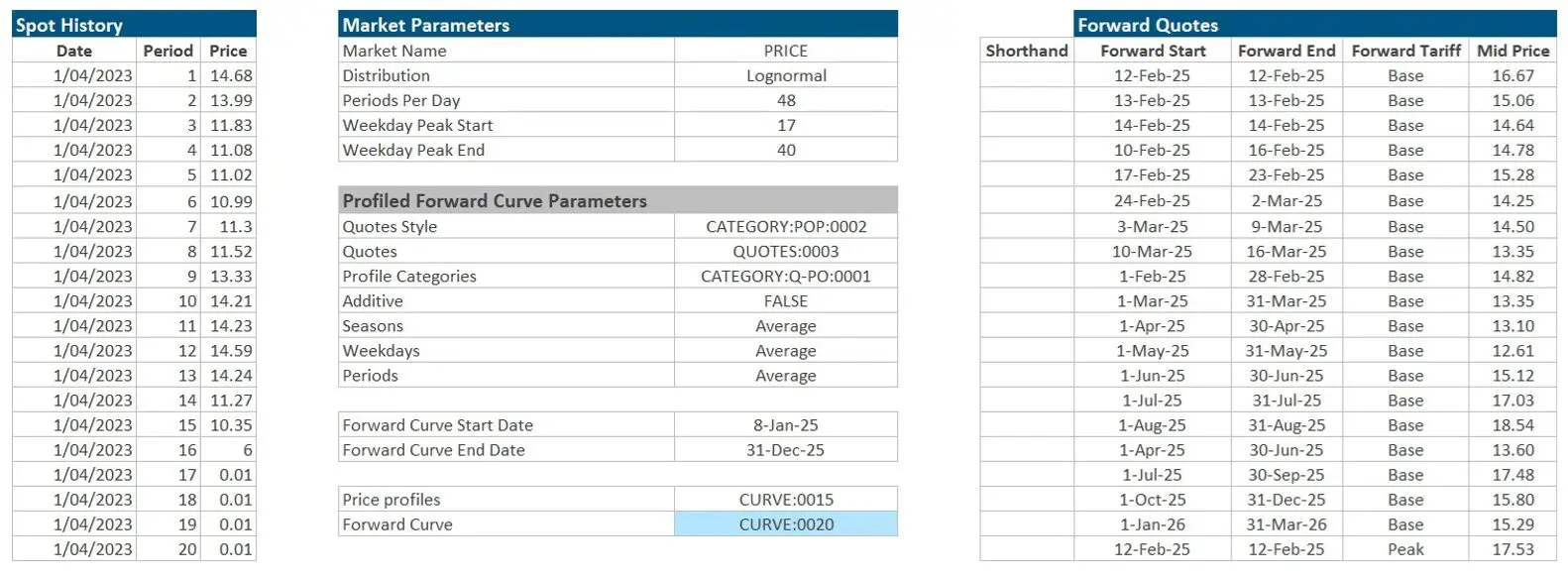
How Forward Contracts Are Used in Practice
Different participants use forward contracts for different reasons:
Hedging
Many participants use forwards to reduce unwanted market exposure. Examples include:
- generators locking in future sales prices
- industrial consumers securing future fuel costs
- producers protecting future revenues
- retailers managing procurement costs
The objective is typically stability rather than speculation.
Trading
Forward contracts are also actively traded by market participants seeking to profit from market views. Traders may buy or sell forwards based on expectations regarding:
- future prices
- supply and demand conditions
- seasonal patterns
- regional market dynamics
Portfolio Management
Forward contracts often form the foundation of larger energy portfolios. Combined with options, physical assets, storage positions, and transportation agreements, they help shape a participant’s overall risk profile.
Key Characteristics of Forward Contracts
Although forward contracts vary across markets, most share several common characteristics:
Future Delivery
The transaction relates to a future delivery period rather than immediate physical supply.
Fixed Pricing
The price is agreed when the contract is executed, creating certainty for both parties.
Bilateral Structure
Forward contracts are commonly negotiated directly between counterparties. This allows contract terms to be customised to suit specific commercial requirements.
Counterparty Exposure
Because forwards are often traded ‘over-the-counter’ (OTC), each party is exposed to the creditworthiness of the other.
Managing this counterparty credit risk can be an important consideration in energy markets.
Common Misunderstandings
A Forward Price Represents a Forecast of Future Market Prices
Agreeing a forward price does not necessarily mean participants believe that price will ultimately prevail. In many cases, forward contracts are used to provide price certainty and reduce exposure to market volatility, rather than to speculate on future prices.
The contract simply reflects a mutually agreed commercial arrangement between buyer and seller at a point in time.
Forward Contracts Eliminate All Risk
Forward contracts can help reduce exposure to commodity price volatility, but they do not eliminate risk entirely. Other exposures may remain (and in some cases increase) including volume risk, basis risk, operational risk, and counterparty credit risk.
Effective risk management requires consideration of the broader portfolio, not just individual contracts.
Forward Contracts in Energy Markets
Forward markets play a critical role in modern energy systems. Participants use forward contracts to:
- support investment decisions
- secure future revenues
- manage procurement costs
- facilitate long-term planning
- reduce earnings volatility
As portfolios grow in complexity, the challenge often shifts from executing individual forward contracts to understanding how thousands of contracts interact across multiple commodities, delivery periods, and market scenarios.
This is one reason integrated valuation and risk analytics capabilities like those available in Lacima Analytics have become increasingly important for participants operating large energy and commodity portfolios.
One-Sentence Takeaway
Forward contracts allow market participants to lock in future commodity prices, providing a foundation for trading, hedging, and risk management across energy and commodity markets.
Related Learning Resources
Explore how futures contracts differ from forwards and why exchanges play an important role in commodity markets.
How to Value Forward Contracts
Once a forward contract is in place, its economic value changes as market prices move. Learn how forward contracts are valued using current market prices and forward curves to determine their Mark-to-Market value.
What is Mark-to-Market (MtM) Valuation?
Understand how forward contracts are valued as market prices change over time.
Discover how options differ from forward contracts by providing rights rather than obligations.