
 Search
Learning | Valuation Pricing Analytics
How to Value Flexible LNG Contracts
Introductory Summary
Modern LNG contracts have evolved well beyond simple agreements to buy and sell liquefied natural gas.
Many contracts now contain a wide range of commercial flexibilities that allow participants to respond to changing market conditions throughout the life of the agreement. Destination flexibility, cargo diversion rights, volume tolerances, pricing alternatives, and timing flexibility can all create substantial additional value beyond the underlying commodity transaction.
As we discussed in What is LNG Contract Optionality?, these contractual structures have become increasingly sophisticated as the global LNG market has matured.
Valuing flexible LNG contracts therefore involves far more than forecasting LNG prices. The challenge is to identify every source of embedded optionality, understand how those flexibilities interact, and determine how they would be exercised under changing market conditions.
For organisations managing LNG portfolios, this has become one of the most important applications of modern quantitative valuation and optimisation.
Why Flexible LNG Contracts Are Different
Traditional commodity contracts generally specify fixed quantities, delivery dates and pricing arrangements. Flexible LNG contracts rarely do.
Instead, many contracts provide the holder with a portfolio of commercial choices that may include:
- destination flexibility;
- cargo diversion rights;
- upward quantity tolerance (UQT) and downward quantity tolerance (DQT);
- delivery timing flexibility;
- pricing alternatives;
- cancellation or deferral rights; and
- shipping flexibility.
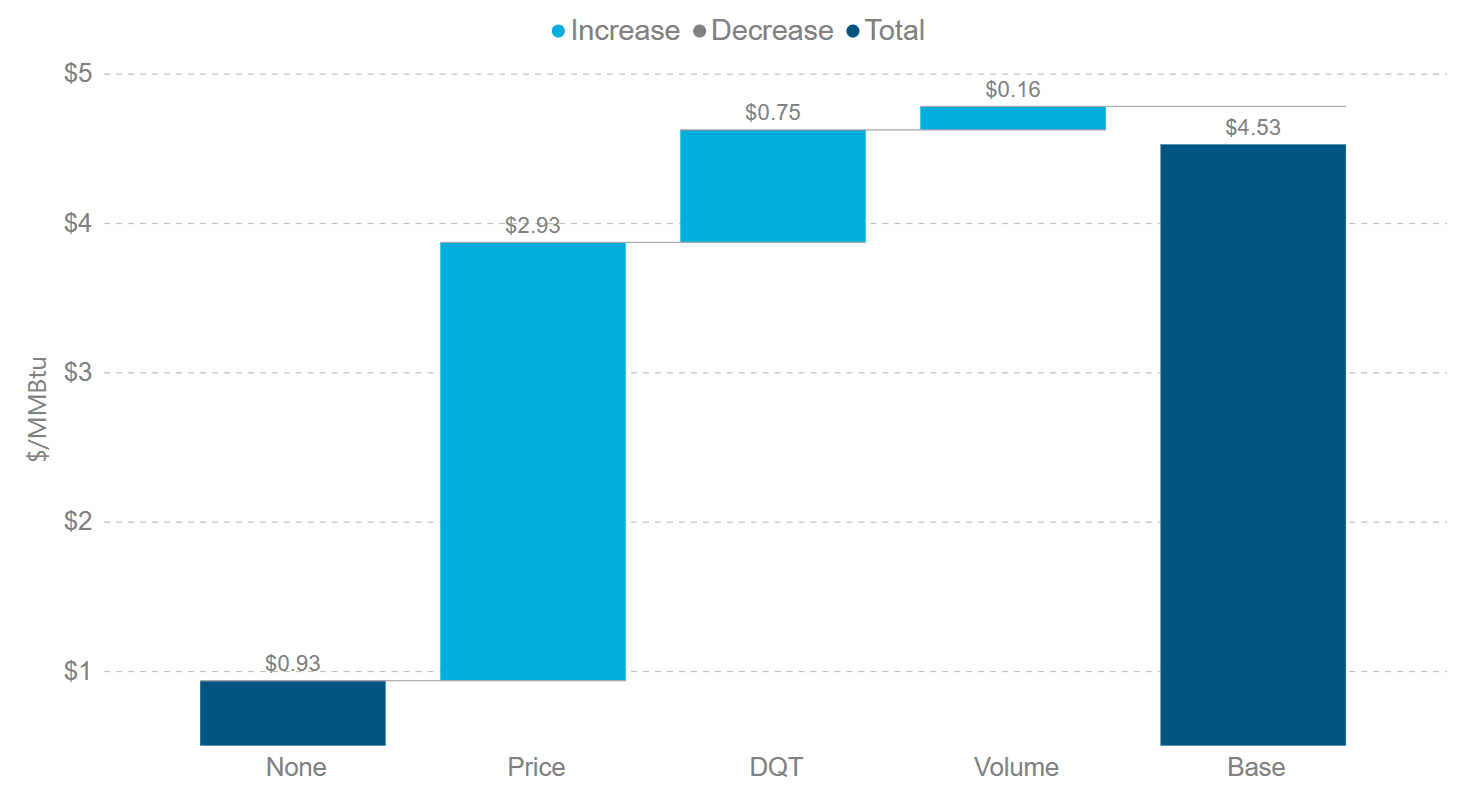
Each flexibility has potential value. More importantly, many of these flexibilities interact with one another. Exercising one option may increase or reduce the value of another, making valuation considerably more complex than simply analysing each provision independently.
Understanding how these commercial choices interact is often just as important as valuing each source of flexibility individually.
The Objective of Flexible LNG Valuation
The purpose of valuation is not simply to estimate today’s Mark-to-Market (MtM) value of the contract. It is to determine the economic value of every commercially significant decision that the contract allows its holder to make.
This requires practitioners to answer questions such as:
- Should this cargo be delivered or diverted?
- Which destination creates the highest value?
- Should contractual volume flexibility be exercised?
- Is it preferable to nominate one pricing mechanism over another?
- How does exercising today’s flexibility affect opportunities later in the contract?
Rather than producing a single deterministic answer, valuation seeks to identify the exercise strategy that maximises commercial value while satisfying every contractual obligation.
Where the Value Really Comes From
Flexible LNG contracts are rarely single commercial instruments. Instead, they are better viewed as collections of interacting commercial options whose combined value can substantially exceed the value of the underlying LNG sale itself.
The overall value may therefore be considered as arising from several distinct components.
The Base Contract
Every LNG agreement contains an underlying commercial transaction. This may involve agreed purchase quantities, pricing formulas, delivery windows and transportation obligations.
Without any additional flexibility, this component can often be valued using simple Mark-to-Market (MtM) assumptions such as forwards or swaps.
Embedded Flexibility
Additional contractual provisions create opportunities to improve commercial outcomes as markets evolve. Examples include:
- redirecting cargoes between regional markets;
- adjusting contractual quantities;
- changing delivery timing;
- selecting alternative pricing mechanisms; or
- responding to unexpected operational events.
Each of these decisions may create incremental value beyond the underlying commodity transaction.
Interaction Between Flex Components
Importantly, flex provisions rarely operate independently.
For example:
- exercising destination flexibility may influence shipping availability;
- changing delivery timing may affect future diversion opportunities;
- volume flexibility may alter pricing outcomes; and
- exercising one contractual right may increase or reduce the value of another.
As a result, the combined value of several flex provisions is often different from the simple sum of their individual values.
These interdependencies mean the economic value of a contract cannot generally be determined by valuing each flexibility in isolation. Understanding these interactions is one of the reasons sophisticated optimisation models are frequently used in LNG portfolio analysis.
Portfolio Value
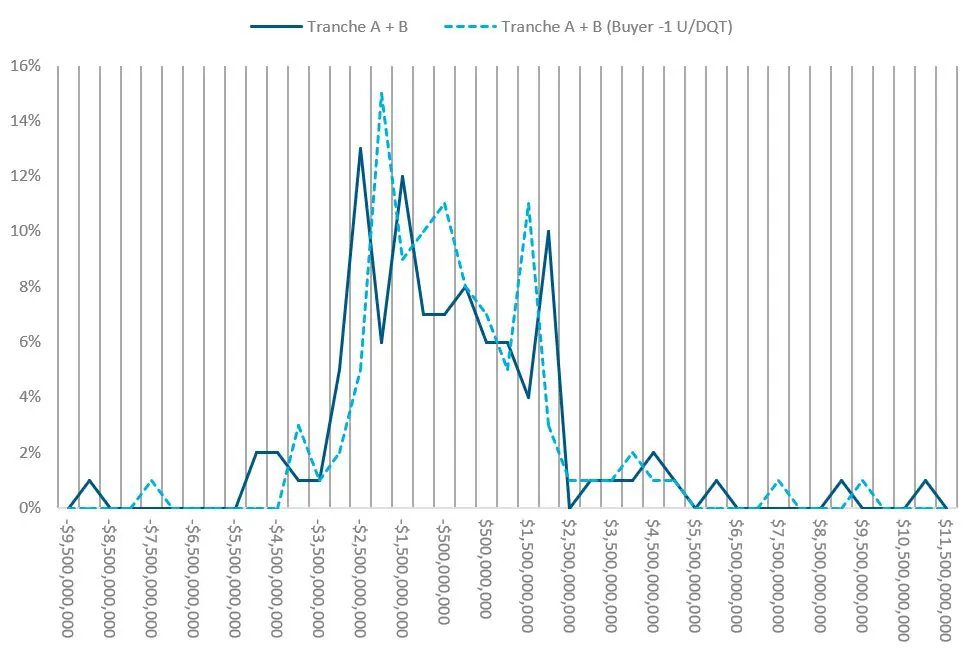
Many of the largest sources of commercial value emerge only when flexible LNG contracts are analysed as part of a broader portfolio rather than individually.
A cargo that appears to have only limited standalone value may significantly improve overall portfolio performance by:
- balancing regional market exposures;
- satisfying downstream delivery commitments;
- utilising spare transportation and shipping capacity;
- avoiding spot market purchases at a premium;
- creating optimisation opportunities across multiple contracts; or
- reducing overall portfolio risk.
Equally, exercising flexibility within one contract may preserve or enhance valuable opportunities elsewhere in the portfolio.
For many LNG participants, these portfolio interactions represent one of the largest contributors to commercial value and often exceed the value visible from analysing contracts independently.
A Practical Framework for Valuing Flexible LNG Contracts
Rather than beginning with mathematical models, practitioners typically start by understanding the commercial structure of the agreement itself.
Step 1: Understand the Contract
The first step is identifying every commercially significant contractual provision. This commonly includes:
- delivery obligations;
- pricing mechanisms;
- destination clauses;
- quantity flexibility;
- diversion rights;
- shipping responsibilities;
- timing flexibility; and
- operational constraints.
Before valuation begins, practitioners must understand exactly which commercial decisions the contract permits.
Step 2: Build the Market View
The valuation then requires an internally consistent market view. Depending on the agreement, this may include:
- LNG forward curves;
- regional gas prices;
- oil prices;
- freight costs;
- shipping availability;
- foreign exchange assumptions;
- interest rates and/or inflation factors; and
- volatility assumptions where stochastic valuation is required.
As with all energy valuation problems, the quality of the analytical outputs depends heavily on the quality and consistency of these market inputs.
Step 3: Identify Every Source of Optionality
Rather than treating the contract as a single instrument, practitioners typically decompose it into its individual sources of commercial flexibility.
Doing so helps distinguish:
- value that already exists in today’s observable market prices; and
- additional value that may emerge as market conditions change over time.
This decomposition also provides greater transparency when explaining valuation results to traders, commercial teams, finance functions and senior management.
Step 4: Evaluate Future Decisions
Unlike fixed commodity contracts, many LNG flex provisions only become valuable when future market conditions are uncertain.
Practitioners therefore evaluate how commercial decisions may evolve across a wide range of possible market outcomes.
Depending on the complexity of the contract, this may involve optimisation techniques, stochastic simulation, or other quantitative approaches designed to determine how contractual flexibility would be exercised under changing market conditions.
These valuation techniques become particularly powerful when applied across an integrated LNG portfolio, where destination choices, shipping constraints and interactions between contracts all influence the optimal exercise strategy.
Why Portfolio Analysis Changes Everything
Although flexible LNG contracts can be valued individually, commercial decisions are rarely made in isolation.
As portfolios grow, the objective shifts from maximising the value of each individual contract towards identifying the combination of cargo movements, destination choices, pricing elections and shipping decisions that maximises value across the portfolio as a whole.
The valuation problem therefore becomes one of optimisation rather than simply pricing. Every commercial decision must be evaluated in the context of its impact on future flexibility, contractual obligations and opportunities elsewhere in the portfolio.
This portfolio-centric approach has become one of the defining characteristics of modern LNG portfolio management and is one of the principal reasons sophisticated optimisation techniques are now widely used throughout the LNG industry.
Common Pitfalls and Misconceptions
Flexible LNG Contracts Can Be Valued Like Fixed Commodity Contracts
Fixed commodity contracts generally involve predetermined quantities, delivery dates and pricing mechanisms. Flexible LNG contracts contain multiple embedded commercial options whose value depends on how they may be exercised as market conditions evolve.
Ignoring this flexibility can materially underestimate contract value.
Every Flex Provision Can Be Valued Independently
Individual flex components rarely operate in isolation. Destination flexibility, cargo diversion, pricing alternatives, shipping arrangements and volume flexibility often influence one another.
Advanced valuation methods therefore consider both the individual value of each provision and the interactions between them.
Portfolio Value Is Simply the Sum of Individual Contract Values
Not necessarily. Contracts frequently create additional value when managed collectively.
Interactions between cargoes, contractual obligations, infrastructure and regional market exposures can create optimisation opportunities that are not visible when contracts are analysed independently.
Managing Flexible LNG Valuation in Practice
Modern LNG valuation extends well beyond calculating the value of individual cargoes.
Commercial teams increasingly need to understand how contractual flexibility interacts with shipping schedules, destination choices, infrastructure constraints, market exposures and other contracts across the portfolio. As portfolios expand, maintaining a consistent analytical framework across these interrelated decisions becomes progressively more challenging.
Many organisations therefore adopt integrated valuation and optimisation platforms that bring together market data, forward curves, freight economics, contractual flexibility, portfolio optimisation and governance within a single analytical environment.
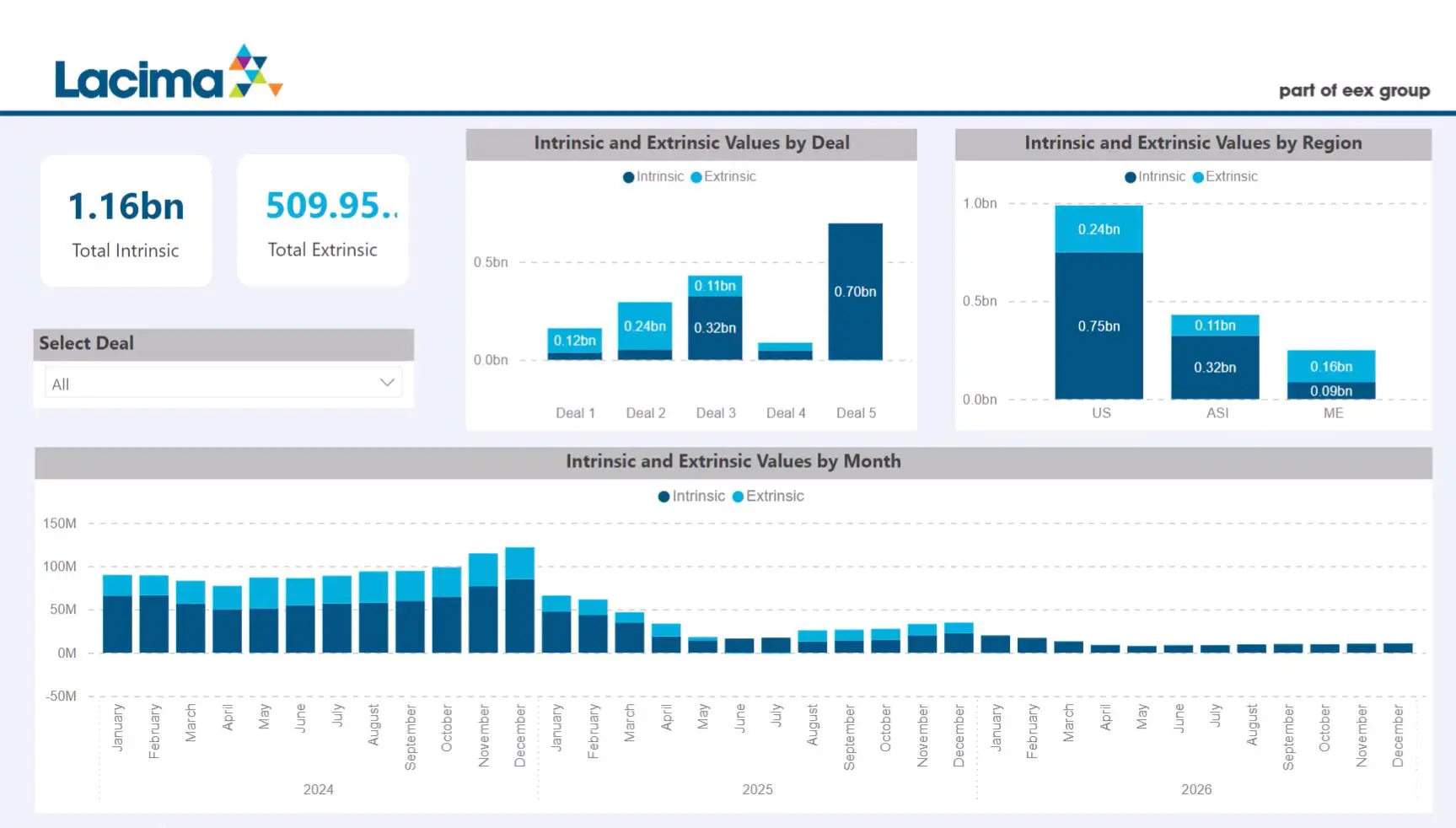
For example, Lacima’s LNG Deal & Portfolio Analysis solution enables traders and analysts to model destination flexibility, pricing alternatives, UQT/DQT provisions, cargo diversions and other contractual optionality within a consistent portfolio framework. Where shipping becomes a key commercial driver, Lacima’s LNG Shipping Optimiser extends this capability by incorporating vessel scheduling, fleet optimisation, freight economics and logistical constraints directly into the valuation and optimisation process.
By analysing contracts, vessels and market opportunities together rather than independently, organisations can identify sources of value that are often impossible to recognise using standalone deal analysis.
One-Sentence Takeaway
Flexible LNG contract valuation is fundamentally about identifying, quantifying and optimising embedded commercial flexibility, recognising that interactions between contractual options, shipping logistics and portfolio decisions often create value well beyond the underlying commodity transaction.
Related Learning Resources
What is LNG Contract Optionality?
Understand the commercial flexibilities embedded within modern LNG contracts, including destination flexibility, cargo diversion rights, pricing alternatives, UQT/DQT provisions and other sources of embedded value.
Discover how stochastic models represent future price uncertainty when valuing contracts with significant embedded optionality.
What is Monte Carlo Simulation?
Learn how Monte Carlo simulation evaluates thousands of possible future market outcomes when valuing flexible energy contracts.
Understand why uncertainty itself creates economic value and why embedded flexibility can be worth substantially more than the underlying commodity transaction.