
 Search
Learning | Foundations of Energy Risk
What is Portfolio Exposure?
Introductory Summary
Portfolio exposure refers to the sensitivity of a portfolio to changes in market conditions or operational factors. In energy and commodity markets, exposure is rarely limited to price alone. It often includes volatility, physical assets, optionality, and interlinked commodity relationships.
Understanding portfolio exposure is central to managing risk across complex portfolios. Participants use exposure analysis to assess how market movements may affect portfolio value, earnings, cash flow, or operational performance across financial and physical asset portfolios.
Definition
Portfolio exposure describes how a portfolio responds to changes in:
- commodity prices
- forward curves
- volatility
- spread relationships
- physical asset utilisation
- weather-driven demand changes
- transportation and storage constraints
Exposure analysis helps participants understand where risk exists within a portfolio and how different positions interact under changing market conditions.
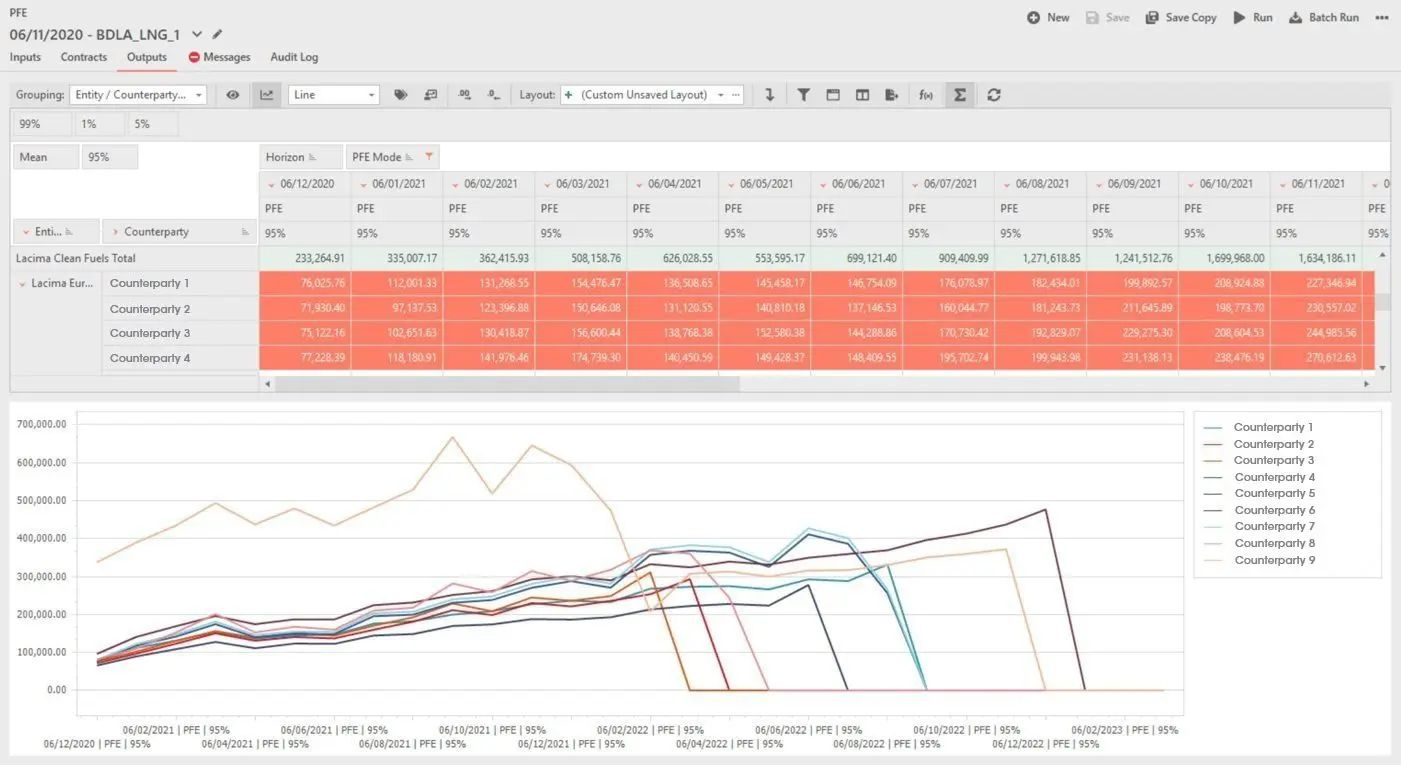
Why This Matters in Energy & Commodity Markets
Energy and commodity portfolios are often highly interconnected.
For example:
- power portfolios depend on fuel and emissions markets
- LNG portfolios depend on regional pricing and shipping dynamics
- storage assets may create optionality linked to forward curve shape and volatility
As a result, exposure must often be assessed at portfolio level rather than instrument level. Many participants therefore require portfolio-wide analytics capable of aggregating exposure across:
- financial contracts
- structured transactions
- physical assets
- operational constraints
- multiple commodities and regions
Key Components of Portfolio Exposure
Physical Asset Exposure
Physical assets can materially influence portfolio exposure. Examples include:
- gas storage facilities
- transportation capacity
- LNG shipping
- generation assets
Operational constraints and flexibility often affect both valuation and portfolio risk behaviour.
Price Exposure
Sensitivity to changes in commodity prices or forward curves. Examples include:
- outright commodity prices
- regional basis
- spreads
- seasonal patterns
Volatility Exposure
Some portfolios are sensitive not only to price direction, but also to changes in market volatility. This is particularly important where portfolios contain:
- options
- storage flexibility
- swing contracts
- structured agreements
Correlation & Cross-Commodity Exposure
Energy markets are frequently interconnected. Changes in one market can amplify or offset exposure in another through:
- fuel switching
- generation economics
- regional market relationships
- spread dynamics
Common Pitfalls and Misconceptions
Portfolio Exposures Can Be Viewed Position by Position
Energy portfolios often contain complex relationships between commodities, assets, regions, and contract structures. Analysing positions independently can overlook important portfolio interactions and netting effects.
Physical Constraints Do Not Affect Exposure
Operational limitations can materially affect realised exposure. Factors like storage capacity, transportation restrictions, generation availability, and delivery obligations can create exposure profiles that differ significantly from purely financial portfolios.
How Portfolio Exposure is Addressed in Practice
Organisations often rely on portfolio analytics applications to:
- aggregate exposures across assets and portfolios
- analyse scenario impacts
- measure spread and correlation risk
- assess physical asset exposure
- support stress testing and simulation
Applications such as Lacima Analytics provide consistent exposure analytics across trading and physical portfolios.
One-Sentence Takeaway
Portfolio exposure measures how changes in market conditions and operational factors affect the value and behaviour of an entire portfolio, revealing risks that are often invisible when positions are analysed individually.
Related Learning Resources
What is Energy Risk Management?
Learn how participants identify and manage exposure across energy and commodity portfolios.
Explore how Value at Risk is used to estimate potential portfolio losses under changing market conditions.
Understand how stress testing is used to assess portfolio behaviour under extreme market scenarios.
Learn how interconnected commodity markets can influence portfolio exposure and risk behaviour.
While reasonable care has been taken in preparing this information, we make no warranties or representations as to its completeness, currency or accuracy. To the extent permitted by law, Lacima accepts no liability for any loss, damage or outcome arising from its use or reliance. Use of this article is subject to the full Terms and Conditions of this website.