
 Search
Learning | Valuation & Pricing Analytics
What is Extrinsic Value?
Introductory Summary
In energy and commodity markets, today’s economics rarely tell the whole story.
Many contracts and physical assets contain flexibility that allows participants to respond to changing market conditions over time. The value created by that future uncertainty is known as extrinsic value.
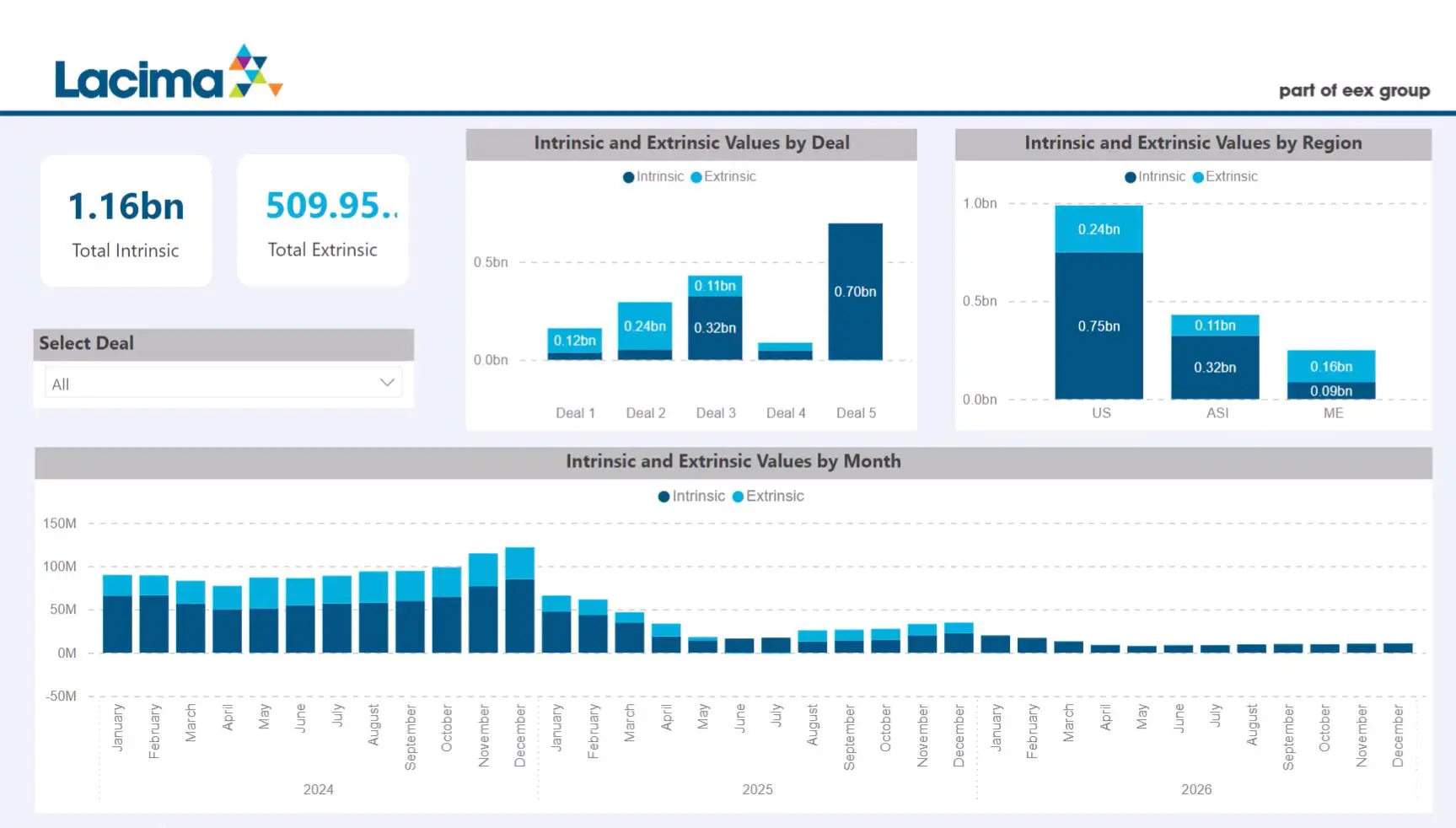
For some energy transactions, extrinsic value may represent only a modest component of overall worth. In others, particularly where significant optionality exists, it can exceed the value identified using current market conditions alone.
Definition
Extrinsic value is the portion of a contract’s or asset’s value that arises from future uncertainty and the ability to make decisions as market conditions evolve. It reflects the value of having choices.
If intrinsic value answers the question:
“What is this worth if I had to decide today?”
Extrinsic value asks:
“What additional value might be realised because I can wait, observe future conditions, and choose the most advantageous course of action?”
Why Extrinsic Value Matters
Energy markets are characterised by uncertainty. Prices fluctuate. Demand changes. Infrastructure constraints emerge. Weather patterns shift. Regional spreads widen and narrow.
Participants that retain flexibility may be able to adapt to those changes, creating significant economic value.
In relatively stable environments, intrinsic value may explain much of a position’s worth. However, as volatility and uncertainty increase, extrinsic value often becomes increasingly important.
Where Extrinsic Value Arises
Extrinsic value is commonly found wherever participants have choices that can be exercised in the future. For example:
LNG Contracts
Destination flexibility, quantity tolerances (UQT and DQT), and cargo timing provisions can allow participants to optimise outcomes as conditions evolve.
Gas Storage
Injection and withdrawal decisions can be adjusted in response to changing forward prices.
Swing Contracts
Volume nominations can be altered within contractual limits to respond to market conditions.
Generation Assets
Operators may choose when to dispatch generation assets depending on evolving spark or dark spreads.
Extrinsic Value During Deal Negotiation
One of the most valuable applications of extrinsic valuation occurs before a contract is executed.
During negotiations, participants often have opportunities to shape the flexibility embedded within an agreement. Volume tolerances, destination rights, timing windows, extension provisions, and other flex components may all be proposed, amended, or removed as commercial discussions evolve.
Understanding the potential value of these provisions before committing to the deal can significantly improve negotiation outcomes.
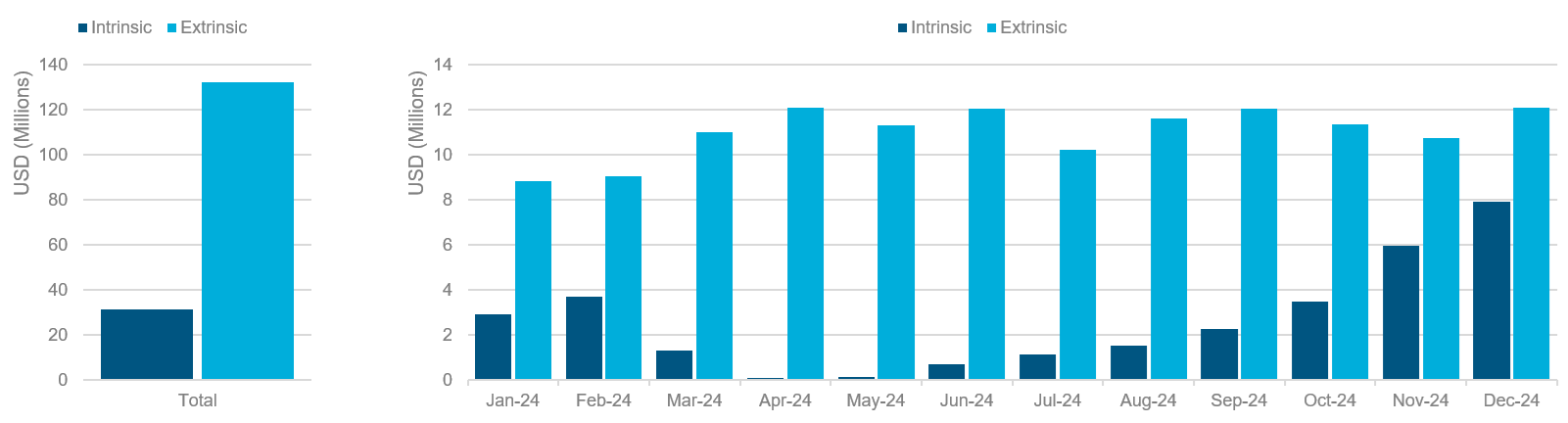
Rather than relying solely on today’s market prices, participants can use analytical models and simulation techniques to estimate how different flex terms may perform across a range of future market conditions.
This allows them to move beyond asking:
“What is this deal worth today?”
and instead ask:
“Which contractual flexibilities are most valuable, and which are worth negotiating for?”
Assessing Extrinsic Value in Practice
While the specific methodology varies depending on the contract structure, participants commonly seek to answer several key questions:
Which Flex Options Create the Greatest Value?
Individual flex provisions can contribute very differently to a deal’s economics. Examples may include:
- upward quantity tolerances (UQT);
- downward quantity tolerances (DQT);
- destination flexibility;
- timing flexibility; and
- extension rights.
Modelling these provisions helps estimate their expected contribution to overall deal value.
Does the Contract Contain Sufficient Flexibility?
In volatile markets, flexibility can provide both upside opportunities and downside protection.
Assessing extrinsic value before execution helps participants determine whether the contract includes enough optionality to support their broader commercial objectives and risk appetite.
How Should Flexibility Be Managed Once the Deal Is Active?
Extrinsic valuation does not end when negotiations conclude.
As market conditions evolve, participants often revisit their analysis to reassess:
- whether flex provisions should be exercised;
- how opportunities have changed;
- whether new risks have emerged;
- how the contract interacts with the wider portfolio.
Regular reassessment helps ensure that flexibility continues to be used effectively throughout the life of the agreement.
How Do Different Market Conditions Affect Value?
Because extrinsic value arises from uncertainty, participants frequently assess contracts under many possible future scenarios.
Simulation techniques allow them to explore questions such as:
- How valuable would destination flexibility become if regional spreads widened?
- What happens if volatility increases?
- How resilient is the deal under adverse conditions?
- Which flex components become most valuable under stress?
This analysis can help participants negotiate from a more informed position and better understand the trade-offs associated with proposed contractual changes.
How Do Different Flex Provisions Interact?
Flexibility provisions do not always operate independently. Exercising one right may:
- reduce the value of another;
- overlap with an existing provision; or
- unlock additional opportunities elsewhere in the contract.
For example, increasing contracted volumes under an upward quantity tolerance may create additional opportunities to optimise destination choices. Conversely, certain provisions may partially duplicate one another.
Understanding these interactions is often as important as valuing the individual flex components themselves.
Common Misunderstandings
Extrinsic Value Is Merely a Small Adjustment
In some transactions, extrinsic value may indeed be modest. However, in contracts with meaningful flexibility operating in volatile markets, it can represent a significant proportion of total value and, in some circumstances, exceed intrinsic value.
More Volatility Is Always Bad
Volatility increases uncertainty, but uncertainty can enhance the value of flexibility. Participants with contractual or operational choices may benefit from having multiple future pathways available.
Extrinsic Value in Professional Practice
Estimating extrinsic value is considerably more challenging than calculating intrinsic value. Participants often employ stochastic models, simulation techniques, and optimisation frameworks to understand how future uncertainty influences decision-making.
The objective is not simply to generate a valuation figure, but to identify where flexibility exists, understand when it becomes valuable, and support better commercial decisions throughout the life of a contract or asset.
Integrated analytical platforms like Lacima Analytics can help participants assess these interactions consistently across increasingly complex portfolios, enabling both stronger deal structuring and more informed ongoing management.
One-Sentence Takeaway
Extrinsic value captures the economic benefit of future flexibility, helping participants both negotiate better deals and make better decisions as market conditions evolve.
Related Learning Resources
Explore how immediate economics provide a useful benchmark for valuation.
What is LNG Contract Optionality?
Discover how contractual flexibility influences the economics of LNG transactions.
What is Monte Carlo simulation?
Learn how participants evaluate uncertainty through simulation techniques.
What is Stochastic Dynamic Programming?
Understand how future decisions can be optimised under uncertain market conditions.