
 Search
Learning | Foundations of Energy Risk
What is Commodity Risk Management?
Introductory Summary
Commodity risk management is the process of identifying, measuring, and managing exposure to commodity price movements and related market uncertainties.
These exposures may arise from fluctuating prices, volatility, supply and demand imbalances, logistics constraints, or operational factors affecting physical and financial commodity portfolios.
Commodity markets often span multiple interconnected sectors such as power, gas, LNG, oil, and emissions, meaning risk rarely sits in isolation.
Many of the techniques used to manage commodity risk rely on quantitative market models. To understand how these models represent uncertainty, see What is Stochastic Modelling?
Definition
Commodity risk management is the structured assessment of risks arising from commodity market exposure.
This includes analysing how changing market conditions may affect:
- portfolio value
- earnings
- cash flow
- physical asset utilisation
- contractual obligations
It is used by:
- trading participants
- utilities
- producers
- industrial consumers
- energy retailers
- infrastructure operators
Why This Matters in Commodity Markets
Commodity markets can be highly volatile and are often influenced by a wide range of external forces including:
- weather
- geopolitics
- logistics and infrastructure constraints
- fuel supply disruptions
- regulatory changes
- changing demand patterns
Many commodity portfolios also contain exposure across multiple interconnected markets.
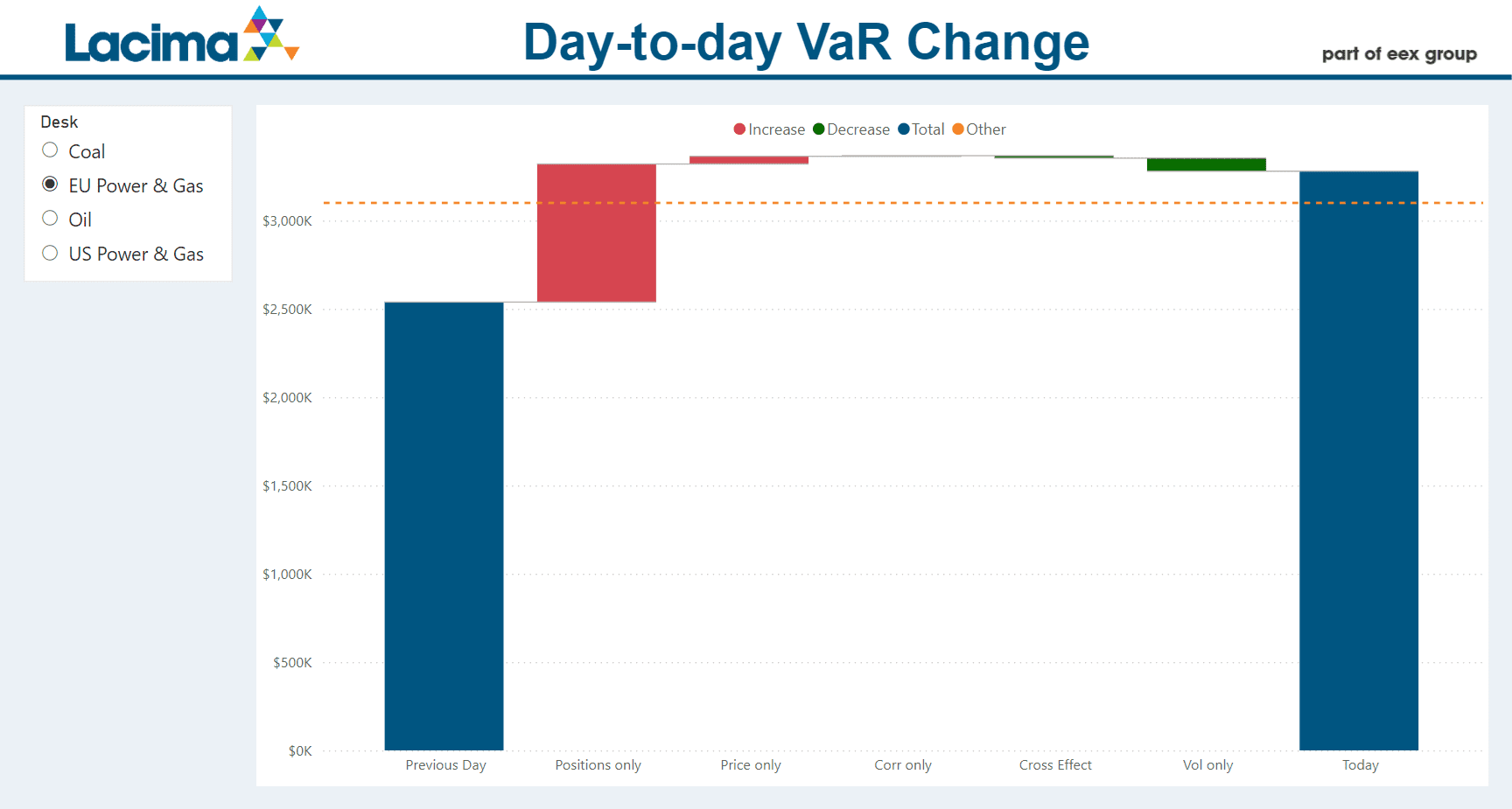
For example:
- power prices may depend on gas, coal, carbon, and renewable generation dynamics
- LNG portfolios may be influenced by regional spreads, shipping availability, and seasonal demand
- industrial commodity portfolios may contain transportation and inventory exposure alongside outright price risk
As portfolios become more complex, participants increasingly require integrated approaches to valuation, exposure analysis, and scenario modelling.
Key Components of Commodity Risk Management
Price Risk
Exposure arising from movements in commodity prices and forward curves. This may include movements in:
- outright prices
- spreads
- regional basis differentials
- seasonal curves
Physical & Operational Risk
Commodity portfolios often contain operational exposure associated with:
- storage
- transportation
- generation assets
- supply obligations
- inventory management
These operational factors can materially affect portfolio risk and valuation outcomes.
Correlation & Interaction Risk
Commodity exposures are frequently interconnected. For example:
- gas and power markets may exhibit strong dependency relationships
- fuel switching dynamics can affect spread behaviour
- regional dislocations can create unexpected portfolio concentration risk
Understanding these relationships is often critical for effective portfolio risk management.
Common Pitfalls and Misconceptions
Commodity Exposures Can Be Analysed in Isolation
Commodity exposures are often interconnected across:
- fuels
- regions
- transportation systems
- generation assets
Analysing positions independently can overlook important portfolio interactions and spread risks.
Physical Constraints Have Little Impact on Commodity Risk
In many commodity markets, physical infrastructure and operational flexibility significantly influence exposure and valuation. Examples include:
- storage limitations
- pipeline capacity
- shipping availability
- generation dispatch constraints
These characteristics can create risk profiles that differ materially from purely financial portfolios.
How Commodity Risk Management is Addressed in Practice
In practice, participants typically rely on integrated risk and valuation applications to support:
- portfolio modelling
- scenario analysis
- stress testing
- exposure aggregation
- simulation and optimisation
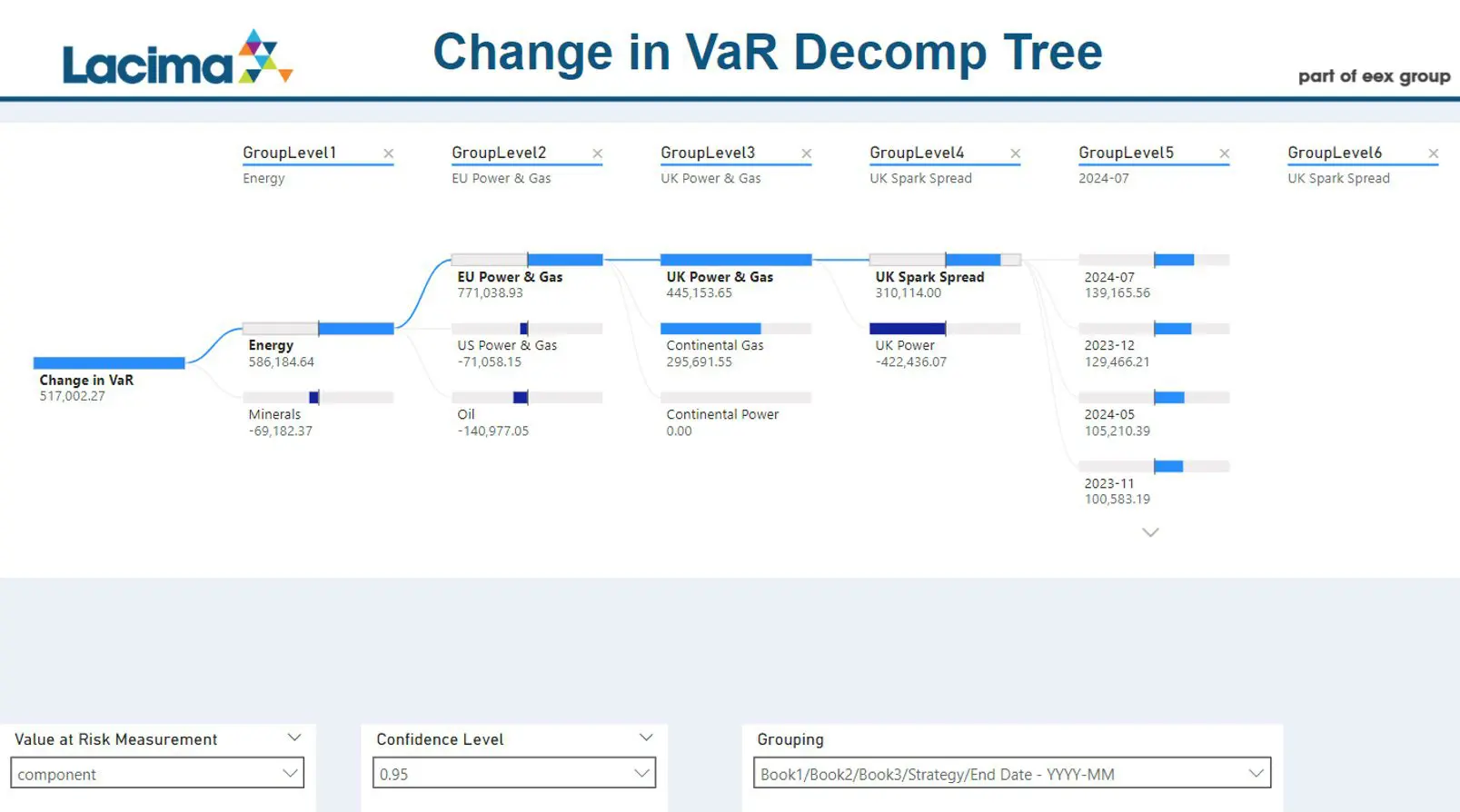
As commodity portfolios grow in scale and complexity, participants increasingly require consistent analytics across trading, risk, finance, and operational teams. Applications such as Lacima Analytics provide integrated valuation and risk analysis across physical and financial commodity portfolios.
One-Sentence Takeaway
Commodity risk management combines valuation, quantitative analytics, and portfolio analysis to identify, measure, and manage price and operational exposure across interconnected physical and financial commodity markets.
Related Learning Resources
What is Energy Risk Management?
Explore how energy risk management is applied across physical and financial energy portfolios.
Understand how participants measure and aggregate exposure across commodity portfolios.
Explore how stress testing is used to analyse extreme market scenarios in commodity portfolios.
What is Monte Carlo simulation?
Learn how simulation techniques are used to model uncertainty and optionality in commodity markets.