
 Search
Learning | Quantitative Modelling Concepts
What is Mean Reversion Jump Diffusion (MRJD)?
Introductory Summary
Many energy and commodity prices exhibit a tendency to move back towards longer-term equilibrium levels over time. This behaviour, known as mean reversion, forms the basis of many quantitative price models.
However, real markets do not always evolve smoothly.
Unexpected events such as supply disruptions, extreme weather, infrastructure failures, or geopolitical developments can cause prices to move sharply over short periods. These sudden movements are difficult to represent using a standard mean-reverting model alone.
A Mean Reversion Jump Diffusion (MRJD) model extends the traditional mean-reverting framework by incorporating the possibility of these occasional price jumps.
The result is a model that captures both the day-to-day behaviour of commodity prices and the infrequent but important events that can significantly influence valuation and risk.
Definition
A Mean Reversion Jump Diffusion (MRJD) model is a stochastic price model that combines two distinct characteristics of many energy and commodity markets:
1. prices generally tend to revert towards a longer-term equilibrium level; and
2. prices may occasionally experience sudden, unexpected jumps.
This reflects the behaviour observed in many markets, where prices fluctuate continuously through time while tending towards longer-term equilibrium levels. In many energy and commodity markets, however, this normal price evolution may occasionally be interrupted by sudden, significant market events. Between jumps, prices evolve according to the normal mean-reverting process.
By combining these two behaviours within a single stochastic process, MRJD models often provide a more realistic representation of markets that experience both gradual price movements and occasional extreme events.
Why Mean Reversion Alone Is Sometimes Not Enough
Standard mean-reverting models provide an effective representation of price behaviour in many situations.
Some energy and commodity markets, however, occasionally experience price movements that are significantly larger than the normal stochastic process would typically generate. Although these events may occur relatively infrequently, they can materially influence valuations, hedge performance, and risk measures.
Extending the model to incorporate occasional jumps allows these events to be represented explicitly while retaining the underlying mean-reverting behaviour.
Rather than replacing mean reversion, MRJD builds upon it to represent a broader range of observed market behaviour.
How an MRJD Model Works
An MRJD model combines two complementary processes:
1. The first describes the normal evolution of prices. Most of the time, prices fluctuate according to a mean-reverting stochastic process, reflecting the tendency for many commodity prices to move back towards longer-term equilibrium levels
2. The second component introduces the possibility of occasional jumps
At random points in time, the model allows prices to move suddenly by an amount determined by the jump process. Following the jump, prices once again evolve according to the normal mean-reverting dynamics.
This enables simulations to capture both the routine behaviour observed during normal market conditions and the less frequent events that can produce unusually large price movements.
Why MRJD Matters
Many quantitative valuation techniques depend on generating realistic future price scenarios. If occasional price shocks cannot be represented, valuations and risk measures may underestimate the potential impact of extreme market events.
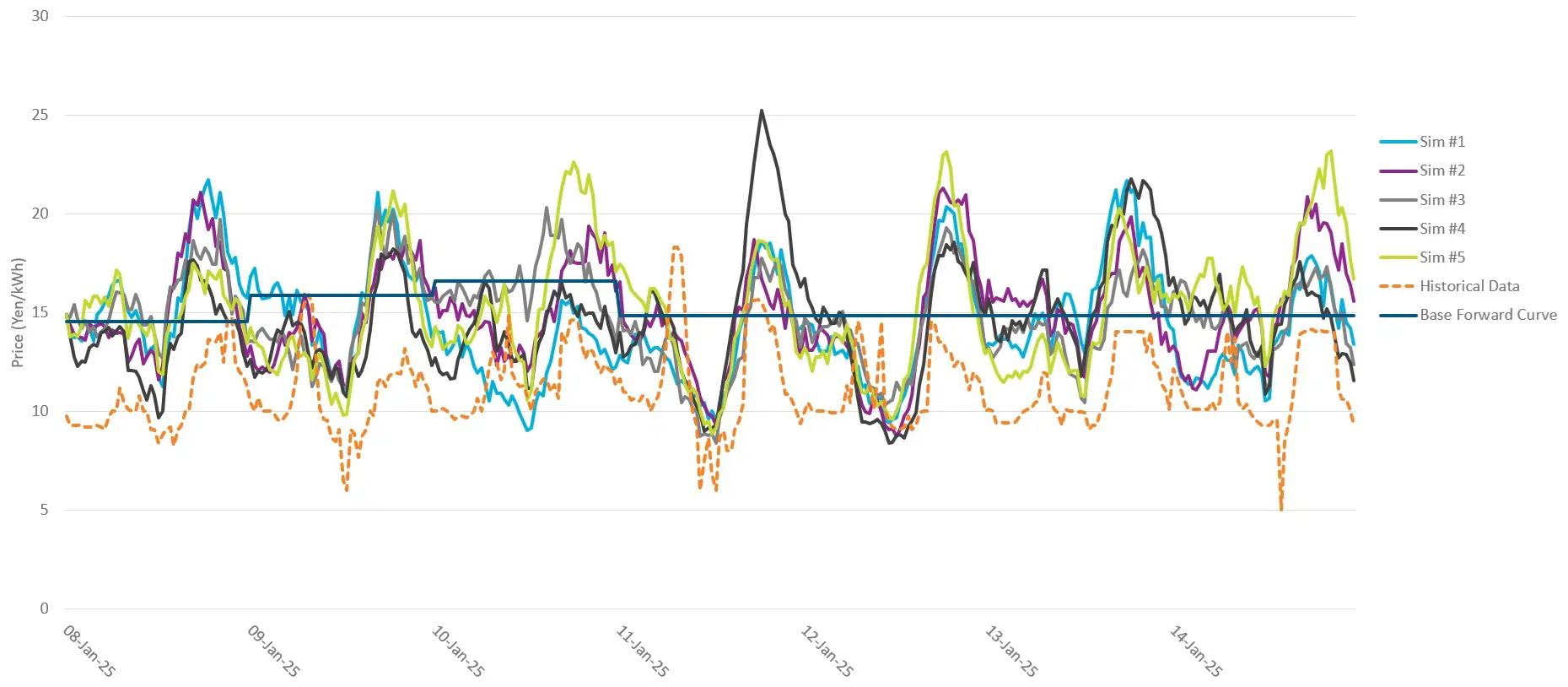
By incorporating occasional jumps into the simulation process, MRJD models can produce price paths that more closely resemble those observed in some energy and commodity markets.
This can be particularly valuable when analysing assets whose value is sensitive to both day-to-day price movements and infrequent but material market events.
Examples include:
- energy options;
- structured commodity contracts; and
- enterprise portfolio risk analysis.
MRJD Versus Standard Mean Reversion
Both models recognise that many prices tend to revert towards longer-term equilibrium levels. The difference lies in how unusual market events are represented.
A standard mean-reverting model assumes prices evolve continuously throughout the simulation. An MRJD model allows that normal evolution to be interrupted by occasional jumps before prices gradually return towards their longer-term equilibrium.
Whether this additional complexity is appropriate depends on the behaviour of the market being modelled and the objectives of the analysis.
Common Pitfalls and Misconceptions
MRJD Helps Predict When Price Shocks Will Occur
MRJD models do not predict future market events or identify when a jump will occur. Instead, they recognise that unexpected price shocks are a characteristic of some markets and incorporate that possibility into simulated price paths.
Every Commodity Market Requires an MRJD Model
Not necessarily. Many markets can be represented adequately using standard mean-reverting models. The choice of model depends on the characteristics of the market being analysed and whether occasional price jumps materially influence valuation or risk.
MRJD Replaces Mean Reversion
Mean reversion remains a fundamental component of the model. MRJD simply extends the traditional mean-reverting framework by introducing an additional mechanism to represent occasional discontinuous price movements.
How MRJD Models Are Applied in Practice
Practitioners rarely begin by deciding to use an MRJD model. Instead, they first assess whether a standard mean-reverting model adequately represents the behaviour of the market being analysed.
If historical prices exhibit occasional shocks that materially influence valuation or risk, extending the model to include jumps may produce a more realistic representation of future market behaviour.
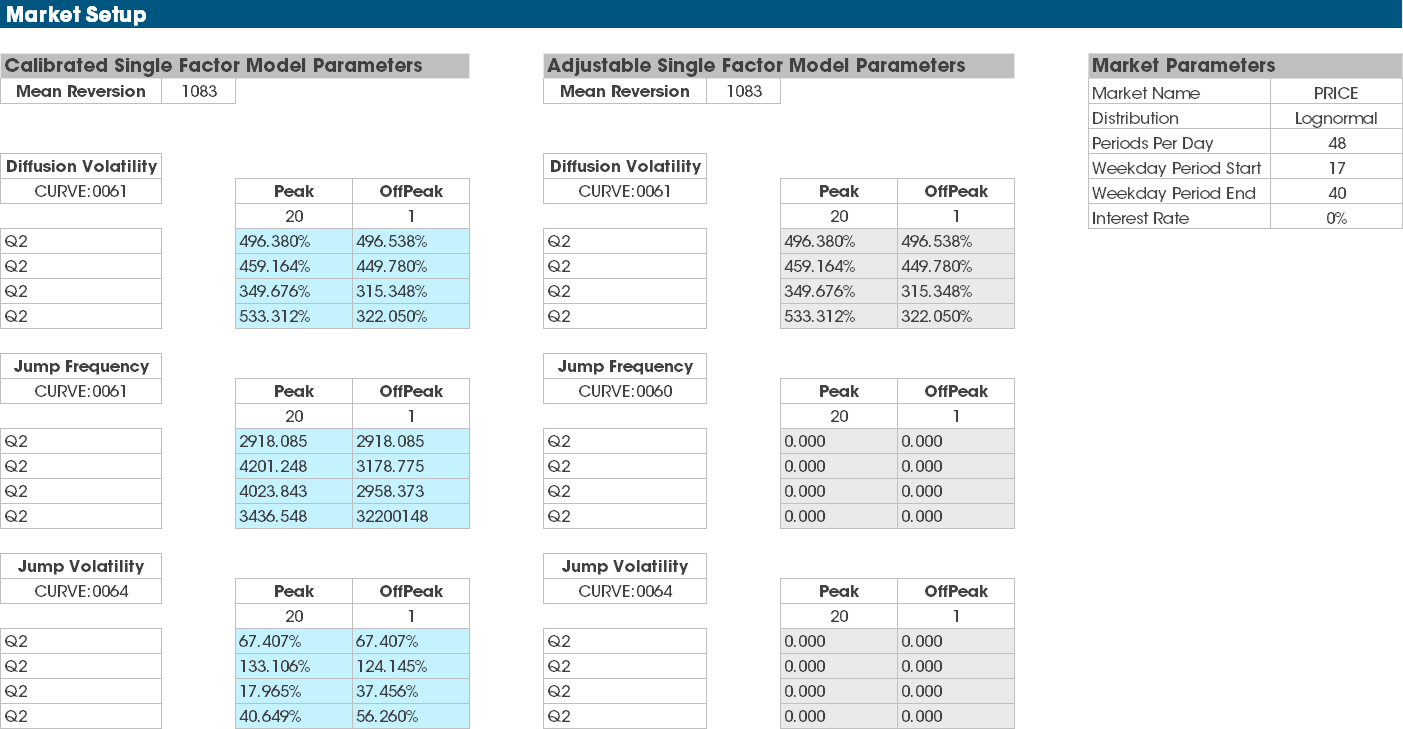
In practice, MRJD models are typically considered alongside other modelling approaches, with practitioners comparing alternative specifications to determine which best reflects the market being analysed. This broader modelling framework often incorporates forward curves, volatility calibration, correlation structures, and simulation techniques to produce a consistent representation of future market behaviour.
Integrated analytics platforms such as Lacima Analytics enable organisations to calibrate, compare, and govern multiple stochastic model specifications within a common analytical framework, helping ensure consistency across valuation, optimisation, and enterprise risk analysis.
One-Sentence Takeaway
A Mean Reversion Jump Diffusion (MRJD) model extends standard mean-reverting price models by incorporating occasional price jumps, allowing simulations to better represent both normal market behaviour and unexpected price shocks.
Related Learning Resources
Learn why many energy and commodity prices tend to move back towards longer-term equilibrium levels and how this behaviour forms the foundation of many stochastic price models.
What is a Single-Factor Model?
Discover how a single stochastic process can be used to represent future commodity price behaviour and where MRJD models fit within this modelling framework.
Learn how multiple stochastic factors can be combined to represent different characteristics of energy market behaviour within a single model.
Explore how stochastic models generate realistic future price scenarios for valuation, simulation, and quantitative risk analysis.