
 Search
Learning | Quantitative Modelling Concepts
What is Path Dependency?
Introductory Summary
Many valuation problems depend only on where the market is today. Others also depend on how the asset itself has evolved over time.
Consider a gas storage facility. Every operating decision changes the state of the asset. Injecting gas increases the inventory available for future withdrawals, while withdrawing gas generates immediate revenue but reduces the flexibility available in future periods. Because each decision changes the state of the asset, today’s optimal decision depends on the operating state that previous decisions have created.
This characteristic is known as path dependency.
Understanding path dependency is essential when valuing assets whose future decisions depend not only on current market conditions, but also on the operating state created by earlier decisions.
Definition
Path dependency describes situations where the value of an asset, contract, or portfolio depends not only on its current state, but also on how previous decisions have shaped that state.
For many financial instruments, today’s market conditions contain all the information needed to estimate value. Path-dependent assets are different.
Previous operating decisions determine the current operating state, which in turn determines the opportunities that remain available. As a result, valuing a path-dependent asset requires the valuation model to track how the asset evolves through time rather than considering each point in isolation.
Why Path Dependency Matters
Many operational energy assets evolve as decisions are made.
For assets such as gas storage, every operating decision influences the flexibility available in future periods. For example:
- injecting gas reduces immediate cashflow but increases the inventory available for future withdrawals;
- withdrawing inventory today increases immediate cashflow but reduces future operating flexibility; and
- operating constraints may change as the asset’s state changes, such as inventory-dependent injection and withdrawal rates (ratchets).
Similar path-dependent behaviour also occurs in other operational assets, including:
- grid-scale battery storage;
- hydro reservoirs;
- swing gas contracts;
- tolling agreements; and
- thermal generation assets with operational constraints such as ramp rates, minimum up/down times, or start-up costs.
This means the best decision today depends on the state created by previous decisions.
Path Dependency in Gas Storage
Gas storage provides one of the clearest examples of a path-dependent asset. Every operating decision changes the inventory held within the storage facility. That inventory then influences the operating choices available on subsequent periods.
Injecting gas creates additional opportunities for future withdrawals. Withdrawing gas generates immediate cashflow but reduces the inventory available for future sales. Choosing to do nothing preserves flexibility while waiting for potentially more favourable market conditions.
Because each decision changes the operating state of the asset, storage valuation cannot be performed by considering each day independently. Instead, the sequence of decisions must be evaluated across the life of the asset.
This is one of the reasons gas storage valuation is fundamentally an optimisation problem.
Why Simulation Becomes Important
Path dependency is one reason stochastic simulation plays such an important role in modern energy valuation. Each simulated future price path creates a different sequence of market conditions.
As prices evolve along that path, the optimal operating decisions also evolve. Those decisions continually change the state of the asset, influencing every subsequent decision.
The valuation therefore depends on both:
- the simulated market prices; and
- how the asset evolves as decisions are made throughout each simulation.
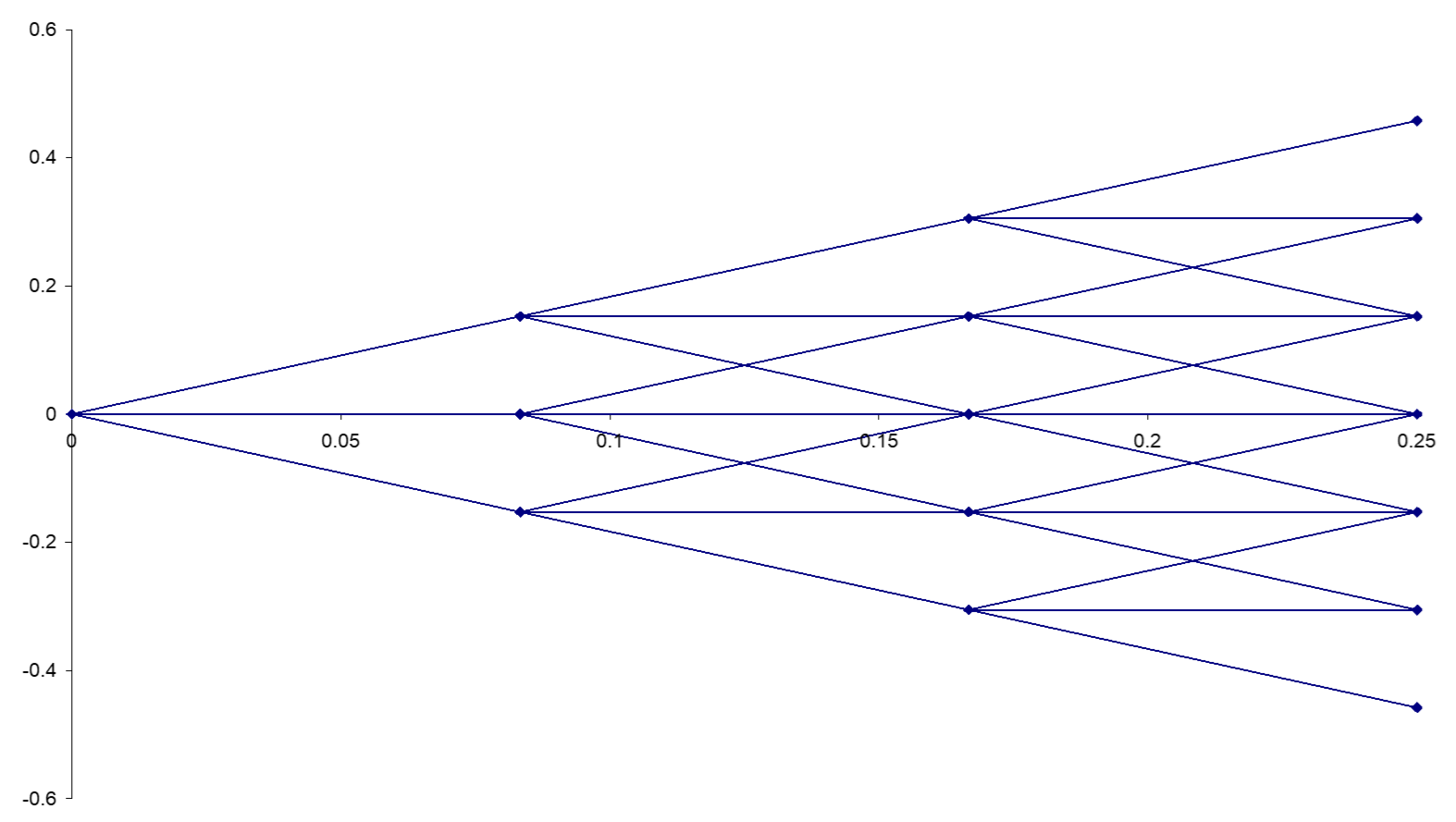
Whether using Monte Carlo simulation or lattice-based methods such as trinomial trees, practitioners evaluate many possible future states of the market to estimate the value of assets whose future decisions depend on both prices and operational flexibility.
How Optimisation Handles Path Dependency
Because every decision influences the opportunities that follow, path-dependent problems cannot usually be solved by evaluating decisions one at a time.
Instead, optimisation algorithms determine the sequence of decisions that maximises value over the life of the asset while continually updating its operating state.
For example, when valuing gas storage using a trinomial tree, backward induction determines the optimal operating decision at every future node before working back towards today’s market conditions.
When using Monte Carlo simulation, optimisation is performed independently along each simulated price path before the results are combined to estimate expected value and risk.
Although the numerical techniques differ, both approaches recognise the same principle: every decision should reflect both its immediate value and its effect on future operating flexibility.
Common Pitfalls and Misconceptions
Path Dependency Means Prices Depend on the Past
Not necessarily. Path dependency usually refers to the evolution of the asset or contract being valued rather than the behaviour of market prices themselves. A storage facility becomes path dependent because previous operating decisions continually change the state of the asset.
Every Valuation Problem Is Path Dependent
Many financial instruments depend only on current market conditions. Path dependency becomes important when previous decisions determine the current operating state and therefore influence future value.
Current Market Prices Contain All the Information Needed
Not always. For many operational assets, current prices alone are insufficient.
Inventory levels, state of charge, exercised rights, operating constraints, and previous decisions may all influence the optimal strategy going forward.
How Path Dependency Is Addressed in Practice
Representing path dependency requires more than simulating future market prices. The valuation model must also keep track of how the asset itself evolves as decisions are made.
In practice, stochastic price models are combined with optimisation algorithms that update the operating state after every simulated decision. This allows each future decision to reflect both changing market conditions and the flexibility that remains available.
Applications such as Lacima Analytics bring these capabilities together within a common analytical framework, enabling organisations to value path-dependent assets consistently while supporting optimisation, simulation, and enterprise risk analysis using the same underlying market model.
One-Sentence Takeaway
Path dependency recognises that the value of many operational assets depends not only on their current state, but also on how previous decisions have shaped the opportunities that remain available.
Related Learning Resources
See how path dependency influences storage valuation by affecting future operating decisions and embedded optionality.
Learn how different simulated market scenarios are generated and why each path can produce different operational decisions.
What is a Trinomial Tree Model?
Discover how backward induction evaluates the optimal decision at every future state for path-dependent valuation problems.
What is Monte Carlo simulation?
Explore how thousands of simulated future paths are used to value assets whose future decisions depend on both market uncertainty and operational flexibility.