
 Search
Learning | Energy & Commodity Derivatives
What is a Swing Contract?
Introductory Summary
Energy demand rarely follows a perfectly predictable path.
A gas retailer may experience higher-than-expected customer demand during a cold winter. An industrial consumer may need more fuel than originally forecast. A power market participant may need greater flexibility to respond to changing market conditions.
Swing contracts were developed to accommodate this uncertainty.
By allowing the holder to vary the quantity of energy purchased or delivered within agreed limits, swing contracts provide valuable operational flexibility while reducing the need to commit to fixed volumes before actual demand is known.
In many energy markets, that flexibility can be worth as much as, or even more than, the commodity itself.
Definition
A swing contract gives the holder the right to vary the volume of commodity purchased, sold, or delivered over a specified period, subject to predefined contractual limits.
The holder can typically choose when and how much volume to nominate within those limits as market conditions, operational requirements, or demand forecasts evolve.
This flexibility gives the holder the ability to respond to changing market conditions, creating embedded optionality within the contract.
Why Swing Contracts Exist
Many commodity contracts require fixed quantities to be delivered at fixed times. While this creates certainty, it can also create risk.
If actual demand differs from forecast demand, participants may find themselves:
- over or under-contracted
- exposed to spot market prices
- carrying unnecessary balancing costs
Swing contracts help manage this problem by introducing controlled flexibility. Rather than committing to a single fixed outcome, the holder retains the ability to adjust future decisions within an agreed range.
This can be particularly valuable in markets where demand is influenced by:
- weather conditions
- industrial activity
- customer consumption patterns
- generation requirements
Key Features of a Swing Contract
Although contract structures vary, most swing agreements contain several common elements:
Minimum and Maximum Volumes
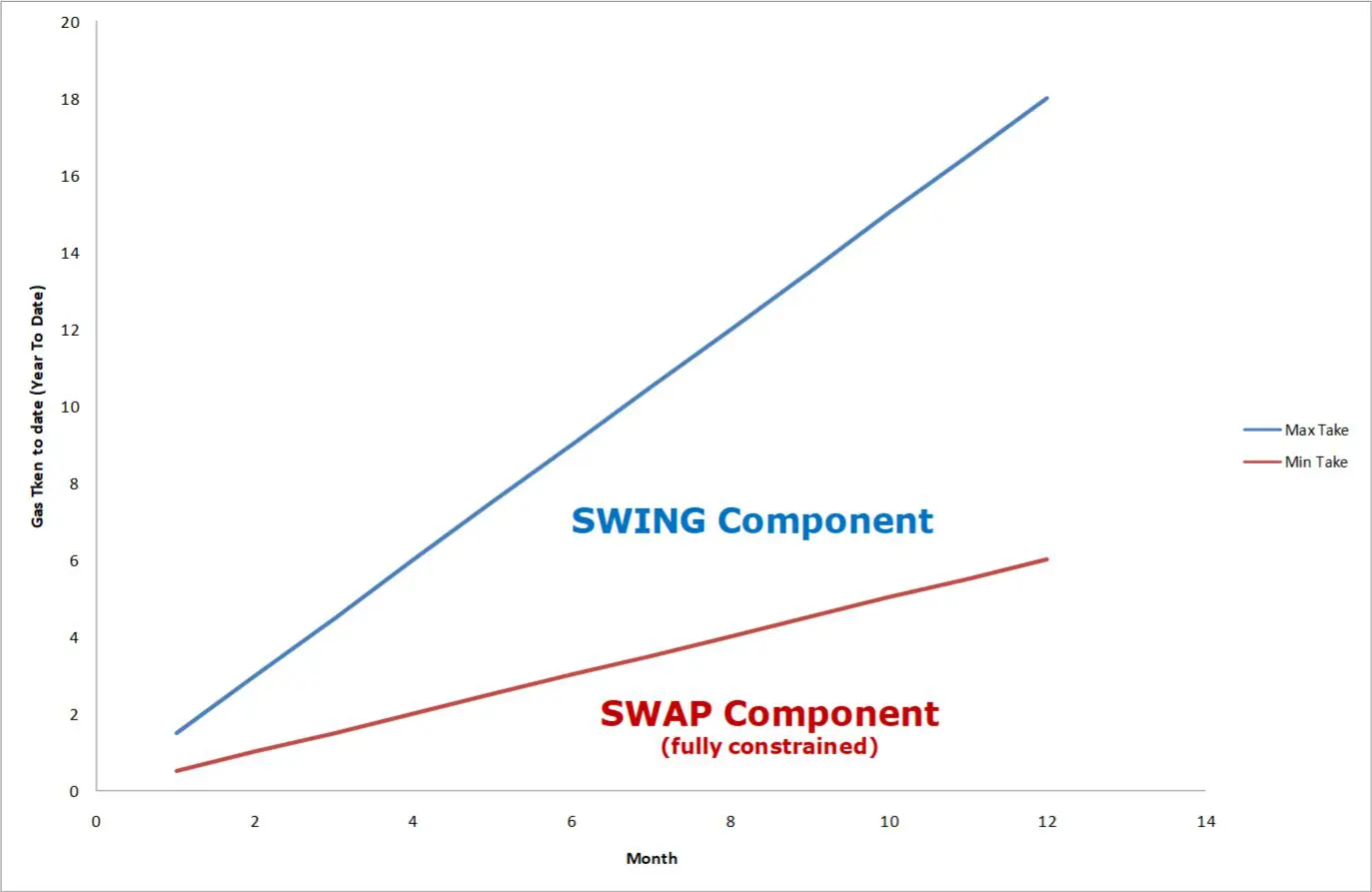
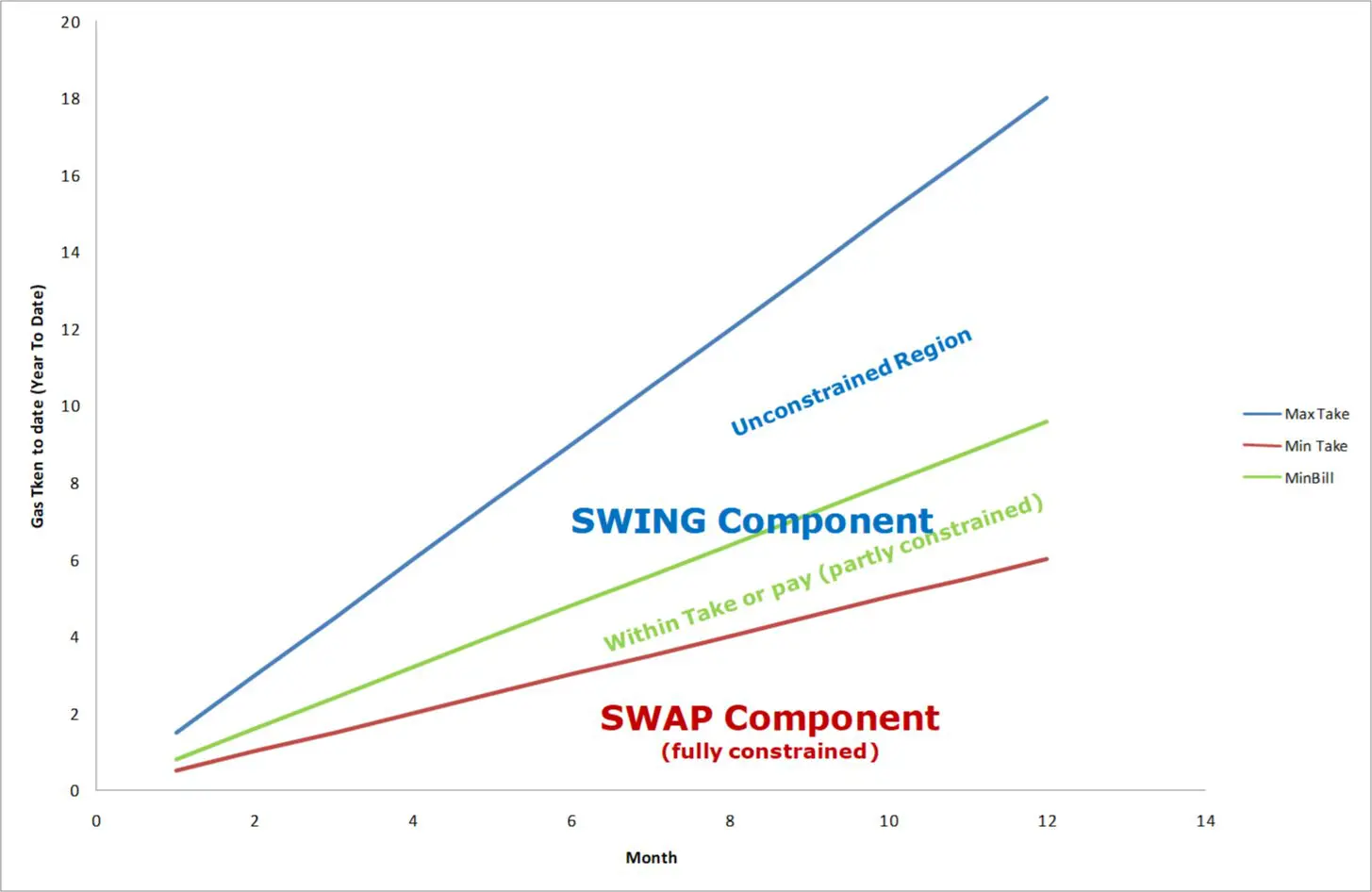
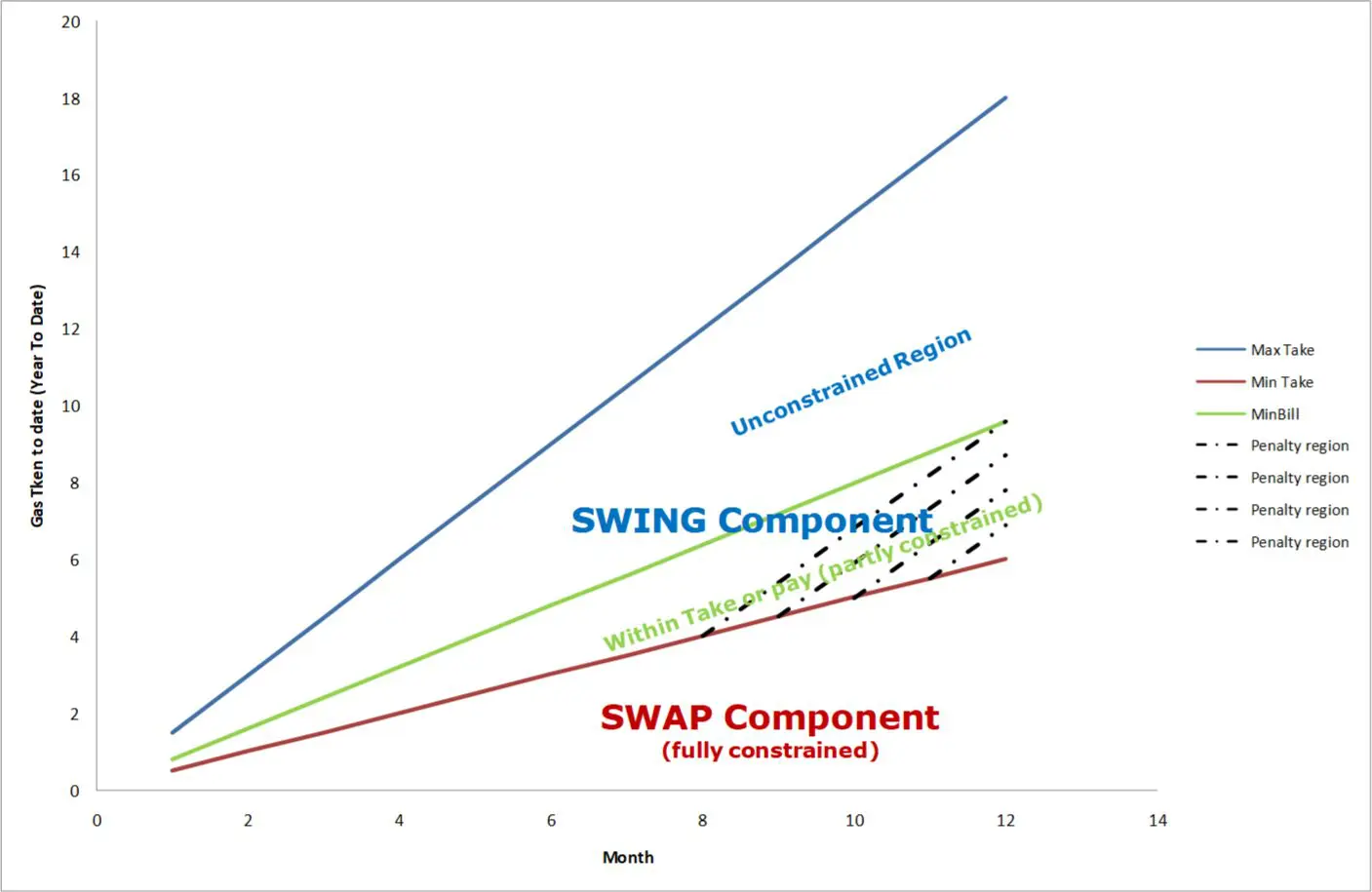
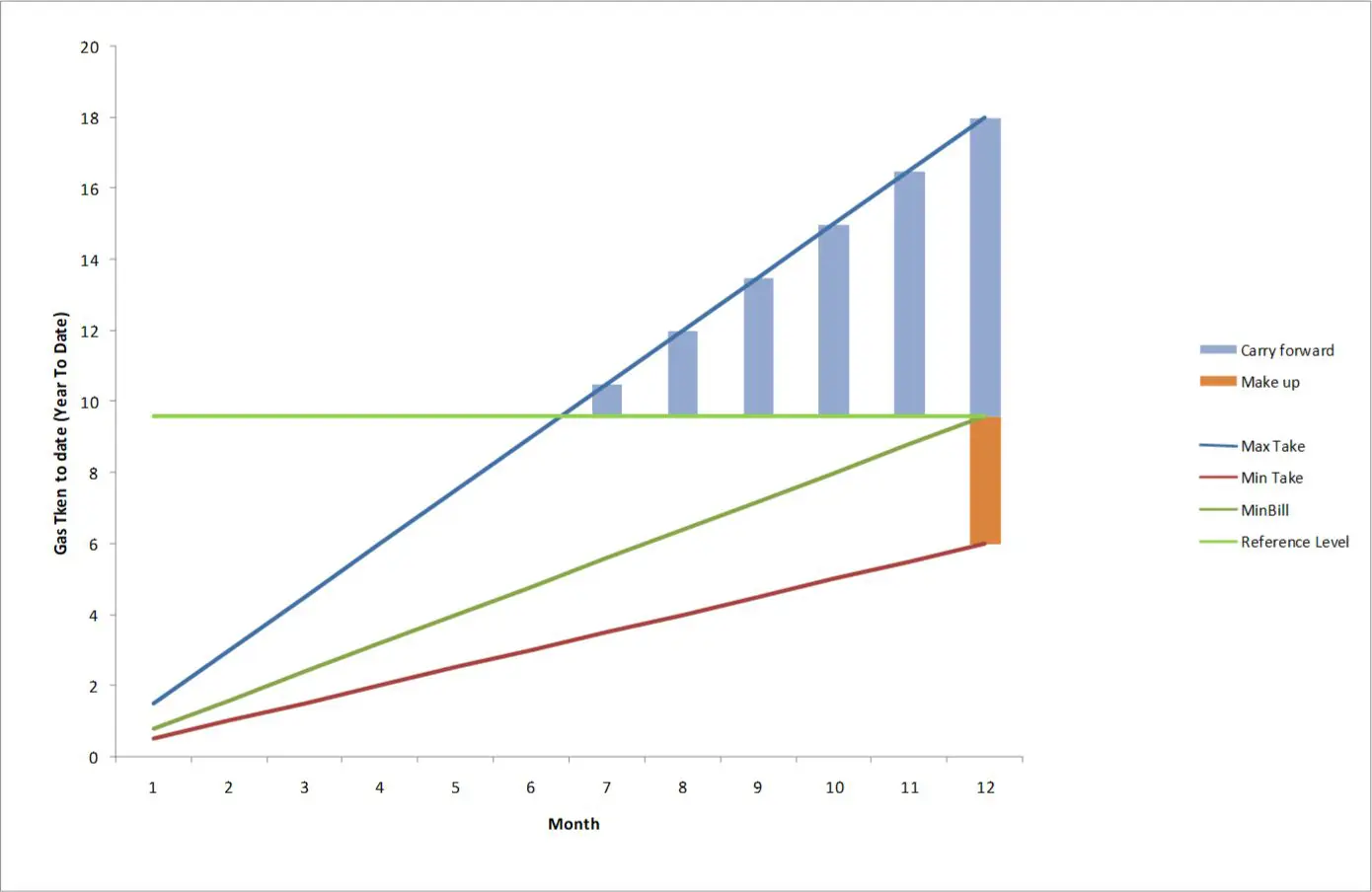
The contract specifies the minimum and maximum quantities that may be nominated or delivered over a given period. These limits define the operational boundaries within which the holder may vary volumes.
Exercise Flexibility
The holder determines when and how much volume to utilise within the permitted maximum and minimum contractual limits. The value of the contract often depends on how effectively this flexibility is exercised.
Contract Duration
Swing contracts usually apply over a defined delivery period, such as a month, quarter, season, or year.
Operational Constraints
Physical limitations like transportation capacity, storage availability, delivery restrictions and operational scheduling requirements may restrict how flexibility can be used.
Why Swing Contracts Are Valuable
The value of a swing contract comes from flexibility – if market conditions change, the holder can adapt their decisions rather than being locked into a single predetermined outcome.
For example, during periods of high market prices, a participant may choose to maximise contracted volumes. During periods of lower demand or less favourable economics, they may nominate lower quantities.
This ability to respond to future uncertainty creates optionality and can generate significant commercial value.
Importantly, the value of a swing contract is not determined solely by today’s market conditions. It depends on how future prices, demand patterns, and operational requirements may evolve throughout the life of the contract.
Accordingly, the ability to analyse these conditions and assess the value of different exercise decisions is key to realising the contract’s commercial value. That’s where analytical solutions such as Lacima Analytics can help.
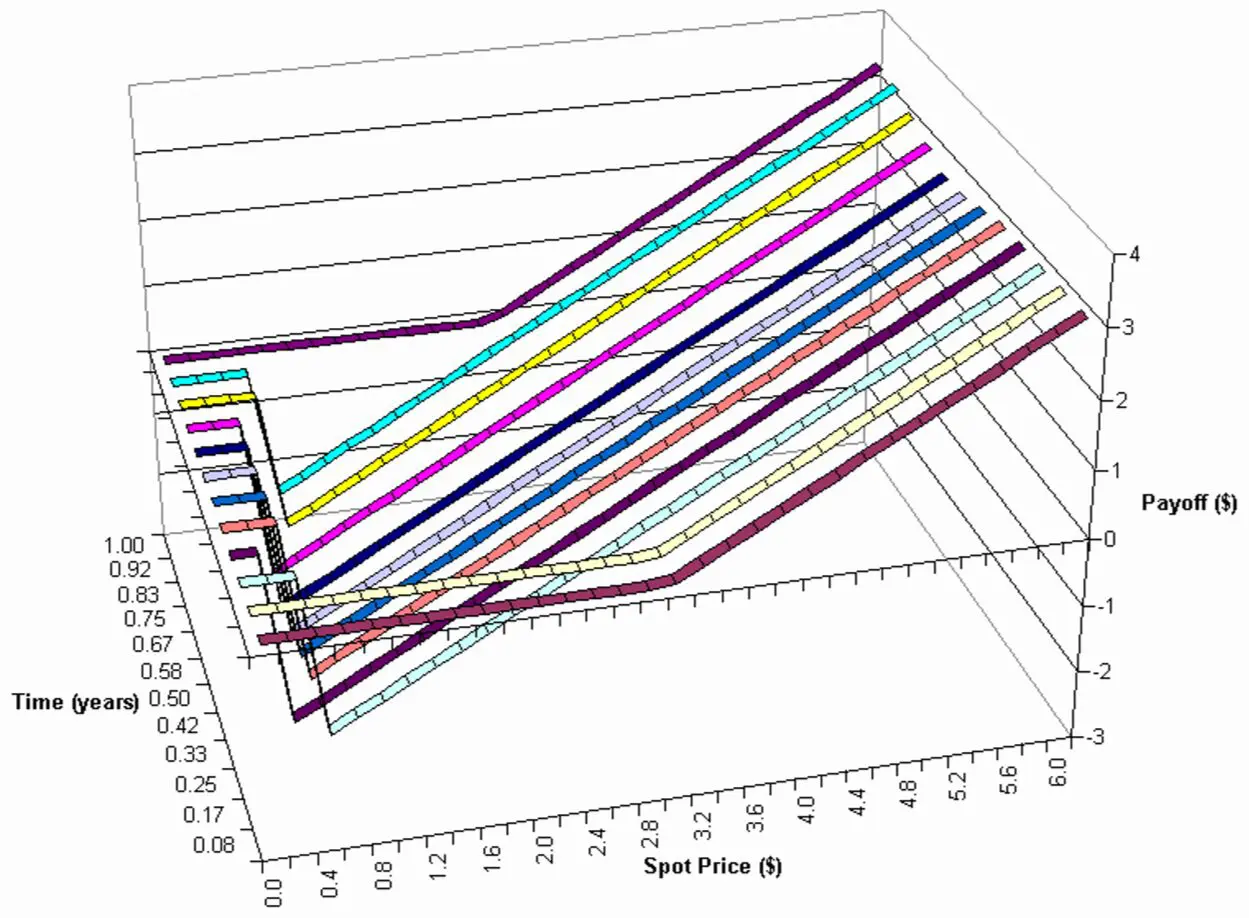
Swing Contracts in Natural Gas Markets
Swing contracts are most commonly associated with natural gas markets. Gas retailers and large consumers often face uncertainty regarding future demand, particularly during periods of changing weather conditions.
A swing contract allows them to:
- secure supply in advance;
- accommodate demand variability;
- reduce balancing risk;
- improve procurement flexibility.
For this reason, swing contracts have become a common component of many gas supply portfolios.
Common Misunderstandings
A Swing Contract is Just Another Name for a Commodity Supply Agreement
While swing contracts are a form of commodity supply agreement, a standard supply contract typically requires fixed or pre-determined volumes. The value of a swing contract lies in the flexibility it adds on top of this structure, allowing the holder to vary volumes within agreed limits.
This embedded optionality means the ability to make future decisions can be worth considerably more than participants initially realise.
The Value of a Swing Contract Depends Only on Current Prices
The value of a swing contract cannot be determined simply by looking at current market prices. Future volatility, uncertainty, and market dynamics all influence the value of the flexibility being provided.
Swing Contracts Are Valued Like Standard Forward Contracts
Because future decisions depend on future market conditions, swing contracts are generally more complex to value than standard forward contracts. Sophisticated valuation techniques are often required to properly assess the value of the embedded optionality.
Swing Contracts in Practice
Swing contracts sit at the intersection of trading, risk management, and physical operations. They are widely used to manage uncertainty while preserving commercial flexibility.
However, determining the value of that flexibility is rarely straightforward. Participants must consider a wide range of possible future market outcomes, operational constraints, and exercise decisions.
This is one reason advanced stochastic modelling techniques such as Trinomial Trees and Monte Carlo simulation are commonly used when valuing swing contracts and other forms of energy optionality.
One-Sentence Takeaway
A swing contract creates value by allowing participants to adjust future commodity volumes within agreed limits, providing flexibility in the face of uncertain market and operational conditions.
Related Learning Resources
Learn the fundamentals of option contracts and how optionality creates value in energy markets.
What is Gas Storage Optionality?
Explore another important form of embedded optionality found within physical energy assets.
What is Monte Carlo simulation?
Understand how Monte Carlo simulation is used to analyse uncertainty and optionality in energy markets.
Learn the conceptual process used to estimate the value of swing flexibility in energy portfolios.