
 Search
Learning | Quantitative Modelling Concepts
What is Calibration Risk?
Introductory Summary
Building a quantitative model is only the first step.
Before it can be used for valuation, optimisation, or risk analysis, the model must first be calibrated so that it reflects the behaviour of the market being analysed.
This involves estimating model parameters from observable market information to allow the model to accurately reproduce important characteristics such as price volatility, mean reversion, correlations, and other aspects of market behaviour.
If the calibration does not accurately reflect current market conditions, even an appropriate modelling framework can produce unreliable results.
This exposure is known as calibration risk.
Definition
Calibration risk is the risk that a quantitative model doesn’t provide an appropriate representation of the market because its parameters or assumptions do not accurately reflect observable market behaviour.
Calibration determines how a model behaves. Depending on the modelling framework, this may involve estimating parameters such as:
- volatility;
- mean reversion;
- jump behaviour;
- correlations; and
- other parameters estimated from observable market behaviour.
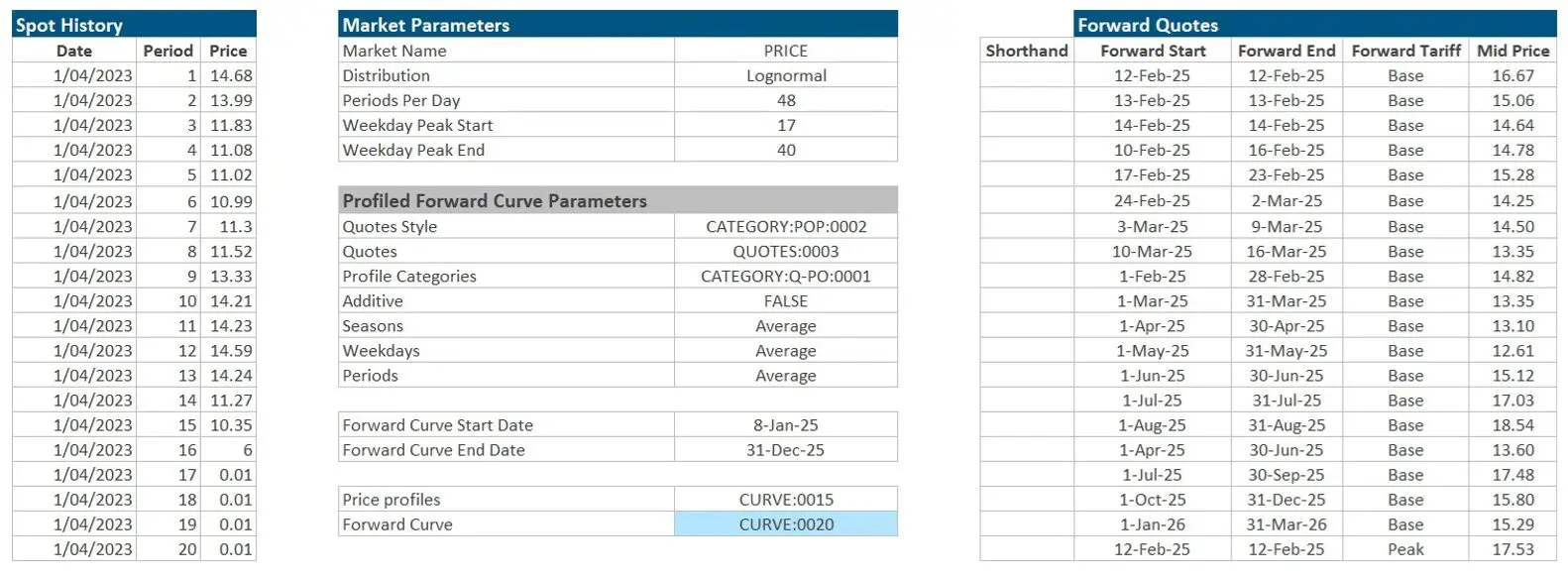
Because every valuation, optimisation, and simulation depends on these assumptions, poor calibration can affect every output produced by the model.
Why Calibration Matters
Calibration is what transforms a mathematical model into a practical market model.
“A model can only ever be as good as its calibration.”
Two organisations may use exactly the same stochastic modelling framework yet produce very different analytical results because they have calibrated their models differently.
For example, a mean reversion model requires estimates of parameters such as long-term equilibrium prices, volatility, and the speed at which prices revert towards equilibrium. Different calibration assumptions can produce different simulated price behaviour and, consequently, different valuations, optimisation decisions, and risk measures.
Choosing an appropriate modelling framework is therefore only part of the challenge. The model must also be calibrated so that it provides a realistic representation of the market being analysed.
Calibration Is More Than Curve Fitting
Calibration is sometimes misunderstood as simply adjusting parameters until a model reproduces historical prices.
In practice, calibration is a broader exercise. The objective is to build a coherent market model that reflects observable market behaviour while remaining appropriate for the valuation or risk analysis being performed.
Depending on the application, practitioners may calibrate models using:
- historical spot prices;
- forward curves;
- option market prices;
- implied volatilities;
- correlations between market variables; and
- other observable market information.
Observable market information provides the evidence from which model parameters are estimated. For example, historical prices may be used to estimate mean reversion, while option prices may be used to calibrate implied volatility.
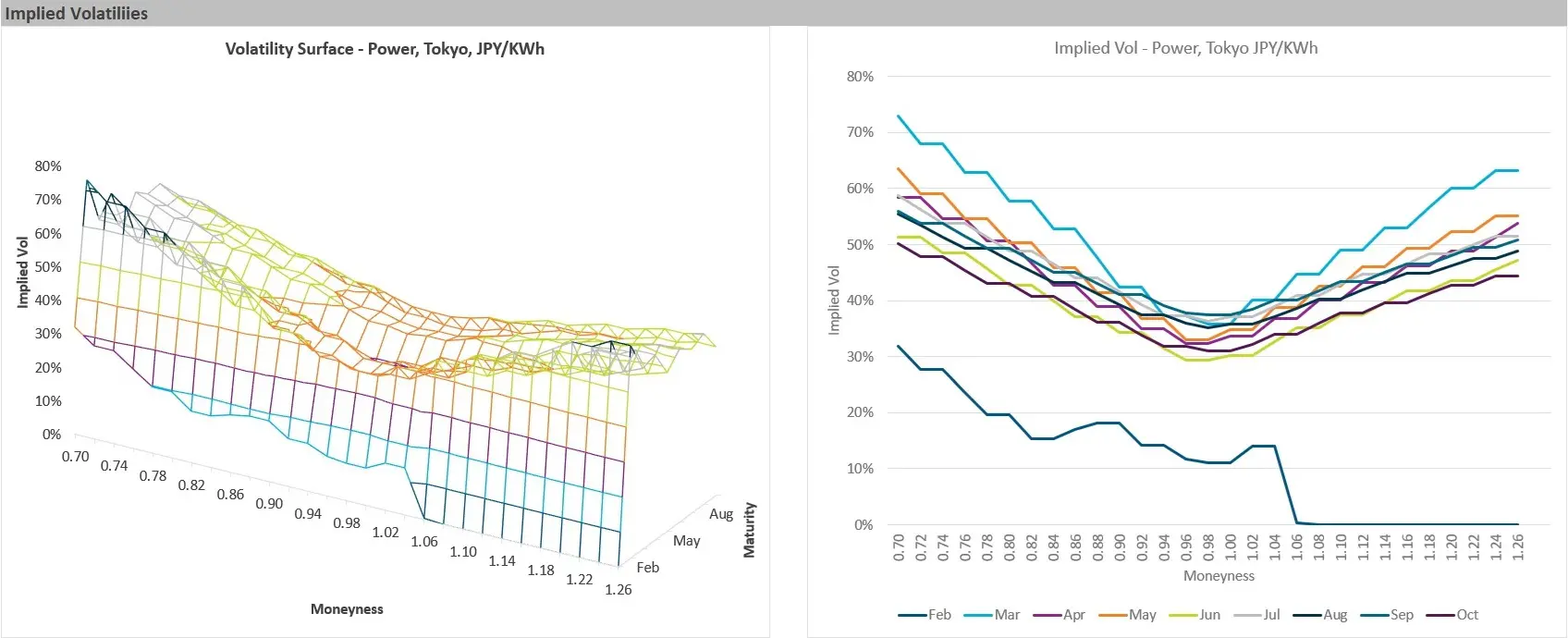
Professional judgement remains an important part of the process. The objective is not to reproduce every historical price movement perfectly, but to create a market model that behaves realistically for the purpose of the analysis.
Sources of Calibration Risk
Calibration risk can arise for many reasons. Common sources include:
- limited or poor-quality market data;
- market conditions changing after the model has been calibrated;
- inappropriate assumptions about model parameters;
- overfitting the model to historical observations; and
- using parameters that are no longer representative of current market behaviour.
For this reason, calibration is rarely treated as a one-off exercise. Models are typically reviewed and recalibrated as markets evolve.
Common Pitfalls and Misconceptions
Model Calibration is a One-off Process
Market conditions continually change. Model parameters that accurately represented the market several months ago may no longer be appropriate today. Periodic review and recalibration are therefore an important part of model governance.
A More Complex Model Eliminates Calibration Risk
Not necessarily. Even sophisticated stochastic models depend on the quality of their calibration. A poorly calibrated complex model may produce less reliable results than a simpler model that has been calibrated appropriately.
Calibration Guarantees Accurate Forecasts
Calibration helps ensure a model reflects observed market behaviour, but it does not enable the model to predict future prices with certainty. Unexpected market events remain inherently unpredictable.
How Calibration Risk Is Managed in Practice
Calibration rarely supports just one analytical task.
The same calibrated market model may be used to value physical assets, optimise storage operations, price structured contracts, measure portfolio risk, perform stress testing, and analyse investment opportunities. For this reason, maintaining a consistent market representation across the organisation is often just as important as the calibration itself.
Rather than calibrating separate models for different business functions, many organisations maintain a common market model that can be applied consistently across valuation, optimisation, simulation, and risk analysis. This helps ensure that different teams are working from the same underlying assumptions about future market behaviour.
Applications such as Lacima Analytics support this approach by enabling organisations to calibrate, govern, and maintain shared market models that can be reused across multiple analytical disciplines within a single analytical environment that supports front, middle, and risk management teams.
One-Sentence Takeaway
Calibration risk is the risk that a quantitative model no longer reflects the market it is intended to represent, making effective calibration and ongoing review essential for reliable valuation, simulation, and risk analysis.
Related Learning Resources
Learn how mean reversion models represent long-term price behaviour and why their parameters require careful calibration.
What is a Volatility Function?
Understand how volatility functions are used to represent changing market uncertainty across forward maturities and support calibrated stochastic market models.
See why accurately representing relationships between market variables is an important part of model calibration.
What is Volatility Surface Calibration?
Explore how observable option prices are used to calibrate volatility assumptions for quantitative energy models.