
 Search
Learning | Foundations of Energy Risk
What is an ETRM?
What is an Energy Trading and Risk Management (ETRM) System?
Introductory Summary
Energy trading organisations manage enormous volumes of commercial information.
Every day they execute trades, schedule deliveries, nominate transportation, settle invoices, monitor positions, value portfolios, measure risk, and report financial performance. Managing these activities manually quickly becomes impractical as portfolios grow.
Energy Trading and Risk Management (ETRM) systems were developed to help organisations manage this operational complexity by providing a central platform for capturing, processing, and administering trading activity.
However, despite the name, one of the biggest misconceptions is that an ETRM automatically provides sophisticated risk management.
In practice, many organisations discover that while their ETRM performs operational trading functions very well, valuation, quantitative analytics, optimisation, and enterprise risk management often require specialist analytical capabilities beyond those traditionally provided by an ETRM.
Understanding this distinction is essential when selecting, implementing, and extending an energy trading technology landscape.
Definition
An Energy Trading and Risk Management (ETRM) system is an enterprise software platform that supports the commercial lifecycle of energy and commodity transactions.
Typical capabilities include:
- trade capture;
- position management;
- confirmations;
- scheduling and logistics;
- settlements;
- invoicing;
- accounting integration; and
- operational reporting.
An ETRM provides a central system of record for trading operations, helping organisations manage large volumes of physical and financial transactions in a controlled and auditable manner.
While many ETRM platforms also include valuation and risk functionality, the sophistication of these capabilities varies considerably between systems.
Why Organisations Use ETRM Systems
As trading organisations expand, they must coordinate information across numerous commercial activities. An ETRM helps consolidate these activities into a single operational platform, improving consistency and reducing reliance on disconnected spreadsheets and manual processes.
Typical objectives include:
- improving operational efficiency;
- centralising trade capture;
- supporting scheduling and logistics;
- automating settlements;
- improving financial controls;
- strengthening auditability;
- integrating business processes; and
- providing a single operational source of trading information.
For many organisations, implementing an ETRM represents an important step in improving operational governance across the trading business.
Where the ‘Risk Management’ Part Becomes More Challenging
Although the acronym suggests equal emphasis on trading and risk management, the reality is often more complex. Operational trading activities such as trade capture, scheduling, and settlements generally follow well-defined business processes.
Risk management is fundamentally different.
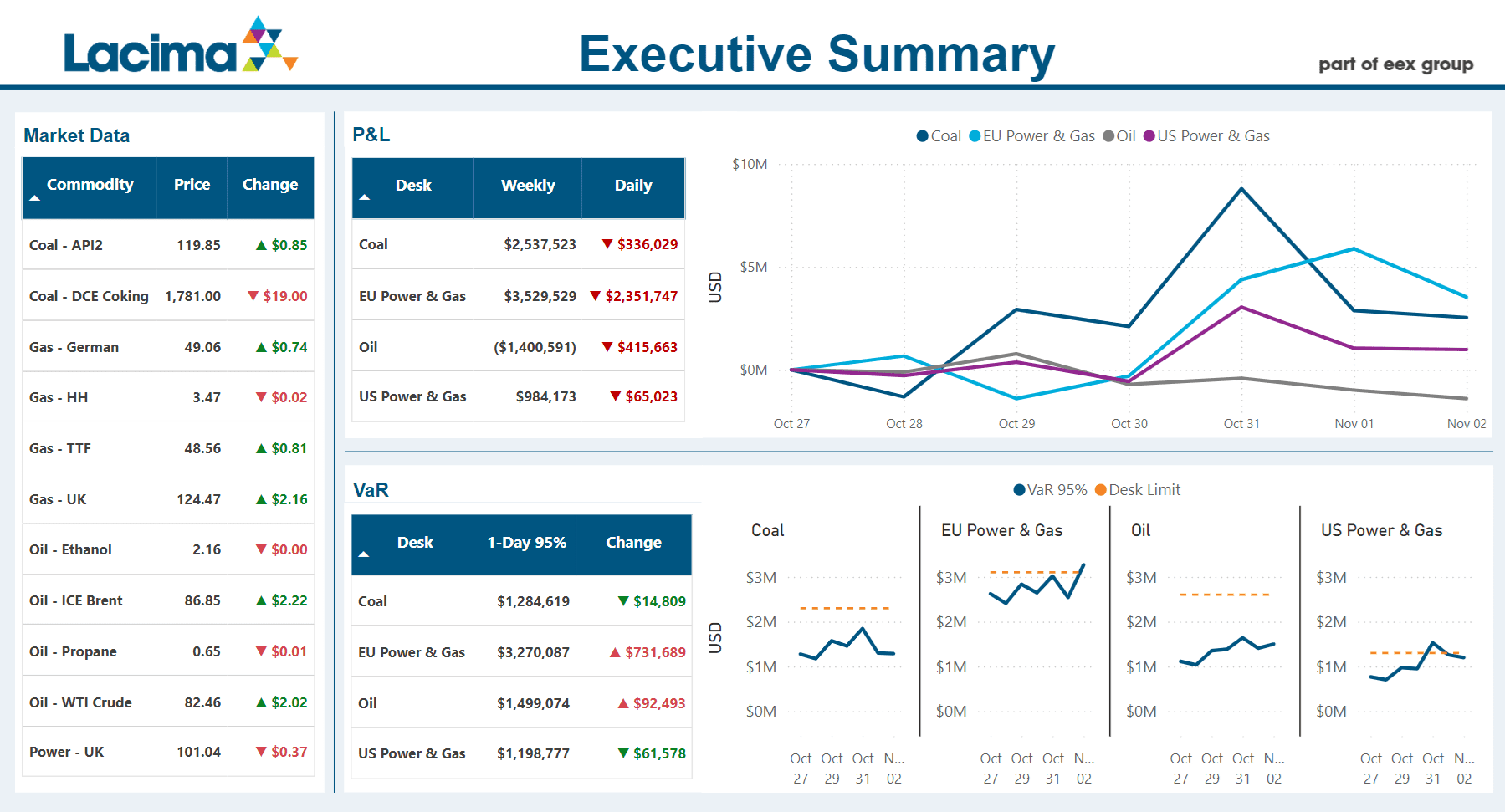
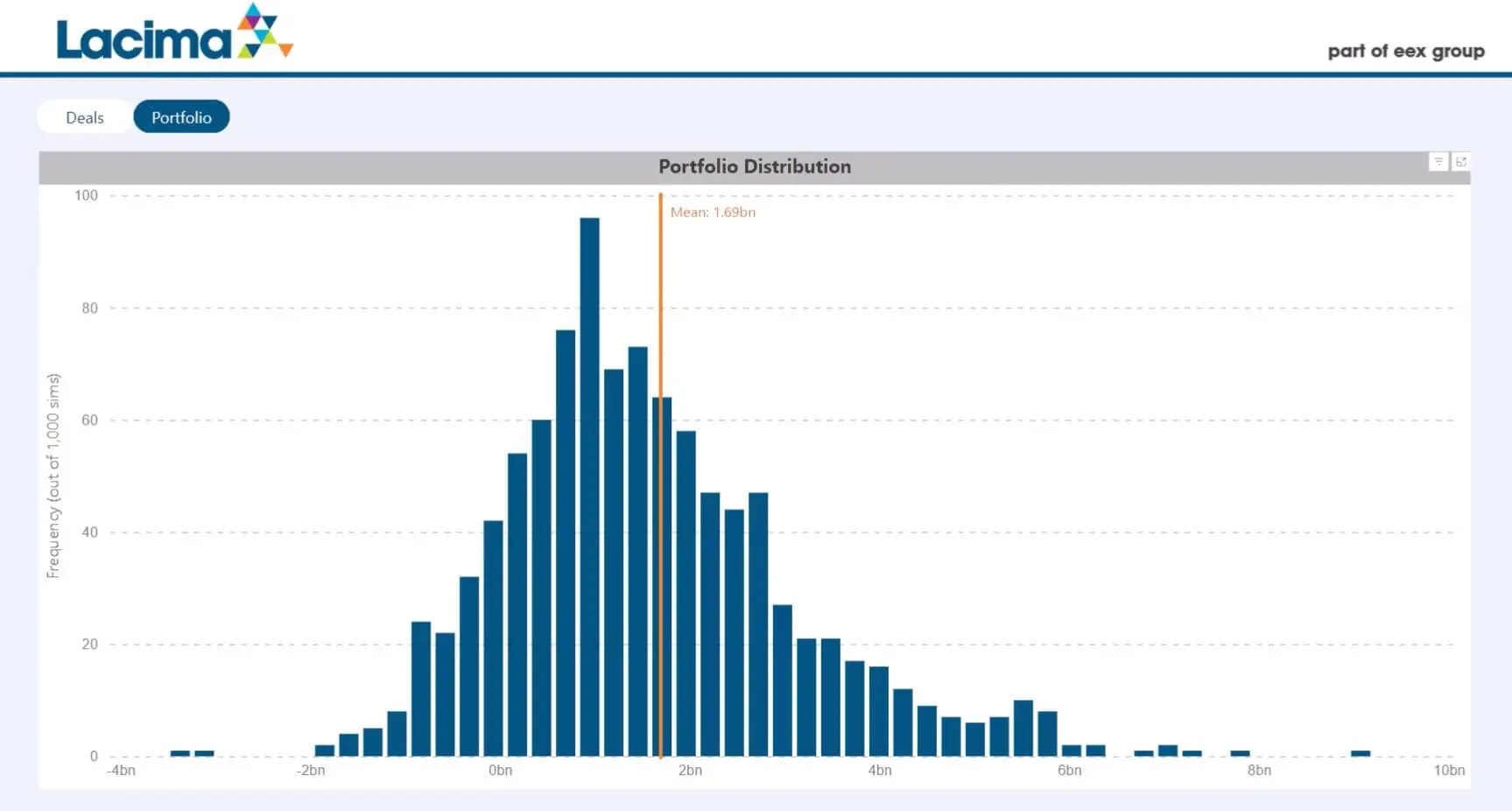
Accurately valuing portfolios, constructing forward curves, optimising flexible assets, calculating option Greeks, running Monte Carlo simulations, measuring Credit Risk, or calculating Value at Risk all require sophisticated quantitative models supported by high-quality market data and specialist analytical techniques.
Although the underlying analytical principles remain well established, applying them has become progressively more challenging as markets, products, and portfolios have become more complex.
As a result, many organisations discover that the ‘RM’ component of an ETRM is significantly more challenging to deliver than the operational trading functionality.
Why Many Organisations Are Rethinking Their ETRM Strategy
One of the most common assumptions during an ETRM implementation is that a single platform will satisfy every operational, valuation, and risk management requirement.
In practice, this has become increasingly difficult.
Although operational trading processes remain relatively stable, the analytical demands placed on trading organisations continue to grow. New products, increasingly flexible physical assets, expanding global portfolios, and more sophisticated risk management requirements have significantly increased the complexity of energy valuation and risk analytics.
Capabilities such as:
- forward curve construction;
- optimisation of flexible assets;
- portfolio optimisation;
- stochastic valuation;
- Monte Carlo simulation;
- stress testing;
- scenario analysis; and
- advanced reporting
now require increasingly specialised analytical techniques.
As a result, many organisations are moving away from the traditional view that a single ETRM should perform every operational and analytical function.
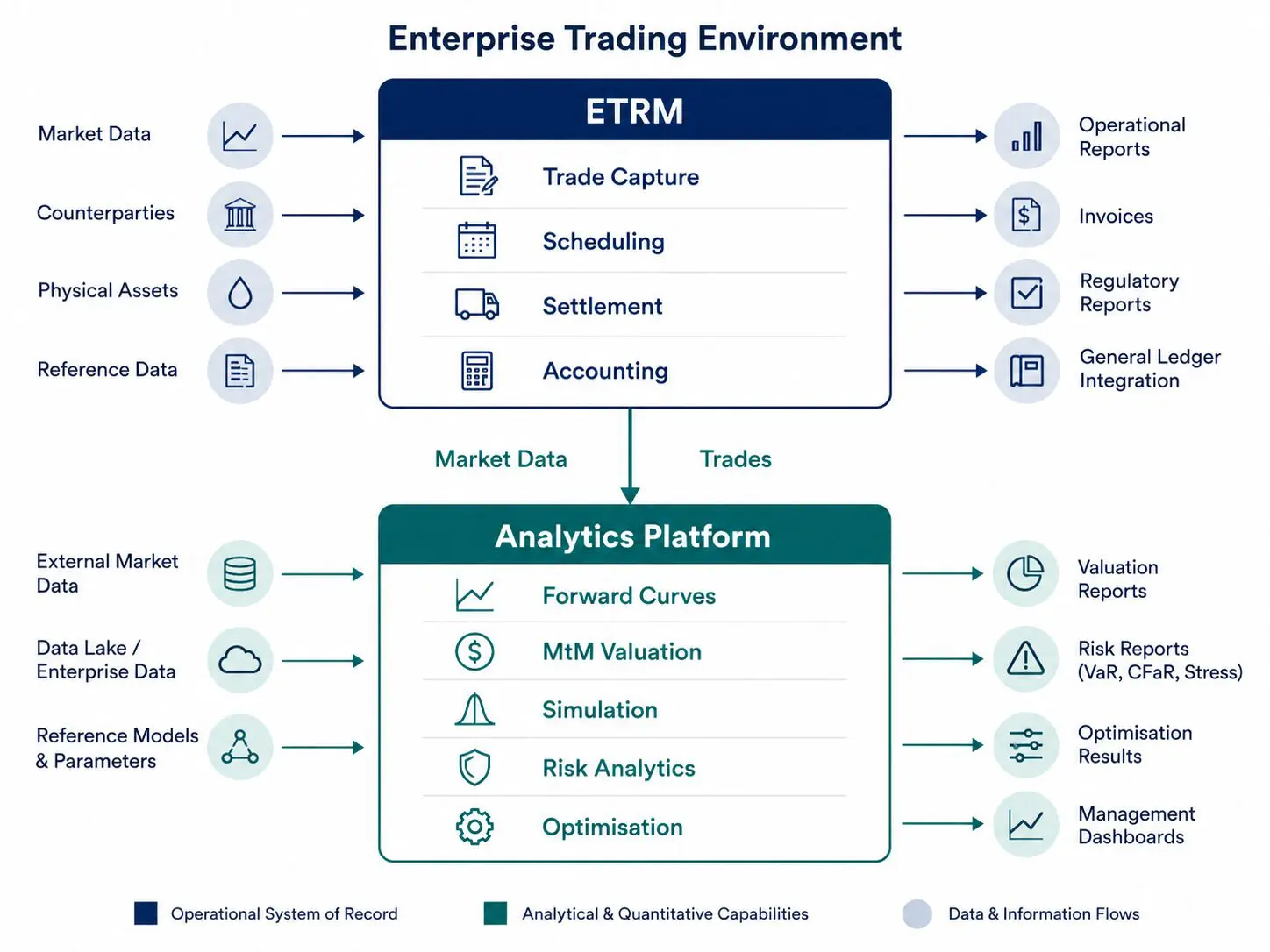
Instead, they are adopting best-of-breed technology architectures in which specialist applications perform the functions for which they are best suited, integrated through common market data, enterprise data platforms, or centralised data lakes.
In some organisations this means supplementing an existing ETRM with specialist analytical applications.
In others, it means replacing significant parts of the traditional ETRM architecture altogether, selecting dedicated solutions for trade capture, market data management, valuation, optimisation, risk analytics, scheduling, reporting, and accounting.
The result is a more flexible technology ecosystem that allows organisations to evolve analytical capability without being constrained by the release cycle or functional boundaries of a single enterprise application.
Best-of-Breed Versus Single Vendor Platforms
Technology strategies vary considerably across organisations.
Some prefer a single integrated platform that attempts to perform every business function. Others adopt a best-of-breed approach, selecting specialist applications for different areas of the trading lifecycle.
The decision is rarely about technology alone. It also reflects:
- organisational priorities;
- portfolio complexity;
- quantitative requirements;
- implementation cost;
- long-term flexibility;
- integration strategy; and
- internal analytical capability.
Many mature trading organisations ultimately operate an integrated technology ecosystem in which operational systems, market data platforms, analytics engines, optimisation models, and enterprise reporting tools each perform the functions for which they are best suited.
Why Flexible Analytics Matter
The underlying principles of valuation and risk management have remained well established for many years. What has changed is the environment in which those techniques are applied.
Energy markets continue to introduce new products, more flexible physical assets, increasingly interconnected regional markets, and larger, more diverse portfolios. As organisations expand across commodities, geographies, and asset classes, the analytical demands placed on valuation and risk management continue to grow.
Maintaining flexible, scalable analytical capability allows organisations to introduce new products, extend existing valuation models, incorporate additional optimisation techniques, and satisfy evolving commercial and regulatory requirements without continually replacing their core operational trading systems.
For many organisations, this flexibility has become an important competitive advantage.
Managing Energy Trading and Risk in Practice
Modern energy organisations rarely think in terms of operational systems or analytical systems alone. Instead, they aim to create an integrated technology environment that combines operational efficiency with robust quantitative analytics.
Operational trading platforms primarily manage trade execution, scheduling, settlements, and accounting, while specialist analytical platforms provide advanced valuation, optimisation, simulation, and enterprise risk management.
Rather than viewing operational systems and analytical systems as competing technologies, many organisations recognise that they perform complementary roles within a modern trading architecture.
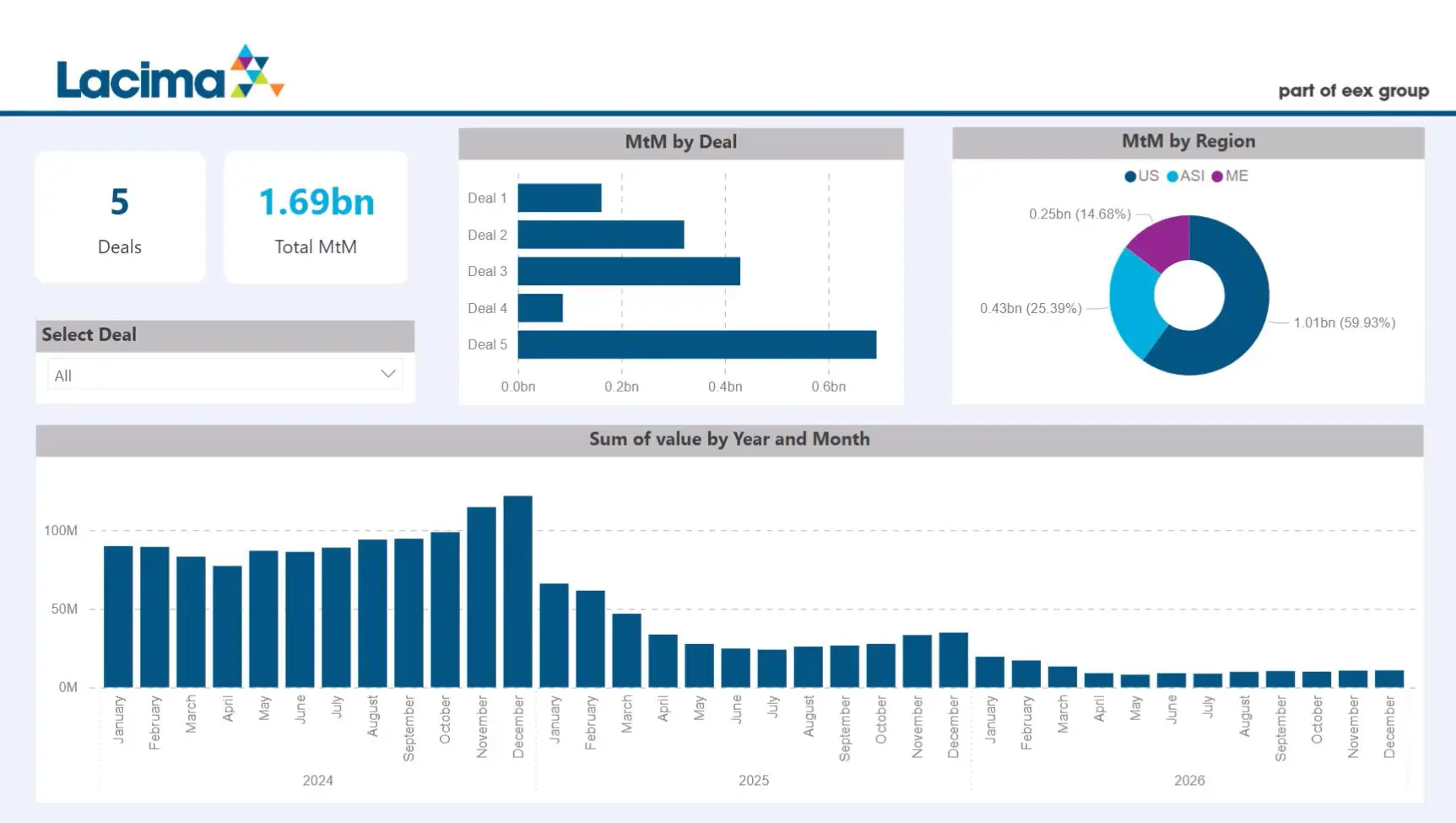
Applications such as Lacima Trader enable traders, analysts, and quantitative teams to perform sophisticated valuation and risk analysis efficiently within Microsoft Excel using market data, forward curves, and portfolio information sourced from their trading environment.
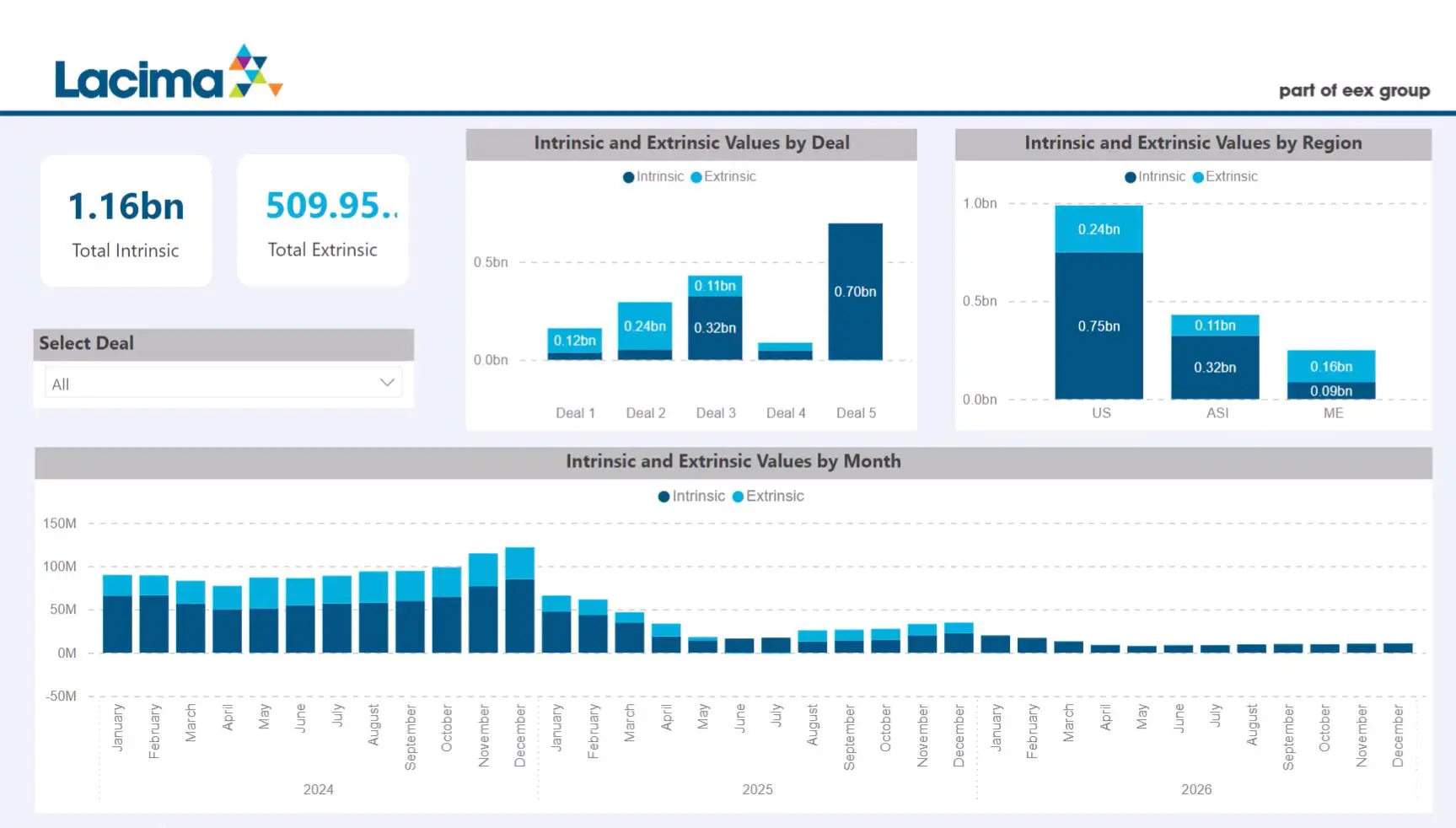
Lacima Analytics provides complementary capabilities, integrating market data management, portfolio valuation, optimisation, quantitative risk analytics, workflow automation, governance, and reporting across complex energy and commodity portfolios, with the governance and audit controls required for enterprise-wide deployment.
Common Pitfalls and Misconceptions
An ETRM Is Expected to Perform Every Function
Modern ETRMs significantly improve operational trading processes, but expecting a single platform to deliver best-in-class trade capture, scheduling, valuation, optimisation, quantitative risk management, reporting, and analytics can be unrealistic. Many organisations achieve better long-term outcomes by combining complementary specialist systems that each perform their role well.
Trading Operations and Quantitative Analytics Are the Same Discipline
Operational trading systems focus on processing commercial transactions. Quantitative analytics focuses on understanding uncertainty, valuing complex assets, measuring exposure, and supporting commercial decision-making.
Although closely related, they require different technologies, different expertise, and different development priorities.
One-Sentence Takeaway
An Energy Trading and Risk Management (ETRM) system provides the operational foundation for managing energy trading activities, while many organisations complement it with specialist analytical platforms to deliver the sophisticated valuation, optimisation, and risk management capabilities required by modern energy and commodity markets.
Related Learning Resources
What is Energy Risk Management?
Learn how organisations identify, measure and manage commercial risk across energy and commodity portfolios.
What is Mark-to-Market (MtM) Valuation?
Understand why consistent portfolio valuation underpins trading, finance and risk management.
Discover why forward curves provide the market foundation for valuation and quantitative analytics.
What is Monte Carlo Simulation?
Learn how Monte Carlo simulation supports valuation, optimisation and enterprise risk analysis.