
 Search
Learning | Foundations of Energy Risk
What is Market Risk?
Introductory Summary
Every participant in an energy or commodity market is exposed to changing market conditions.
Commodity prices move. Forward curves shift. Volatility rises and falls. Relationships between markets evolve. Weather changes demand, generation, and transportation patterns. Each of these factors can alter the value of contracts, physical assets, and entire portfolios.
Market risk is the uncertainty created by these changing market conditions. Understanding and managing that uncertainty is one of the central objectives of energy risk management.
Whether valuing a gas storage facility, measuring portfolio exposure, assessing hedge performance, or evaluating a new investment, organisations rely on quantitative analytics to understand how market movements may affect future financial outcomes.
Definition
Market risk is the risk that changes in market variables will affect the value, earnings, or cash flows of a portfolio, contract, or physical asset.
In energy and commodity markets, these market variables commonly include:
- other observable market factors that influence value; and (where relevant)
- interest and exchange rates.
Unlike operational or credit risk, market risk arises because markets continuously evolve. As prices and other market conditions change, so too does the value and risk profile of commercial positions.
Why Market Risk Matters
Energy markets are inherently uncertain. Supply disruptions, weather events, infrastructure outages, geopolitical developments, regulatory changes, and changing patterns of demand can all influence market prices.
Many organisations also hold portfolios containing both physical assets and financial contracts. The value of these portfolios depends not only on today’s market conditions but also on how those conditions evolve over time.
As a result, market risk influences decisions across many areas of an organisation, including:
- trading;
- hedging;
- asset valuation;
- investment analysis;
- portfolio optimisation;
- financial reporting; and
- enterprise risk management.
Managing market risk allows organisations to make more informed commercial decisions while understanding the potential consequences of adverse market movements.
Sources of Market Risk in Energy Markets
Market risk extends well beyond movements in a single commodity price. Several market variables often interact simultaneously to influence portfolio value:
Commodity Price Risk
Changes in electricity, gas, oil, LNG, or other commodity prices directly affect the value of contracts and physical positions.
Price movements are often the most visible source of market risk, but they are rarely the only one.
Forward Curve Risk
Many valuations depend on the entire forward curve rather than a single market price.
Changes in the shape of the forward curve can materially affect contract valuations, hedge performance, and investment decisions even if today’s spot price changes very little.
Volatility Risk
The level and behaviour of market volatility influence the value of contracts containing optionality.
Higher uncertainty often increases the value of flexible assets and option-based contracts, while lower volatility may reduce that value.
Correlation Risk
Many portfolios depend on relationships between multiple commodities or market variables. Changes in those relationships can materially alter portfolio value and hedge effectiveness.
For example, the value of a gas-fired generator depends not only on electricity prices and gas prices, but also on the relationship between those two markets.
Measuring Market Risk
Understanding market risk requires more than observing market prices. Organisations typically use quantitative analytics to estimate how changing market conditions may affect portfolio performance.
Common approaches include:
Each technique provides a different perspective on uncertainty, helping decision-makers understand both expected outcomes and potential downside risks.
Market Risk and Physical Assets
Market risk is not limited to financial trading portfolios. Physical energy assets are often highly sensitive to changing market conditions.
Sensitive assets include:
- gas storage facilities;
- power stations;
- batteries;
- LNG contracts;
- transportation capacity; and
- renewable generation assets.
The value of these assets often depends on future operating decisions made under uncertain market conditions.
Consequently, organisations frequently combine market risk analytics with valuation and optimisation techniques when evaluating physical assets.
Common Pitfalls and Misconceptions
Market Risk Only Means Price Risk
Commodity prices are important, but market risk also includes changes in forward curves, volatility, correlations, and other market variables that influence value.
Market Risk Can Be Eliminated
Market risk cannot usually be removed entirely. Instead, organisations seek to understand, manage, and where appropriate, hedge their exposure.
How Market Risk Is Addressed in Practice
Managing market risk typically involves combining market data, valuation models, simulation techniques, and portfolio analytics within a consistent risk management framework.
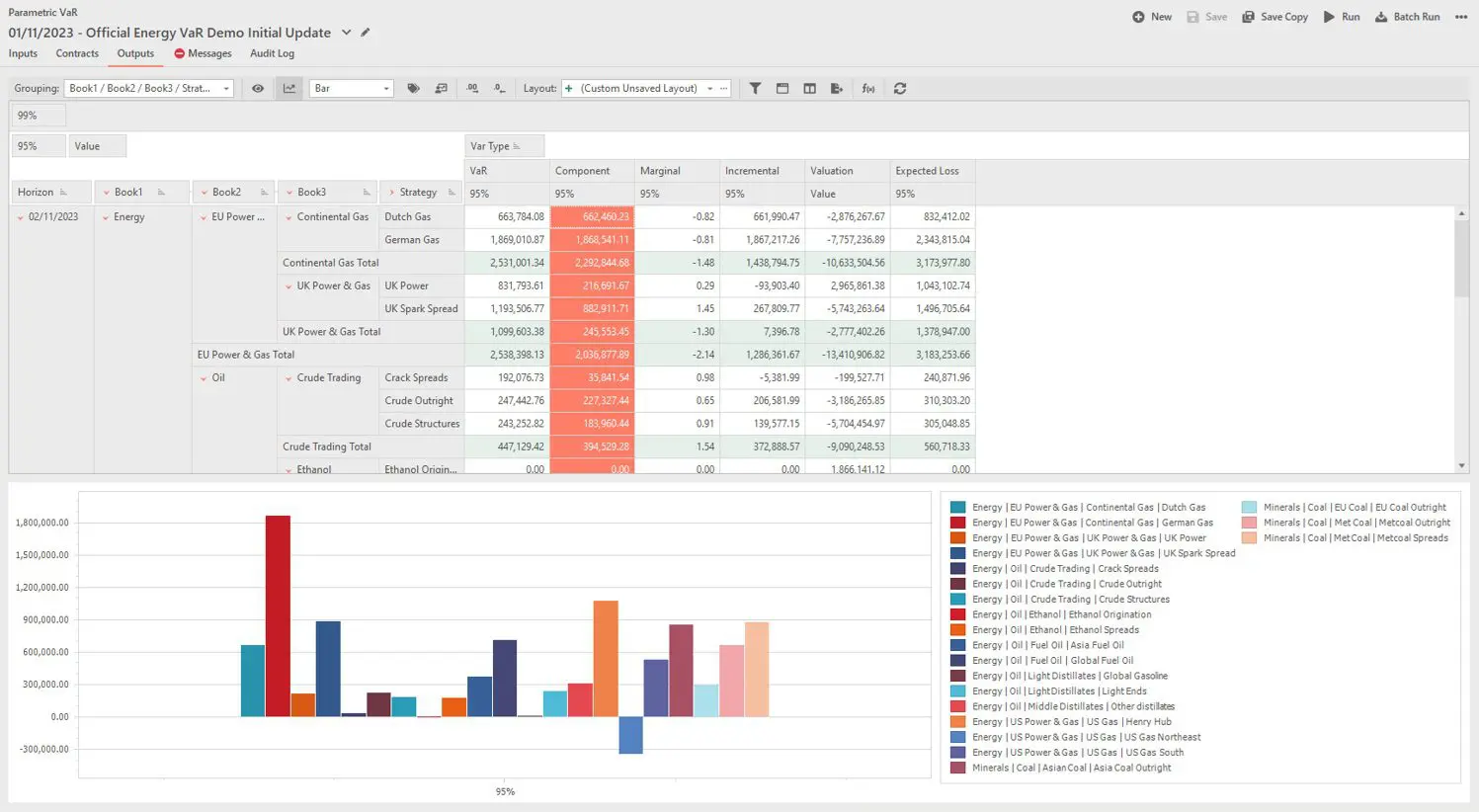
Many organisations integrate forward curves, stochastic market models, portfolio valuation, scenario analysis, stress testing, and risk reporting into enterprise analytics platforms.
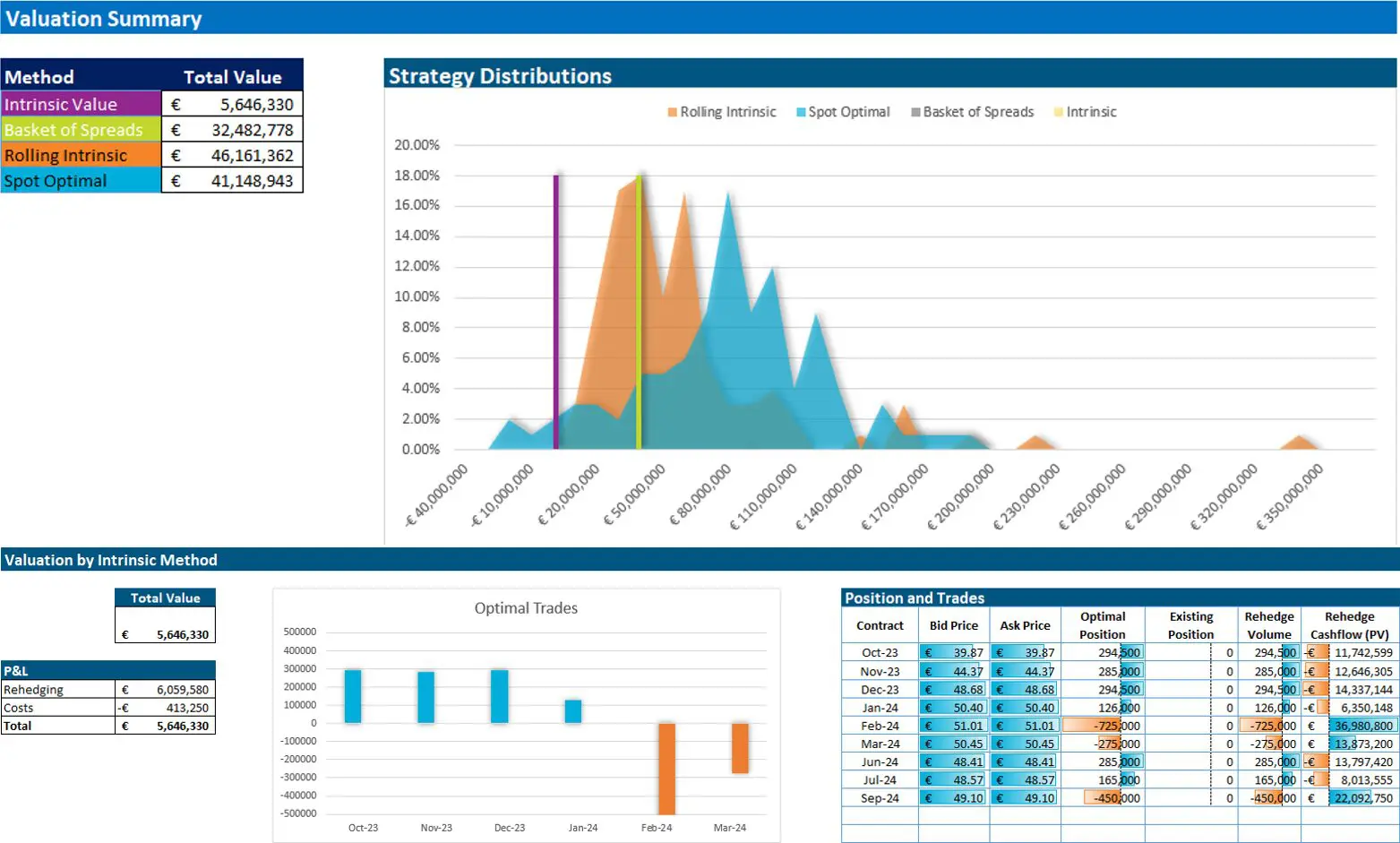
For example, Lacima Analytics’ Market Risk modules support these activities by providing consistent market data management, valuation, simulation, and risk reporting across complex energy and commodity portfolios.
One-Sentence Takeaway
Market risk is the uncertainty created by changing market conditions, and understanding how those changes affect portfolios, contracts, and physical assets is central to effective energy risk management.
Related Learning Resources
What is Energy Risk Management?
Learn how organisations identify, measure, and manage market risk across physical and financial energy portfolios.
Discover how changing market conditions create exposures across physical assets and financial contracts.
Explore how Value at Risk estimates potential portfolio losses arising from adverse market movements.
Learn how alternative market conditions can be evaluated to understand portfolio performance under uncertainty.