
 Search
Learning | Valuation & Pricing Analytics
What is Stochastic Modelling?
Introductory Summary
Stochastic modelling is the process of representing uncertainty using mathematical models that generate multiple possible future outcomes rather than a single deterministic forecast. In energy and commodity markets, it provides a framework for analysing how prices, spreads, and other market variables may evolve over time.
Because energy markets are influenced by changing supply and demand conditions, seasonality, weather patterns, operational constraints, and unexpected events, relying on a single view of the future can be misleading. Stochastic models allow practitioners to explore a range of plausible scenarios and assess how uncertainty may affect valuations, exposures, and commercial decisions.
Definition
A stochastic model is a mathematical representation of a system that incorporates randomness and uncertainty.
Rather than assuming future outcomes are known with certainty, stochastic models describe how variables may evolve according to specified behaviours and probability distributions.
In energy and commodity markets, stochastic modelling is commonly used to represent:
- distribution of commodity price movements;
- volatility behaviour;
- correlations between related markets;
- physical asset optionality;
- operational flexibility; and
- portfolio risk under uncertainty.
Why Stochastic Modelling Matters in Energy Markets
Energy markets rarely behave in a smooth or predictable manner. Prices can respond rapidly to factors such as:
- extreme weather events;
- unexpected outages;
- fuel supply disruptions;
- geopolitical developments;
- changing transportation constraints;
- regulatory interventions; and
- shifts in market sentiment.
At the same time, many energy contracts and physical assets contain embedded flexibility. The value of a gas storage facility, LNG destination rights, or a swing contract often depends not only on today’s market conditions, but on how future market conditions might unfold.
Stochastic modelling provides a way to capture these uncertainties and evaluate decisions in a more realistic context.
Key Characteristics of Stochastic Models
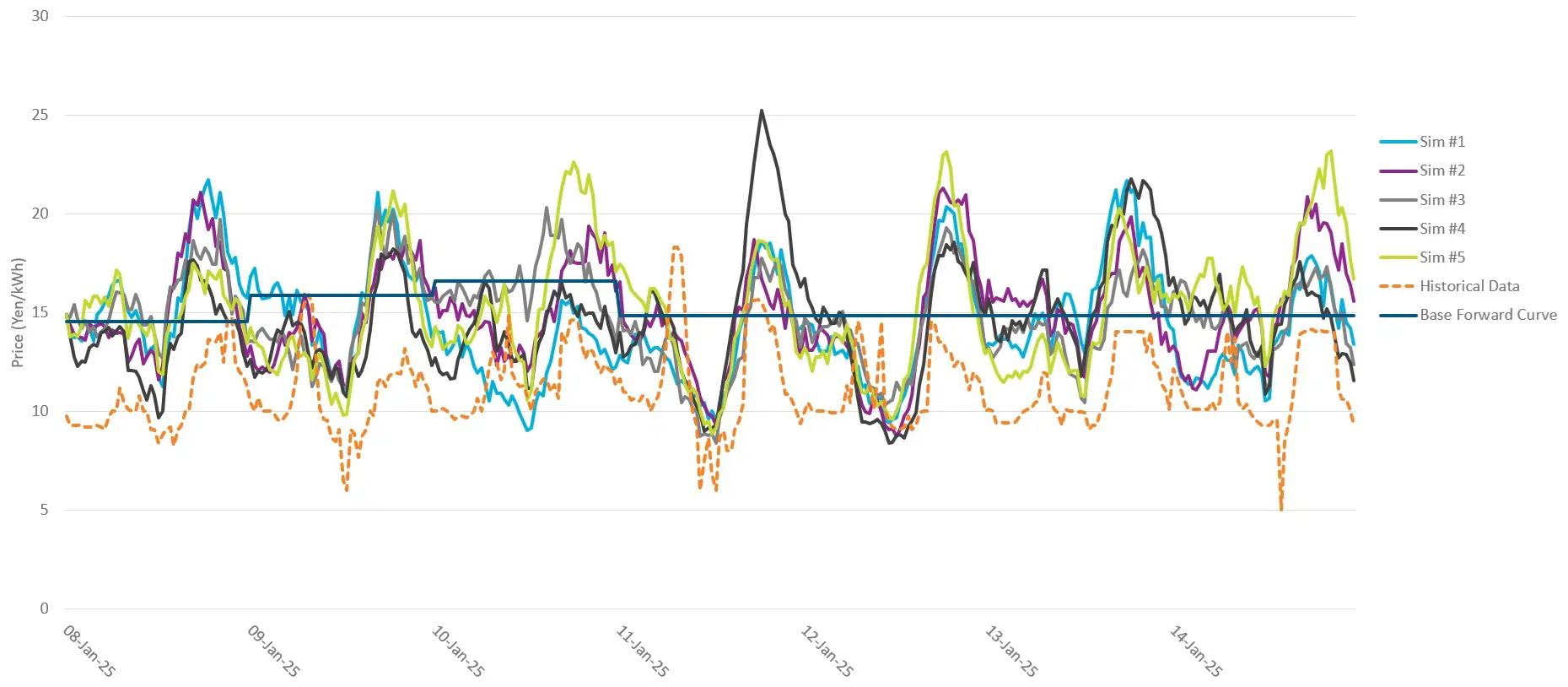
Simulation-Based Analysis
Many stochastic models are used within simulation frameworks.
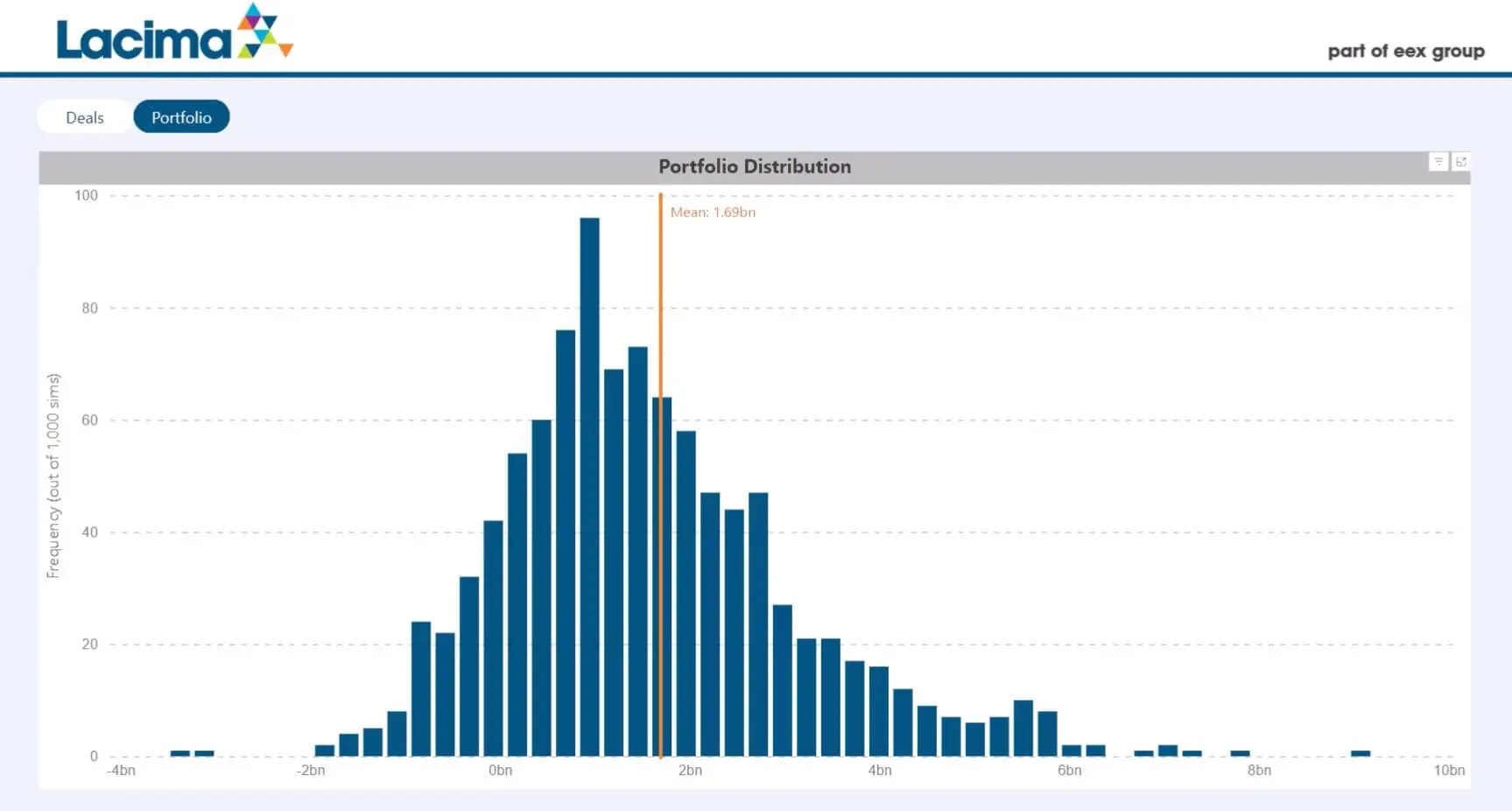
Large numbers of simulated paths can be generated to estimate:
- potential exposures;
- asset values;
- downside risks;
- earnings variability; and
- the impact of different market conditions.
Behavioural Assumptions
Every stochastic model makes assumptions about how markets behave. That may include things like:
- mean reversion towards long-term levels;
- changing volatility over time;
- sudden price jumps;
- relationships between commodities; and
- seasonal market patterns.
Selecting the appropriate assumptions is often as important as the model itself.
Multiple Possible Outcomes
Unlike deterministic approaches that produce a single forecast, stochastic models recognise that many future outcomes are possible.
This allows analysts to evaluate a range of scenarios rather than relying on one expected result.
Stochastic Models Versus Deterministic Models
Deterministic models assume a fixed set of future outcomes. Stochastic models recognise uncertainty and seek to quantify its implications.
Deterministic approaches may be suitable for straightforward planning exercises. However, where optionality, non-linearity, or market uncertainty materially influence value, stochastic techniques often provide a richer understanding of risk and opportunity.
Neither approach is universally superior. The choice depends on the problem being addressed.
The Role of Stochastic Differential Equations
Many stochastic models are expressed mathematically using stochastic differential equations. These equations describe how variables evolve over time while incorporating both predictable tendencies and random influences.
In practice, however, most energy practitioners focus less on the equations themselves and more on the behaviours they produce.
Questions such as:
- Does the model capture mean reversion?
- How does volatility behave?
- Are commodity relationships represented appropriately?
- Does the model reflect observed market conditions?
are often more important than the specific mathematical notation underpinning the model.
Common Pitfalls and Misconceptions
More Complexity Always Means Better Results
Sophisticated models do not automatically produce better decisions. Poor calibration, unrealistic assumptions, or weak data quality can undermine even highly advanced approaches.
Stochastic Models Predict the Future
Stochastic models do not forecast exactly what will happen. Instead, they help practitioners understand what could happen and assess the implications of uncertainty.
Models Eliminate Judgement
Professional judgement remains essential. Understanding the assumptions, limitations, and intended purpose of a model is often just as important as the calculations it produces.
How Stochastic Modelling is Addressed in Practice
In practice, organisations often apply stochastic models within integrated valuation and risk frameworks to support consistent decision-making across commercial, trading, and risk functions. Applications include:
- physical asset valuation;
- Monte Carlo simulation;
- portfolio risk analysis;
- stress testing;
- optimisation studies; and
- strategic scenario assessment.
As portfolios expand across commodities, regions, and asset classes, maintaining consistency between model assumptions, market data, and governance processes becomes increasingly important.
Applications such as Lacima Analytics support the implementation and governance of stochastic modelling approaches across complex energy and commodity portfolios.
One-Sentence Takeaway
Stochastic modelling helps energy market participants understand how uncertainty may affect value and risk by exploring many possible futures rather than relying on a single forecast.
Related Learning Resources
Learn why previous market movements and operational decisions influence future outcomes, and how path dependency affects valuation, optimisation, and stochastic modelling.
What is Monte Carlo simulation?
Explore how simulation techniques model uncertainty and support valuation across many future scenarios.
What is a Volatility Function?
Learn how volatility functions represent changing market uncertainty across time and maturity within stochastic energy market models.
Learn the conceptual steps involved in valuing gas storage assets under uncertain market conditions.