
 Search
Learning | Valuation & Pricing Analytics
What’s Stochastic Dynamic Programming?
Introductory Summary
Stochastic Dynamic Programming (SDP) is a mathematical optimisation technique used to determine the best sequence of decisions when future outcomes are uncertain.
In energy and commodity markets, SDP is commonly used to value and optimise flexible assets and contracts whose value depends on operational decisions made over time. Examples include gas storage facilities, swing contracts, tolling agreements, and other assets where participants repeatedly decide whether to inject, withdraw, generate, transport, buy, sell, or wait.
Rather than asking, “What is the best decision today?”, SDP asks a more powerful question:
“What decision today maximises the total expected value of all future decisions?”
This ability to balance immediate cash flows against future opportunities makes SDP one of the foundational techniques in energy asset valuation.
Why Is Stochastic Dynamic Programming Important?
Many energy assets derive their value from flexibility. A gas storage operator, for example, can choose each day whether to:
- inject gas into storage;
- withdraw gas from storage; or
- take no action.
Each decision affects both today’s cash flow and the opportunities available tomorrow.
Injecting gas may create a short-term cost but preserve valuable future optionality. Withdrawing gas may generate immediate revenue but reduce future flexibility.
SDP provides a framework for systematically evaluating these trade-offs under uncertain market conditions.
Without this type of analysis, participants risk making decisions that maximise short-term outcomes while reducing the overall value of the asset.
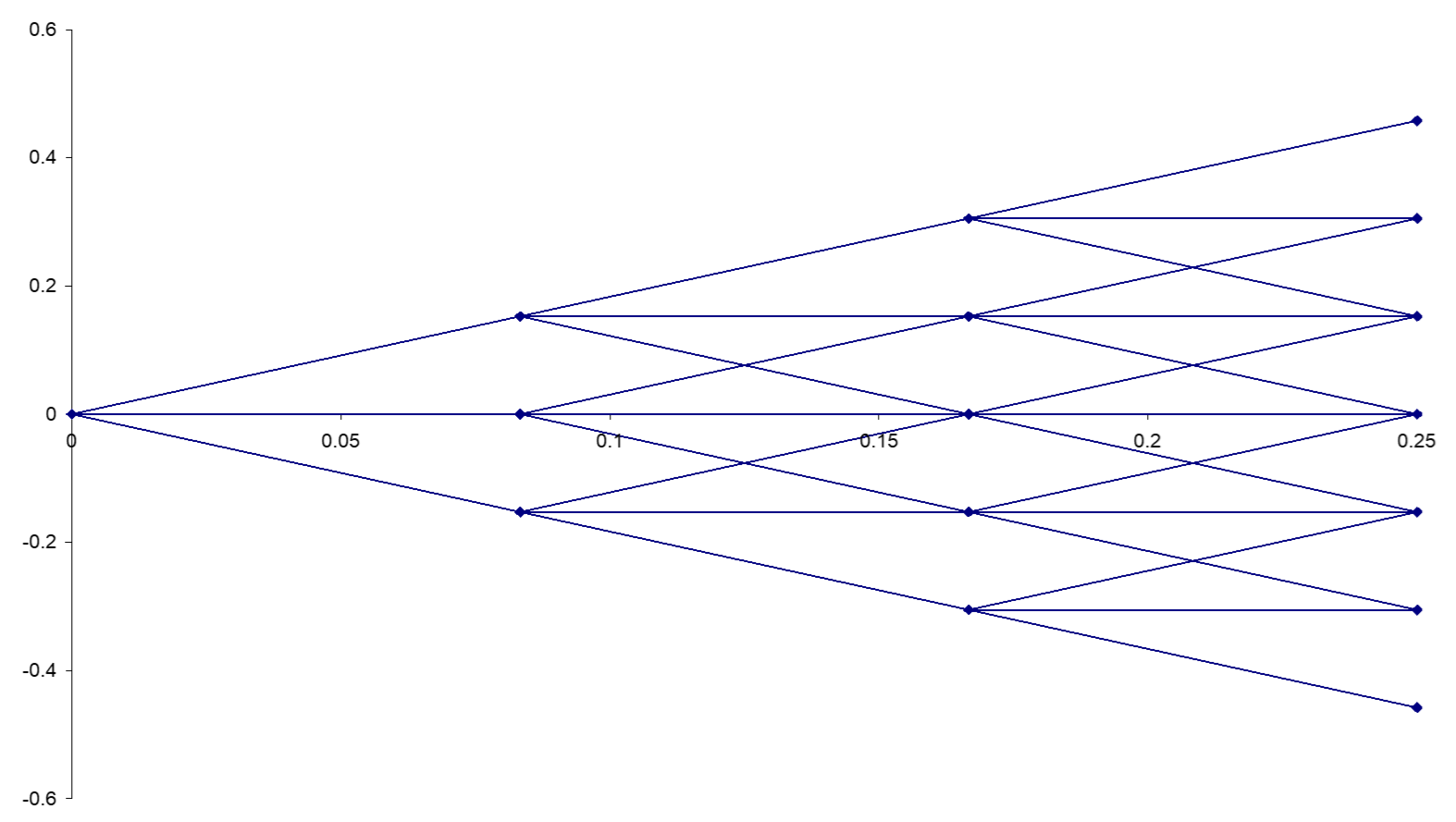
How Does Stochastic Dynamic Programming Work?
At its core, SDP solves problems by working backwards through time. The process typically involves:
- Representing uncertainty using a model of future market evolution.
- Defining the possible operational states of the asset.
- Identifying the feasible decisions available in each state.
- Calculating the immediate cash flow associated with each decision.
- Combining those cash flows with the expected value of future decisions.
- Selecting the decision that maximises total expected value.
This process is repeated recursively until the optimal decision has been determined for every possible combination of market conditions and asset states.
The approach is often referred to as backward induction.
Spot Optimisation and Energy Assets
One of the clearest ways to understand SDP is through the valuation of gas storage facilities.
Under spot optimisation approaches, the value of storage is extracted through daily operational decisions. At each decision point, operators determine whether it is optimal to:
- inject gas;
- withdraw gas; or
- do nothing.
The optimal decision depends on two competing factors:
1. Immediate Cash Flow
Operational decisions create direct financial consequences. For example:
- withdrawals generate positive cash flows from selling gas;
- injections require purchasing gas and therefore incur costs; and
- inactivity produces no immediate cash flow.
2. Future Opportunity Value
Each decision changes the amount of flexibility remaining within the asset.
Injecting gas increases inventory and may improve future opportunities. Withdrawing gas reduces inventory and may limit future options.
SDP balances these competing effects by identifying the decision that maximises the sum of:
- current cash flow; and
- expected future value.
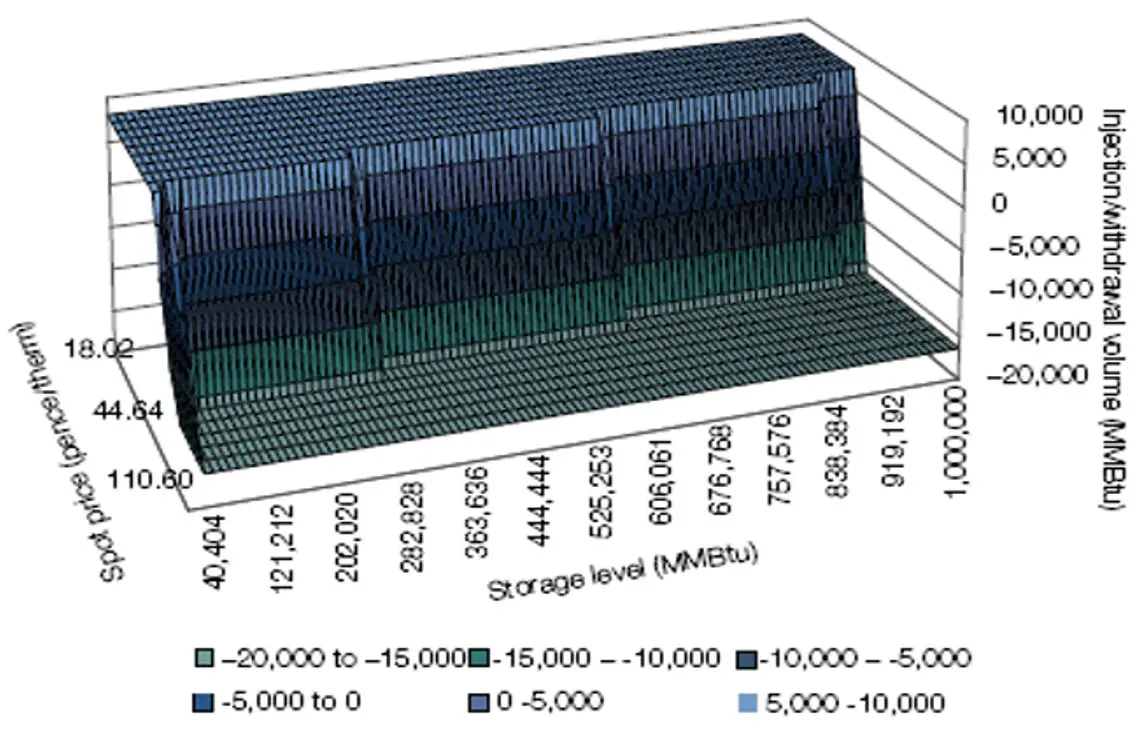
The resulting optimisation can be visualised as a decision surface, showing how the optimal operational decision changes as market prices and the asset’s state change.
This principle lies at the heart of flexible asset valuation.
State Variables and Decision Surfaces
Unlike simpler derivatives, flexible physical assets cannot usually be described using price alone. The optimal decision often depends on multiple state variables.
For gas storage, these commonly include:
- the current spot price;
- the inventory level within storage;
- operational constraints; and
- time remaining until contract expiry.
The resulting optimisation can be visualised as a decision surface showing when operators should inject, withdraw, or remain inactive under different combinations of prices and inventory levels.
These decision boundaries evolve through time as the remaining flexibility of the asset changes.
Applications of Stochastic Dynamic Programming
SDP is used across a wide range of energy applications, including:
- gas storage optimisation;
- swing contract valuation;
- tolling agreement analysis;
- hydroelectric reservoir management;
- inventory optimisation;
- generation dispatch decisions; and
- operational planning involving uncertain prices and constrained assets.
Its strength lies in recognising that physical flexibility has value and that this value emerges through sequential decision-making.
Advantages of Stochastic Dynamic Programming
SDP offers several important benefits:
- It explicitly recognises uncertainty
- It captures operational constraints
- It identifies optimal decisions at every stage of an asset’s life
- It quantifies the value of flexibility
- It produces transparent exercise policies that operators can interpret and explain
These characteristics make it particularly well suited to energy markets, where assets often combine financial optionality with physical limitations.
Limitations of Stochastic Dynamic Programming
Despite its strengths, SDP can become computationally demanding.
As additional uncertainties and operational factors are introduced, the number of states that must be evaluated can increase rapidly. This challenge is often referred to as the curse of dimensionality.
As a result, classical lattice-based SDP approaches are generally most effective when the underlying stochastic process can be represented using recombining structures.
For more complex problems involving multiple risk factors or non-recombining processes, practitioners frequently adopt simulation-based techniques.
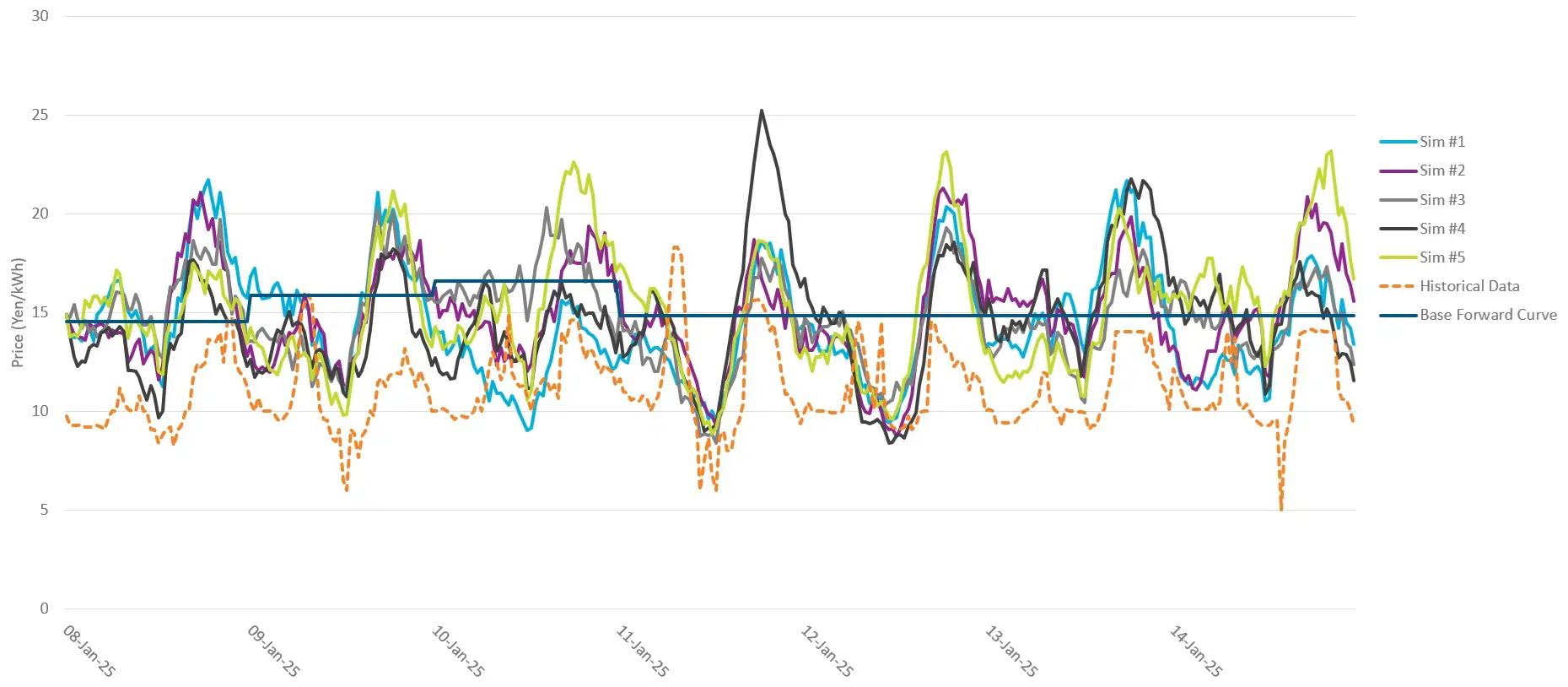
One of the most widely used approaches is Least Squares Monte Carlo (LSMC), which approximates the same backward optimisation logic using regression and simulation.
Rather than replacing SDP, LSMC can be viewed as an alternative implementation of the same underlying decision framework.
Common Misconceptions
Stochastic Dynamic Programming and Least Squares Monte Carlo Are the Same Process
Although SDP and LSMC are closely related, they are not identical methodologies.
Both seek to solve the same underlying optimisation problem: determining the sequence of decisions that maximises expected value under uncertainty.
However, they differ in how that problem is implemented.
Traditional SDP commonly relies on lattice structures and backward induction to evaluate future decisions across discrete states.
LSMC instead uses Monte Carlo simulation and regression techniques to estimate continuation values and approximate the same optimisation process across simulated paths.
As problems become more complex and involve additional sources of uncertainty, simulation-based approaches such as LSMC often provide greater flexibility than classical lattice implementations of SDP.
Understanding this distinction helps practitioners select the most appropriate methodology for the problem they are trying to solve.
Stochastic Dynamic Programming Is Only Relevant to Academics
Although the underlying mathematics can be sophisticated, SDP is widely used in commercial energy applications.
It supports the valuation, optimisation, and risk management of assets and contracts that involve operational flexibility.
Many organisations rely on SDP-based methods to inform trading, structuring, and investment decisions.
Stochastic Dynamic Programming Predicts Future Prices
SDP does not forecast what prices will be. Instead, it identifies the optimal decisions to make under a specified model of uncertainty.
Its purpose is decision optimisation rather than prediction.
Final Thoughts
Stochastic Dynamic Programming provides one of the most important frameworks for understanding flexibility in energy markets.
By combining immediate operational outcomes with the value of future opportunities, it allows organisations to make better decisions under uncertainty.
Whether valuing gas storage facilities, swing contracts, or other flexible assets, SDP helps reveal a fundamental truth of energy markets:
That the value of an asset often lies not only in what it can do today, but in preserving the ability to make better decisions tomorrow.
One-Sentence Takeaway
Stochastic Dynamic Programming determines the sequence of decisions that maximises expected value under uncertainty by balancing immediate cash flows against the value of future flexibility.
Related Learning Resources
What is a Trinomial Tree Model?
Learn how trinomial trees represent uncertain future price movements and use backward induction to evaluate decisions across different market states.
What is Monte Carlo simulation?
Understand the simulation techniques used to generate possible future market outcomes and support complex valuation problems.
Explore why future flexibility creates value beyond today’s observable market opportunities.
See how intrinsic, spread option, stochastic dynamic programming, and simulation-based approaches are applied to one of the most important flexible assets in energy markets.