
 Search
Learning | Energy & Commodity Derivatives
What is Theta?
Introductory Summary
Time is one of the most important drivers of option value.
Unlike forward contracts, which simply gain or lose value as market prices move, options also derive value from the possibility that favourable market movements may occur before they expire.
As time passes, that opportunity gradually disappears.
Theta measures how an option’s value changes simply because time has passed.
For traders, risk managers, and analysts, understanding Theta helps explain why an option may lose value even when market prices remain unchanged, making it one of the most important Greeks used in option valuation and risk management.
Definition
Theta measures the sensitivity of an option’s value to the passage of time, assuming all other market variables remain unchanged.
More specifically, it estimates how much an option’s value is expected to change over a given period (typically one day) simply because the option has moved closer to its expiry date.
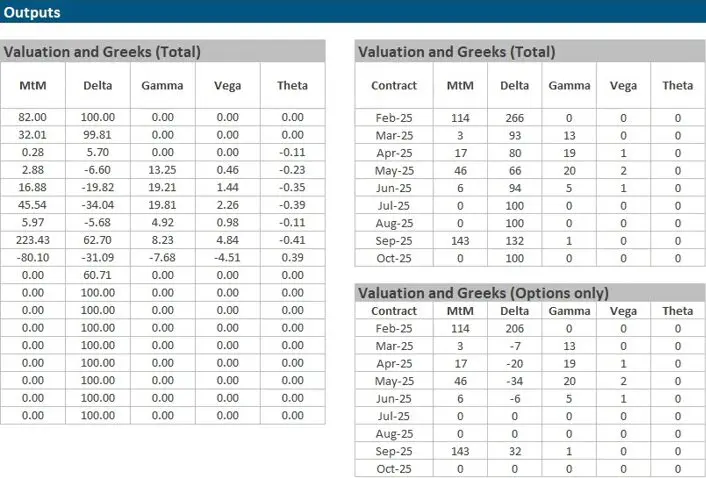
For example, if an option has a Theta of -0.08, its value would be expected to decrease by approximately $0.08 over the next day, assuming commodity prices, volatility, and all other market conditions remain unchanged.
Theta therefore measures time sensitivity, rather than price sensitivity or volatility sensitivity.
Why Time Has Value
One of the defining characteristics of an option is that it provides flexibility. The holder has time to observe how market prices evolve before deciding whether to exercise the option.
That flexibility has economic value.
The longer an option has before expiry, the greater the opportunity for favourable market movements to occur. As expiry approaches, however, that opportunity steadily reduces.
Even if commodity prices remain unchanged, the option gradually loses part of its value because there is less time remaining for favourable outcomes to develop.
Theta measures this gradual reduction in value.
Why Theta Matters
Understanding an option’s current value is only part of effective portfolio management. Practitioners also need to understand how that value evolves as expiry approaches.
Theta supports activities such as:
- monitoring time decay across option portfolios;
- evaluating holding versus exercising decisions;
- comparing alternative trading strategies;
- managing option portfolios approaching expiry;
- understanding changing portfolio sensitivities; and
- supporting valuation and risk analysis for flexible energy assets.
Because time passes continuously, Theta represents one of the few sources of option value change that occurs even when markets remain relatively stable.
How Theta Changes Through Time
Theta is not constant. Its behaviour changes throughout the life of an option.
When expiry is still a long way off, the loss of one day’s time generally has only a modest impact on value. As expiry approaches, however, each remaining day becomes increasingly important.
For options close to the strike price, time decay often accelerates significantly during the final stages of the contract’s life.
This changing pattern explains why option portfolios approaching expiry often require closer monitoring than longer-dated positions.
Theta Across Different Energy Assets
Although Theta is most commonly associated with exchange-traded options, many physical energy assets also contain optionality that is influenced by time.
Examples include:
- tolling agreements;
- transportation capacity; and
- virtual power plant optimisation.
For these assets, the remaining operational flexibility often changes as delivery periods approach, meaning time itself becomes an important contributor to value.
Understanding how this flexibility evolves is an important part of managing many physical energy portfolios.
Theta and Trading Decisions
Theta plays an important role in many option trading and portfolio management decisions. For example, traders may compare the expected loss of option value through time with the potential benefit of retaining future flexibility.
Similarly, portfolio managers often monitor Theta alongside other Greeks when evaluating hedge positions or assessing how option portfolios are likely to evolve.
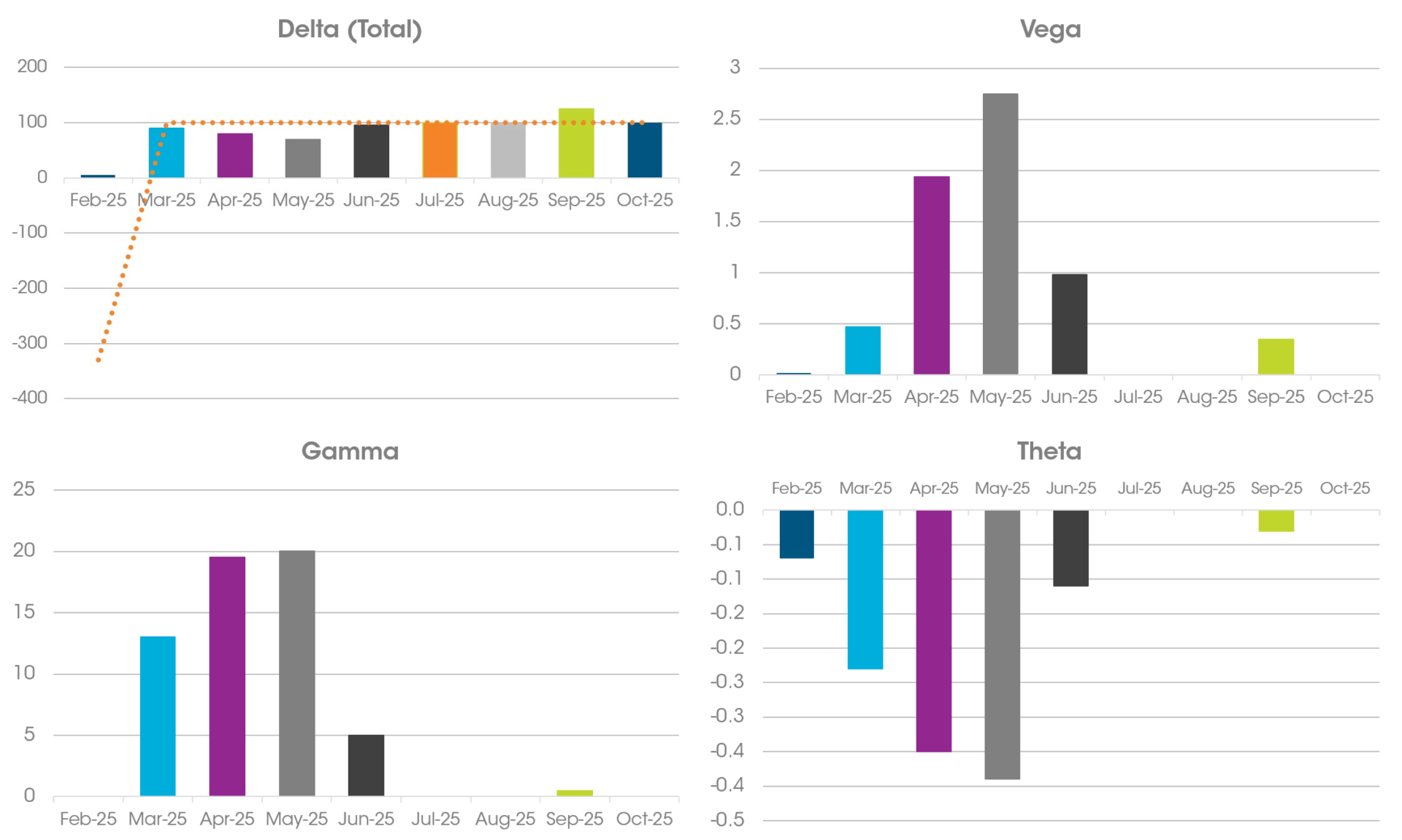
Importantly, Theta rarely acts in isolation. Changes in commodity prices, market volatility, and the passage of time all occur simultaneously, meaning Theta is typically interpreted alongside Delta, Gamma, and Vega to develop a more complete understanding of portfolio risk.
Common Pitfalls and Misconceptions
Theta Means Every Option Always Loses Value
Theta is often negative for purchased options because their time value gradually declines. However, the overall value of an option can still increase if favourable market movements more than offset time decay.
Theta Is Constant
Theta changes continuously. As market prices, volatility, and time remaining all evolve, the rate of time decay changes as well. Understanding this changing behaviour is one reason why option portfolios require ongoing monitoring rather than periodic review.
Time Decay Is the Only Driver of Option Value
Time is only one factor influencing option value. Commodity prices, market volatility, interest rates, and the relationship between the market price and strike price all continue to affect valuation throughout the life of the option.
Managing Theta in Practice
As option portfolios become larger and more complex, monitoring the effect of time across thousands of positions quickly becomes impractical using manual calculations.
Every trading day changes the remaining life of an option, causing Theta and other option sensitivities to evolve continuously.
Applications such as Lacima Trader allow traders and analysts to calculate Theta, explore changing option sensitivities, test trading scenarios, and perform energy valuation and risk analysis directly within Microsoft Excel.
For organisations managing larger enterprise portfolios, Lacima Analytics extends these capabilities by integrating market data, forward curves, valuation models, portfolio analytics, enterprise reporting, and governance within a controlled analytics environment, enabling Theta and other Greeks to be monitored consistently across trading, risk, finance, and commercial functions.
One-Sentence Takeaway
Theta measures how an option’s value changes as time passes, helping practitioners understand, monitor, and manage the effect of time decay across energy and commodity option portfolios.
Related Learning Resources
Learn how Delta measures an option’s sensitivity to changes in the underlying commodity price.
Explore how Gamma measures the rate at which Delta changes as market prices move.
Discover how changes in market volatility influence the value of energy and commodity options.
Learn how changes in interest rates influence the value of energy and commodity options.