
 Search
Learning | Foundations of Energy Risk
What is Cash Flow at Risk (CFaR)?
Introductory Summary
Profitability is important, but so is liquidity.
Participants can often withstand short-term fluctuations in portfolio value, but unexpected pressure on future cash flows can create operational and financing challenges. Cash Flow at Risk (CFaR) is designed to help quantify that uncertainty.
CFaR estimates how future cash generation may be affected by adverse market movements, providing insight into the range of potential cash flow outcomes that could occur over a defined period. It is particularly useful for participants whose revenues and costs are directly linked to volatile commodity markets.
Definition
Cash Flow at Risk (CFaR) measures the potential reduction in expected future cash flows under adverse market conditions.
Unlike Value at Risk, which focuses on portfolio value, CFaR focuses on the actual cash entering or leaving the business.
For many participants, this distinction is critical because liquidity often drives decision-making as much as profitability.
CFaR is commonly used to assess:
- future liquidity risk
- earnings stability
- hedging effectiveness
- budget sensitivity
- financial planning assumptions
- debt servicing and financing capacity
Why Future Cash Flow Matters
Many energy and commodity businesses make decisions today based on cash flows they expect to receive months or years into the future.
Examples include:
- power generation revenues
- commodity production income
- LNG cargo sales
- storage and transportation earnings
- retail supply margins
When commodity prices move unexpectedly, those future cash flows may change significantly.
Because commodity prices can be highly volatile, understanding the potential range of outcomes helps participants plan funding requirements, assess liquidity risks, and evaluate whether existing hedging programmes remain appropriate.
CFaR provides a framework for assessing this uncertainty and supporting :
- financial planning and budgeting
- hedging and risk management decisions
- capital allocation and investment decisions
- credit assessments and financing discussions
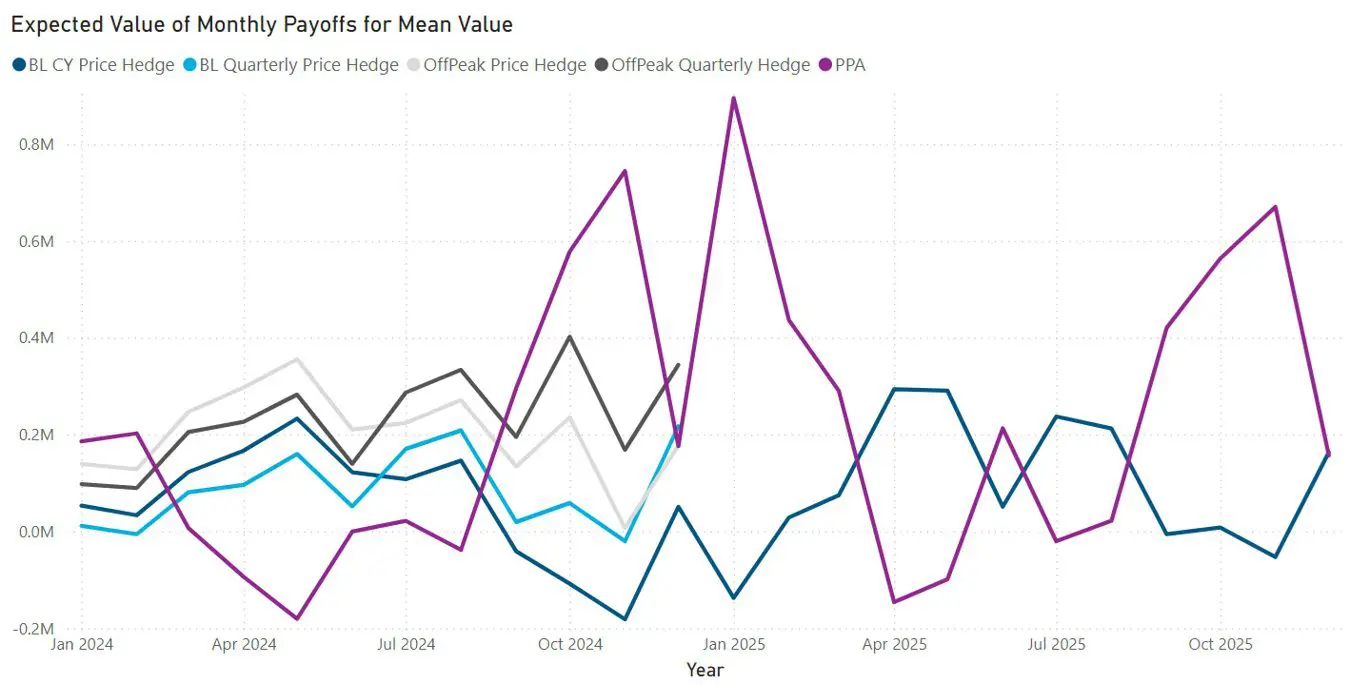
Sources of Cash Flow Uncertainty
Future cash flows can be affected by a wide range of factors, including:
Commodity Prices
Changes in electricity, gas, oil, LNG, emissions, or other commodity prices can directly affect revenues and costs.
Volume Variability
Production levels, asset availability, customer demand, and operational performance can all influence realised cash flows.
Market Volatility
Periods of heightened volatility can create larger swings in expected cash generation.
Contract Structures
The design of supply agreements, transportation contracts, tolling arrangements, and other commercial structures can materially influence future cash flow profiles.
How CFaR Supports Decision-Making
CFaR is commonly used to support:
- liquidity management
- budgeting processes
- financing decisions
- hedge programme evaluation
- capital allocation discussions
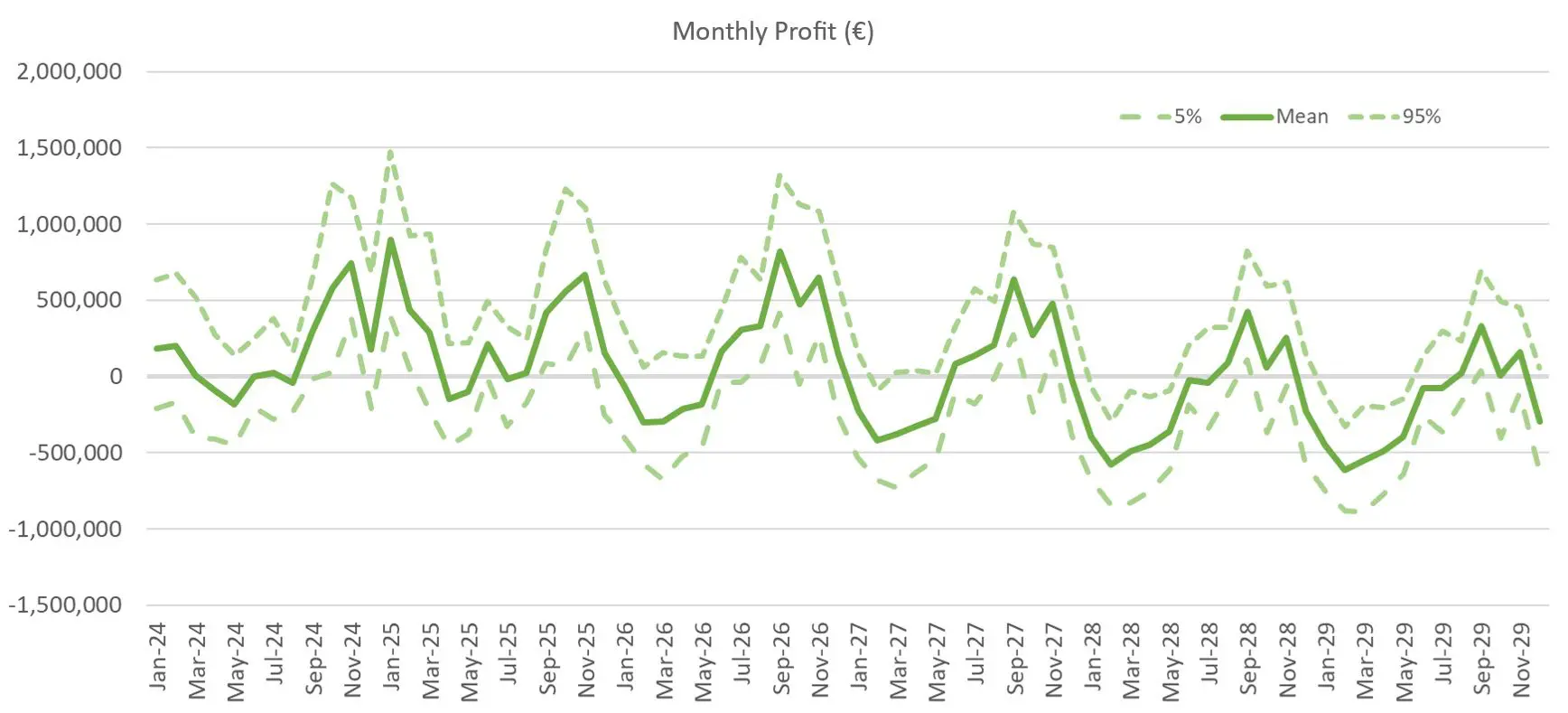
Rather than focusing solely on expected outcomes, CFaR encourages participants to consider a range of possible future scenarios and the consequences of adverse market conditions.
Common Misconceptions
Strong Earnings Always Lead to Strong Cash Flows
One misconception is that strong expected earnings automatically translate into strong cash flows. In reality, timing differences, settlement structures, collateral requirements, and contract terms can create very different cash flow outcomes.
Portfolio Value and Cash Flows are Always Aligned
A portfolio may experience changes in value without an immediate impact on realised cash flows. CFaR focuses specifically on future cash generation rather than Mark-to-Market valuation.
A Single Forecast Is Sufficient for Cash Flow Analysis
Energy and commodity markets are inherently uncertain. Analysing only a single expected outcome can underestimate the range of possible future cash flow results. CFaR is most effective when combined with scenario analysis and simulation-based approaches.
How Cash Flow at Risk is Applied in Practice
In practice, CFaR is often evaluated alongside other portfolio risk measures to provide a broader picture of financial resilience. CFaR can support:
- budgeting
- liquidity planning
- hedging decisions
- investment analysis
- risk reporting
As portfolios become increasingly interconnected, participants typically require integrated valuation, forecasting, and risk analytics capabilities to understand how changing market conditions may affect future cash generation.
For example, Lacima Analytics Market Risk supports the analysis of future portfolio performance across energy and commodity markets.
One-Sentence Takeaway
Cash Flow at Risk (CFaR) estimates how adverse market conditions could reduce future cash flows, helping organisations understand liquidity risk and make more informed financial, hedging, and investment decisions.
Related Learning Resources
What is Earnings at Risk (EaR)?
Learn how Earnings at Risk measures the potential impact of market movements on future profitability.
Understand how Value at Risk is used to estimate potential portfolio losses under normal market conditions.
Explore how scenario analysis helps participants assess the impact of changing market conditions on portfolio performance.
Learn how stress testing is used to evaluate portfolio resilience under severe market conditions.
While reasonable care has been taken in preparing this information, we make no warranties or representations as to its completeness, currency or accuracy. To the extent permitted by law, Lacima accepts no liability for any loss, damage or outcome arising from its use or reliance. Use of this article is subject to the full Terms and Conditions of this website.