
 Search
Learning | Foundations of Energy Risk
What is Mark-to-Market (MtM) Valuation?
Introductory Summary
Every trading day, energy companies need to answer a simple but commercially critical question:
“What is our portfolio worth today?”
Answering that question is rarely straightforward. Markets move, forward prices change, volatility evolves, and new market information becomes available.
As market conditions change, the economic value of contracts and portfolios changes as well.
Mark-to-Market (MtM) valuation is the process of measuring what a portfolio is worth today using current market information. It provides a consistent, market-based view of value that supports trading, finance, risk management, credit analysis, and commercial decision-making.
Rather than waiting until contracts settle or physical delivery occurs, organisations continuously update the value of their positions to reflect today’s market conditions.
Definition
The term ‘Mark-to-Market’ literally means marking the value of a position to today’s market information.
It’s the process of determining the current value of a contract, asset, or portfolio using observable market prices and other relevant market inputs. Rather than relying on historical transaction prices or original deal values, MtM valuation reflects what the position is worth today based on current market information.
In energy and commodity markets, this typically involves applying today’s forward curves, market prices, volatility assumptions, and valuation models to estimate what a position is worth today.
The result is a market-consistent estimate of current value that can be used across trading, risk management, finance, and commercial activities.
Why Mark-to-Market Valuation Matters
Modern organisations make thousands of commercial and risk decisions that depend on understanding current portfolio value.
Mark-to-Market valuation provides that common reference point by establishing a market-consistent estimate of what contracts and portfolios are worth based on today’s market information.
It supports activities such as:
- financial reporting;
- trading performance measurement;
- market risk management;
- credit risk management;
- portfolio optimisation;
- collateral management;
- investment analysis; and
- commercial decision-making.
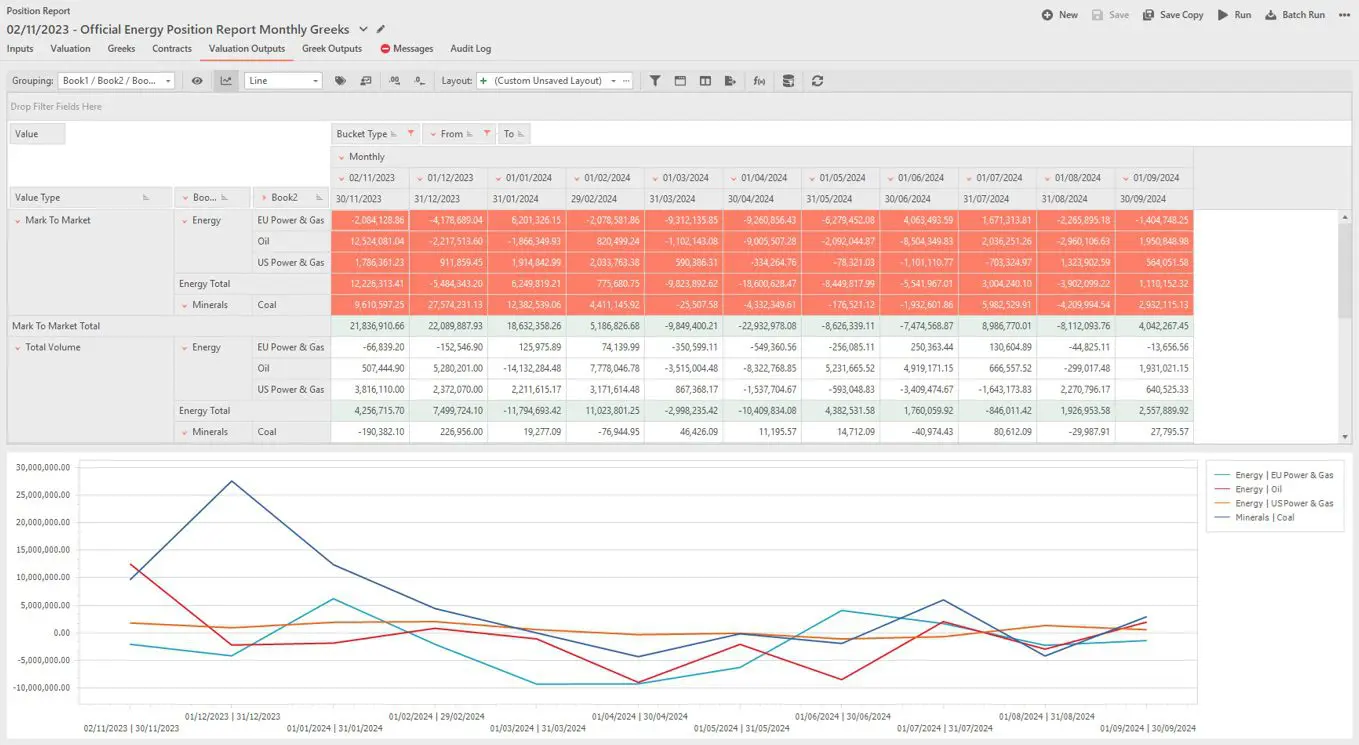
Importantly, Mark-to-Market valuation is not only valuable in its own right – it also forms the foundation for many of the analytical processes used throughout energy and commodity markets. Measures such as Credit Risk, Value at Risk, and Earnings at Risk for example, all begin with a consistent view of current portfolio value.
Without consistent Mark-to-Market valuation, different teams could assign different values to the same portfolio simply because they are relying on different market assumptions. The result is inconsistent reporting, inconsistent risk measurement, and ultimately poorer commercial decision-making.
How Mark-to-Market Valuation Works
Although valuation models can become highly sophisticated, the underlying process is conceptually straightforward. Practitioners typically:
- obtain current observable market data;
- construct consistent forward curves;
- apply appropriate valuation models;
- calculate the current value of each position; and
- aggregate individual positions into portfolio-level results.
The objective is always the same: determine the portfolio’s value based on today’s market conditions rather than historical transaction prices or future expectations.
What Determines Mark-to-Market Value?
Although the precise methodology depends on the asset being valued, most energy valuations combine several common components:
Current Market Prices
Forward curves represent today’s market prices for future commodity delivery and form one of the primary inputs into Mark-to-Market valuation.
Optionality
Many energy contracts allow decisions to be made after the contract has been entered into. Examples include gas storage, swing contracts, tolling agreements, LNG destination flexibility, and transportation contracts. These operational choices can materially influence Mark-to-Market value.
Contract Characteristics
Delivery obligations, pricing mechanisms, settlement terms, transportation rights, and embedded flexibility all influence value.
Market Uncertainty
For contracts containing significant optionality, future uncertainty also contributes to value. That’s why many complex assets require stochastic valuation techniques rather than simple discounted cash flow calculations.
Mark-to-Market Across Different Types of Assets
Not every energy contract is valued in the same way. Relatively straightforward forward or futures contracts may be valued directly from observable forward prices. Assets containing operational flexibility often require more sophisticated approaches.
For example:
- gas storage may require optimisation techniques;
- swing contracts may require simulation-based valuation;
- LNG contracts may include destination and shipping flexibility;
- tolling agreements may depend on operational dispatch decisions; and
- transportation contracts may derive value from changing market spreads.
Although the methodologies differ, they all aim to estimate the asset’s value using current market conditions.
Common Pitfalls and Misconceptions
Good Valuation Depends Only on Good Models
Sophisticated valuation models are important, but they represent only part of the solution.
Even mathematically robust models rely on accurate forward curves, high-quality market data, appropriate valuation assumptions, and effective governance.
Poor or inconsistent market inputs can produce unreliable valuation results regardless of how sophisticated the underlying model may be.
Mark-to-Market Is Simply Today’s Cash Value
Many contracts cannot simply be bought or sold immediately. MtM represents an estimate of current economic value based on prevailing market conditions, not necessarily an immediately realisable cash amount.
Mark-to-Market Predicts Future Prices
One of the most common misconceptions is that Mark-to-Market valuation attempts to predict future prices. It does not.
Mark-to-Market answers the question:
“What is this portfolio worth today based on today’s market?”
It does not answer:
“What will this portfolio ultimately be worth?”
Future financial outcomes will depend on how market prices evolve after the valuation date.
Managing Mark-to-Market Valuation in Practice
As portfolios become larger and more complex, maintaining consistent Mark-to-Market valuation becomes increasingly challenging.
Organisations must manage multiple market data sources, forward curves, valuation models, pricing assumptions, and governance requirements while ensuring that valuation results remain consistent across trading, risk, finance, and commercial functions.
Many organisations therefore implement dedicated enterprise valuation platforms rather than relying on disconnected spreadsheets and manual processes.
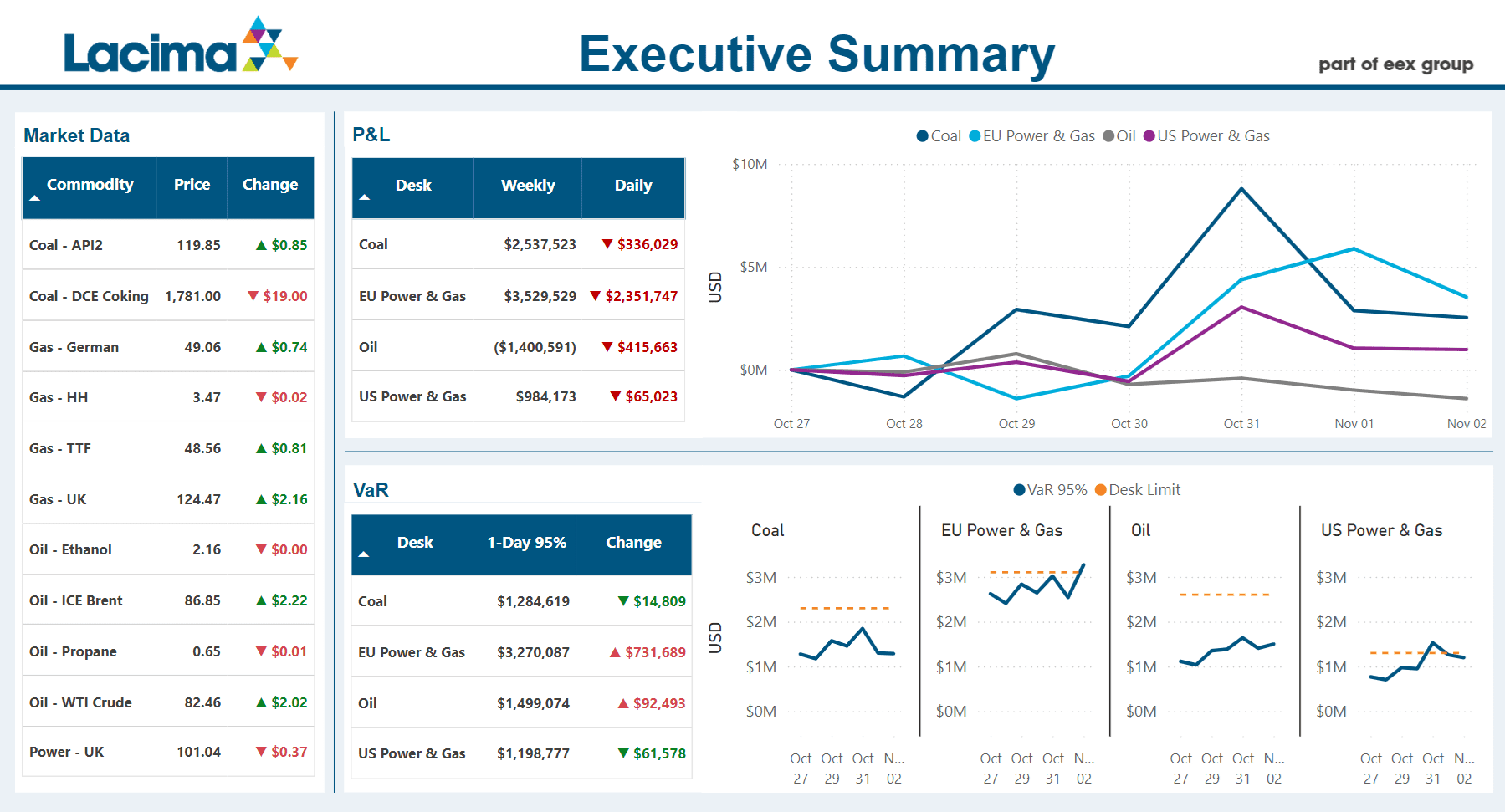
Applications such as Lacima Analytics’ Valuation (Mark-to-Market) module help organisations manage market data, perform consistent portfolio valuation, analyse valuation sensitivities, maintain complete auditability, and produce enterprise-scale valuation reporting across complex energy and commodity portfolios.
One-Sentence Takeaway
Mark-to-Market valuation estimates the current value of contracts and portfolios using today’s market conditions, providing the foundation for trading, risk management, financial reporting, and commercial decision-making.
Related Learning Resources
Learn why forward curves provide one of the most important market inputs into Mark-to-Market valuation.
How to Build an Energy Forward Curve
Understand how observable market prices are transformed into consistent forward curves for valuation and risk analysis.
Explore how intrinsic value estimates the immediate economic value of contracts with operational flexibility.
What is Monte Carlo Simulation?
Discover why complex contracts often require simulation-based valuation under uncertain future market conditions.
While reasonable care has been taken in preparing this information, we make no warranties or representations as to its completeness, currency or accuracy. To the extent permitted by law, Lacima accepts no liability for any loss, damage or outcome arising from its use or reliance. Use of this article is subject to the full Terms and Conditions of this website.