
 Search
Learning | Foundations of Energy Risk
What is Energy Risk Management?
Introductory Summary
Energy risk management is the process of identifying, measuring, and managing exposure to uncertainty in energy and commodity markets. These uncertainties can arise from commodity and energy price movements, volatility, weather conditions, operational constraints, or complex contractual structures.
Unlike many traditional financial markets, energy markets typically combine financial instruments with physical assets and operational flexibility. As a result, risk management in this context often blends valuation, scenario analysis, and portfolio modelling to support commercial and risk decisions.
Many of these analytical techniques rely on quantitative market models. To understand the foundations behind these methods, see What is Stochastic Modelling?
Definition
Energy risk management refers to the structured assessment and management of financial and operational risks arising from energy and commodity market exposure.
Why This Matters in Energy & Commodity Markets
Energy markets are highly dynamic and operationally complex, often responding sharply to changes in supply, demand, and external events. As such, participants may need to manage exposure across:
- fluctuating forward prices;
- weather-driven demand changes;
- supply disruptions and transportation constraints;
- fuel relationships;
- storage flexibility;
- generation outages;
- geopolitical developments; and
- interconnected commodity markets.
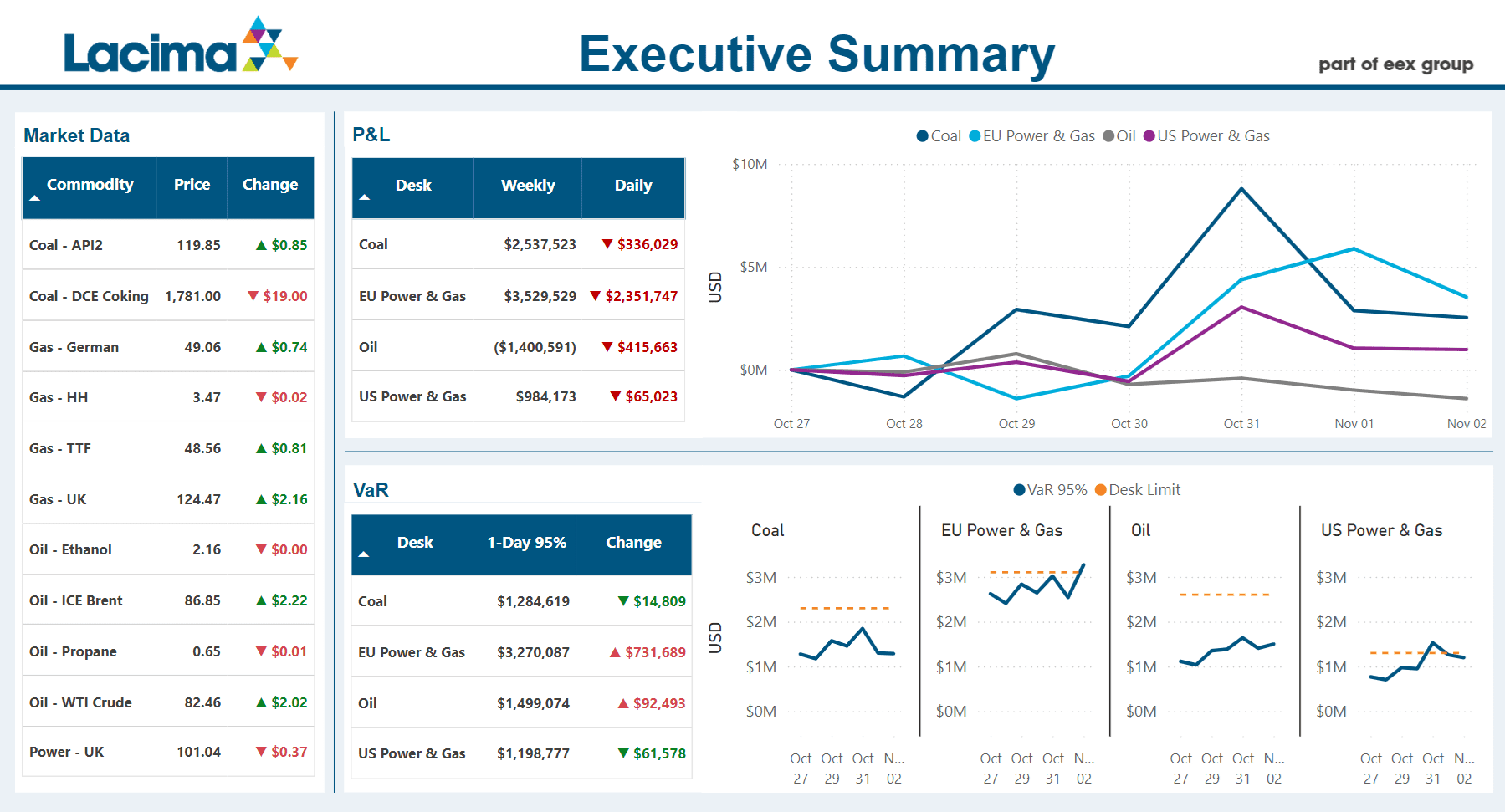
Many energy portfolios also contain embedded optionality through physical assets and structured contracts. This can make exposure analysis significantly more complex than standard financial market risk management approaches.
Key Components of Energy Risk Management
Physical Asset Risk
Energy portfolios often include physical infrastructure such as:
- gas storage
- transportation assets
- LNG facilities
- power generation assets
These assets introduce operational and optimisation considerations that directly influence valuation and risk outcomes.
Portfolio Optionality
Energy contracts and physical assets frequently contain operational flexibility or embedded optionality.
Examples include:
- storage injection and withdrawal flexibility
- swing volume rights
- dispatch optimisation
- LNG destination flexibility
Capturing this behaviour typically requires simulation-based methods.
Market Risk
Market risk arises from changes in:
- commodity prices
- forward curves
- volatility
- spread relationships
This is often analysed using metrics such as:

Common Pitfalls and Misconceptions
Energy Markets Can Be Managed Using Standard Financial Risk Techniques
Standard financial risk methods do not always capture:
- physical constraints
- non-linear optionality
- operational flexibility
- seasonal dynamics
As such, energy portfolios often require more specialised modelling and valuation approaches.
Individual Exposures Can Be Analysed Independently
Energy exposures are often interconnected across commodities and regions. Ignoring these relationships can understate risk, overlooking:
- spread relationships
- correlation effects
- cross-commodity exposure concentrations
How Energy Risk Management is Addressed in Practice
In practice, energy market participants typically use integrated analytics and risk applications to support:
- valuation
- scenario analysis
- portfolio aggregation
- stress testing
- simulation
- exposure monitoring
As portfolios become more complex, consistency across trading, risk, finance, and commercial teams becomes increasingly important.
Applications such as Lacima Analytics support valuation, market risk analytics, and physical asset modelling across energy and commodity portfolios.
One-Sentence Takeaway
Energy risk management is the discipline of identifying, measuring, and managing financial and operational exposure across energy and commodity markets using valuation, quantitative analytics, and portfolio-based decision making.
Related Learning Resources
What is Commodity Risk Management?
Explore how commodity risk management is applied across physical and financial commodity portfolios.
Learn how Value at Risk is used to estimate potential losses across energy portfolios.
What is Monte Carlo simulation?
Understand how Monte Carlo simulation is used to analyse uncertainty and optionality in energy markets.
Learn how participants measure and aggregate exposure across energy trading and physical asset portfolios.